
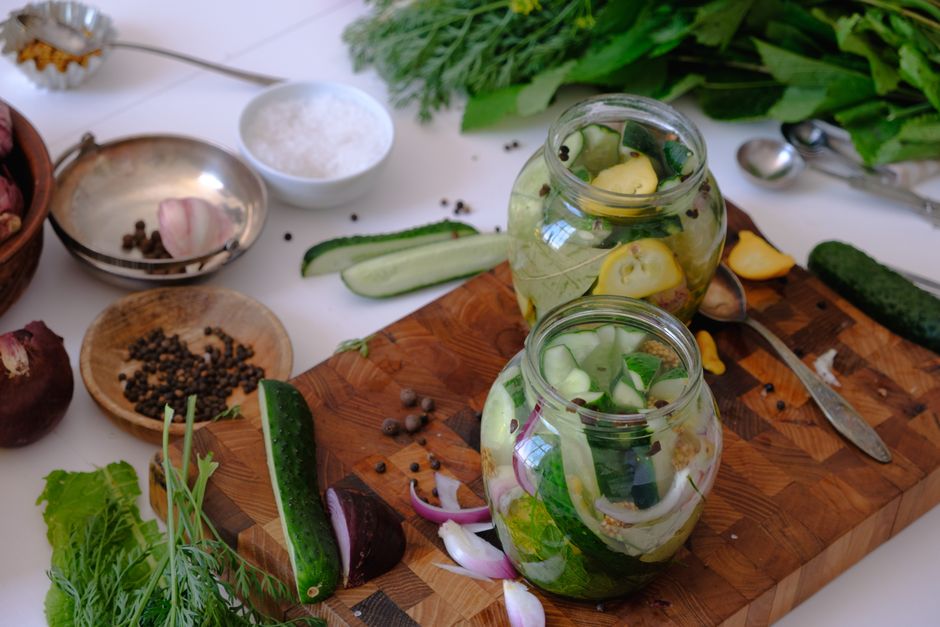
Pickled onions are not a probiotic food, and eating them will not repopulate your gut with beneficial bacteria. The real answer is more interesting than a simple yes or no: pickled onions are fermented or acidified vegetables that can support gut health indirectly, mainly through fiber, plant compounds, and the acids they contain. But the strength of that support depends entirely on how they were made, and most jarred pickled onions in US grocery stores are not fermented at all.
What Actually Happens During Pickling?
Pickling is a preservation method, and there are two very different routes to the same crunchy, tangy result. Understanding the difference explains almost everything else about this topic.
Fermented pickling relies on lactic acid bacteria naturally present on the vegetable. In a saltwater brine, those bacteria consume sugars and produce lactic acid. This is the same process that turns cabbage into sauerkraut and cucumbers into sour pickles. It takes days to weeks and produces a genuinely live, bacteria-rich food.
Quick pickling or vinegar pickling skips the bacteria entirely. You pour hot vinegar, water, salt, and sugar over sliced onions and refrigerate. The acidity of the vinegar does the preserving. It takes hours, not weeks, and the final product contains no live cultures.
Most pickled onions sold in jars at supermarkets are vinegar-pickled. If the label says “refrigerate after opening” and lists vinegar as a main ingredient, that is almost certainly what you have. True fermented pickled onions are usually found in the refrigerated section, sold by small producers, or made at home.
Do Pickled Onions Contain Probiotics?
Only fermented pickled onions contain live bacteria, and even then the amounts are not standardized.
Fermented vegetables do carry lactic acid bacteria, the same broad group found in yogurt and other fermented foods. Some studies suggest these bacteria can survive passage through the stomach, though survival varies widely between people and products. What is much less clear is whether they colonize the gut. Current evidence indicates that most fermented-food bacteria pass through rather than taking up permanent residence.
That does not make them useless. Research on fermented foods has found associations with greater microbial diversity in the gut, which is generally considered a marker of a healthier microbiome. But this research has mostly looked at diets rich in multiple fermented foods, not pickled onions alone. No study has isolated pickled onions and demonstrated a gut health benefit from them specifically.
Vinegar-pickled onions, which are the common type, contain no live bacteria at all. Any gut benefit they offer comes from other components.
Are Pickled Onions Good for Gut Health?
For most people, pickled onions are a reasonable addition to a gut-friendly diet, but they are not a gut health solution on their own.
Here is what they actually bring to the table:
- Fiber — Onions contain fiber, including inulin-type fructans, which feed certain gut bacteria. Pickling does not remove fiber, though quantities in a typical serving are modest.
- Prebiotic compounds — Onions are one of the better dietary sources of fructans, a type of prebiotic fiber. These feed beneficial bacteria in the colon.
- Polyphenols — Onions are rich in quercetin and related compounds. Some research indicates these can influence gut bacteria, though the clinical significance in humans is not firmly established.
- Organic acids — Both lactic acid from fermentation and acetic acid from vinegar can affect the gut environment, though the practical impact of the amounts found in a condiment serving is uncertain.
The honest position: pickled onions contribute to a varied, plant-rich diet, which is the pattern most consistently linked to gut health. They are not a treatment, a supplement, or a replacement for fermented foods with stronger evidence behind them.


What About the Downsides?
Pickled onions are high in sodium, and that matters for some people.
A typical serving of pickled onions might contain a few hundred milligrams of sodium, depending on the recipe. If you are watching your blood pressure or have been advised to limit sodium, this is worth checking on the label. The American Heart Association generally recommends staying under 2,300 mg of sodium per day for most adults, with a lower target of 1,500 mg for those with hypertension or other cardiovascular risk factors.
There is a second issue that gets less attention. Onions are high in fermentable carbohydrates called FODMAPs. For people with irritable bowel syndrome, pickled onions can trigger bloating, gas, and discomfort. Vinegar pickling does not remove FODMAPs. If anything, concentrating onions into a pickle means you may eat more of them in one sitting than you would raw.
Fermented pickled onions also contain histamine, which some people are sensitive to. If you notice headaches, flushing, or digestive symptoms after eating fermented foods, that is a pattern worth discussing with a clinician.
How Do Pickled Onions Compare to Other Fermented Foods?
They are not in the same category as the fermented foods with the strongest evidence base.
| Food | Live Cultures | Typical Serving Size | Evidence for Gut Benefits |
|---|---|---|---|
| Yogurt with live cultures | Yes | 1 cup | Well established |
| Kefir | Yes | 1 cup | Well established |
| Sauerkraut (fermented) | Yes | 2-3 tbsp | Some evidence |
| Kimchi | Yes | 2-3 tbsp | Some evidence |
| Pickled onions (fermented) | Yes | 1-2 tbsp | Limited direct evidence |
| Pickled onions (vinegar) | No | 1-2 tbsp | Indirect only |
The serving size column matters. People eat a cup of yogurt. They eat a spoonful of pickled onions. Even if fermented pickled onions carried the same bacterial load per gram as sauerkraut, the amount consumed is much smaller.
Can You Make Fermented Pickled Onions at Home?
Yes, and it is not complicated, but it does require attention to safety.
Fermenting vegetables at home relies on salt concentration and acidity to keep harmful bacteria from growing. The general approach is a 2% salt brine by weight, submerging the onions completely, and keeping them at room temperature for several days to a few weeks. The acidity drops as lactic acid bacteria multiply, which is what makes the environment hostile to pathogens.
Two things matter for safety. First, keep the vegetables fully submerged. Exposure to air allows mold and undesirable organisms to grow. Second, trust your senses. A properly fermented pickle smells sour and clean. Off smells, slime, or fuzzy mold mean discard the batch.
If you are new to fermenting, starting with a tested recipe from a reliable source is worth the effort. Home fermentation is generally considered safe when basic guidelines are followed, but it is not a place to improvise.
Should You Eat Pickled Onions for Your Gut?
If you enjoy them, there is no reason to avoid them, and they can be part of a diet that supports gut health. Just do not expect them to do the work alone.
The most consistent evidence for gut health points toward eating a wide variety of plant foods, including fiber-rich vegetables, legumes, whole grains, and fruits. Fermented foods with live cultures, particularly yogurt and kefir, have the strongest research support. Pickled onions can be a flavorful addition to that pattern, but they are a condiment, not a cornerstone.
If you are choosing between a jar of vinegar-pickled onions and a jar of fermented ones, the fermented version offers more potential benefit. If you have IBS, watch your symptoms. If you are watching sodium, check the label. Beyond that, enjoy them for what they are: a tangy, crunchy topping that happens to contain some compounds your gut bacteria may appreciate.
Frequently Asked Questions
Are pickled onions a probiotic food?
Only if they were fermented rather than pickled in vinegar. Most jarred pickled onions in stores are vinegar-pickled and contain no live bacteria.
Can pickled onions help with bloating?
No, and they may make it worse for some people. Onions are high in FODMAPs, which can trigger bloating and gas in people with irritable bowel syndrome.
How much pickled onion should I eat for gut health?
There is no established serving size for gut benefits. A typical condiment serving of 1 to 2 tablespoons is reasonable, and pickled onions should be part of a varied diet rather than a focused gut health strategy.
Are fermented pickled onions better than vinegar pickled onions?
For live cultures, yes. Fermented pickled onions contain lactic acid bacteria, while vinegar-pickled onions do not. The evidence for specific gut benefits from either type remains limited.
