
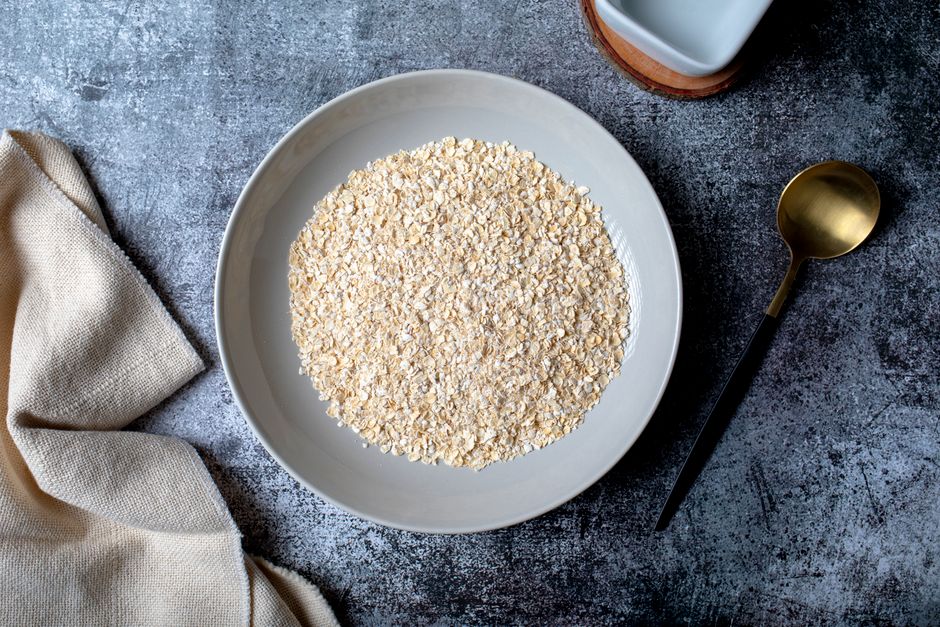
Oats are naturally gluten-free. That is true of old fashioned oats, steel-cut oats, and rolled oats alike — the oat grain itself does not contain gluten. The problem is not the oat. It is what happens to the oat on the way to your bowl.
Oats are often grown near wheat, processed on shared equipment, or stored in the same facilities. That cross-contact is why most standard oats carry a risk of gluten exposure. If you have celiac disease or a wheat allergy, the answer to your question depends far less on the type of oat and far more on how that specific package was handled.
Are Old Fashioned Oats Gluten Free by Nature?
Yes. The oat plant, Avena sativa, does not produce gluten. Gluten is a group of proteins found in wheat, barley, and rye. Oats belong to a different branch of the grass family and make different storage proteins.
This is not a matter of degree. There is no gluten in a clean oat groat. The confusion comes from a related protein called avenin, which makes up a small share of oat protein. Avenin is structurally similar to gluten proteins in some ways. That similarity is why a minority of people with celiac disease report reactions to oats even when those oats are certified gluten-free.
Research on this is fairly consistent. Most people with celiac disease tolerate pure oats. A smaller group does not. Estimates of how many fall into that second group vary across studies, and researchers have not settled on a single figure. If you have celiac disease and want to eat oats, that is a conversation to have with your gastroenterologist or dietitian, not something to sort out from a label alone.
Why Do So Many Oats Contain Gluten?
Cross-contact is the whole story. It happens at several points in the supply chain, and each one adds risk.
- Field rotation. Farmers often rotate oats with wheat or barley. Volunteer wheat can grow among the oats and get harvested together.
- Shared trucks and bins. Grain hauled in the same equipment as wheat picks up dust and stray kernels.
- Shared milling lines. Flour dust travels. A mill that runs wheat flour through the same facility as oats leaves residue behind.
- Flavored and instant varieties. Added ingredients can introduce gluten directly, and these products are rarely tested for it.
This is why “made from oats” tells you almost nothing about gluten content. The grain matters less than the handling.
What Does “Certified Gluten-Free” Actually Mean for Oats?
A gluten-free label on oats means the manufacturer has taken steps to control cross-contact and tests the finished product. In the United States, the Food and Drug Administration sets the standard: a food labeled gluten-free must contain less than 20 parts per million of gluten. That threshold applies to all foods carrying the claim, oats included.
Some oats go further. Purity protocol oats are grown, harvested, transported, and milled in dedicated systems that exclude wheat, barley, and rye entirely. These are sometimes labeled certified gluten-free by a third-party group. Testing programs vary in how often they sample and how they handle a failed batch.
Here is the part that trips people up. A product can be labeled gluten-free without being certified. The FDA rule governs the claim, but enforcement relies heavily on testing and manufacturer compliance. Certification adds an outside layer of verification. Neither is a guarantee, but certification generally means more scrutiny.
If you are highly sensitive, look for oats that state both gluten-free and certified, and check whether the company describes a dedicated facility or a purity protocol.
Which Oats Are Safest — Old Fashioned, Steel-Cut, or Instant?
Cut style does not determine gluten content. Old fashioned oats, steel-cut oats, quick oats, and instant oats are all the same grain processed to different thicknesses. What differs is the ingredient list and the manufacturing standard.
| Type | Gluten risk from the oat itself | Main added risk |
|---|---|---|
| Steel-cut oats | None | Shared milling equipment |
| Old fashioned rolled oats | None | Shared milling equipment |
| Quick oats | None | Shared equipment, sometimes additives |
| Flavored instant oats | None | Added ingredients, low testing rate |
Plain old fashioned oats from a certified gluten-free brand are a reasonable choice for most people avoiding gluten. Flavored instant packets are the weakest option, because flavorings and thickeners can carry gluten and these products are less often tested.
Does Cross-Contact Matter If You Have Celiac Disease?
For celiac disease, yes — and this is where the stakes are real. Celiac disease is an autoimmune condition, not a sensitivity. Even small amounts of gluten can trigger intestinal inflammation and damage to the villi that line the small intestine. That damage can occur without obvious symptoms.
The 20 ppm threshold exists because research has not shown harm at that level for most people with celiac disease. It is a regulatory standard built on available evidence, not a claim that any amount is safe for everyone. Individual tolerance varies.
There is a second issue specific to oats. Avenin can trigger an immune response in a subset of people with celiac disease, even in oats with no detectable gluten. Some clinicians recommend introducing certified gluten-free oats gradually and watching for symptoms, and some suggest follow-up testing. Practices differ, and there is no single agreed protocol.
If you have celiac disease, wheat allergy, or non-celiac gluten sensitivity, talk to your doctor before adding oats. This is not a decision to make from a blog post.
What About People With a Wheat Allergy?
Wheat allergy and celiac disease are different conditions, and the oat question plays out differently for each.
Wheat allergy is an immune reaction to wheat proteins, and it can be severe. Oats do not contain wheat proteins. But cross-contact means a standard package of oats may contain trace wheat. For someone with a wheat allergy, that trace amount could matter, depending on how sensitive they are. Certified gluten-free oats that exclude wheat from the supply chain are generally the safer route.
Some people with wheat allergy also react to other grains, including oats, through a related mechanism. That is uncommon but documented. If you have had a reaction to oats, that is worth reporting to an allergist rather than assuming it was cross-contact.
How Do You Read an Oat Label Without Getting Fooled?
Start with the ingredient list. Plain oats should list one thing: oats. If you see wheat, barley, rye, malt, or “natural flavors” without detail, treat it as a risk.
Then look for the gluten-free claim. It should appear clearly on the package, not buried in fine print. If the brand also states certified gluten-free, or names a third-party certifier, that adds confidence.
One more thing worth knowing. “Wheat-free” is not the same as “gluten-free.” A product can be free of wheat and still contain barley or rye, both of which contain gluten. These two labels get used interchangeably in conversation and they do not mean the same thing.
If a package says nothing about gluten at all, assume cross-contact is possible. That is the honest default.
Frequently Asked Questions
Are old fashioned oats gluten free?
Oats themselves contain no gluten, so old fashioned oats are naturally gluten-free. Most standard oats still carry a cross-contact risk from shared fields and milling equipment, so only oats labeled gluten-free are reliably safe for people avoiding gluten.
Is oatmeal gluten free?
Plain oatmeal made from certified gluten-free oats is gluten-free. Flavored instant oatmeal packets often contain added ingredients that may include gluten, so check the ingredient list and the gluten-free claim on the package.
Can you eat oats if you have celiac disease?
Most people with celiac disease can tolerate certified gluten-free oats, but a minority react to the oat protein avenin even when no gluten is present. Talk to your gastroenterologist before adding oats to your diet.
What is the difference between gluten-free and wheat-free oats?
Gluten-free means the product meets the FDA standard of less than 20 parts per million of gluten from any source. Wheat-free only means it contains no wheat, and it could still contain barley or rye, which both contain gluten.
