
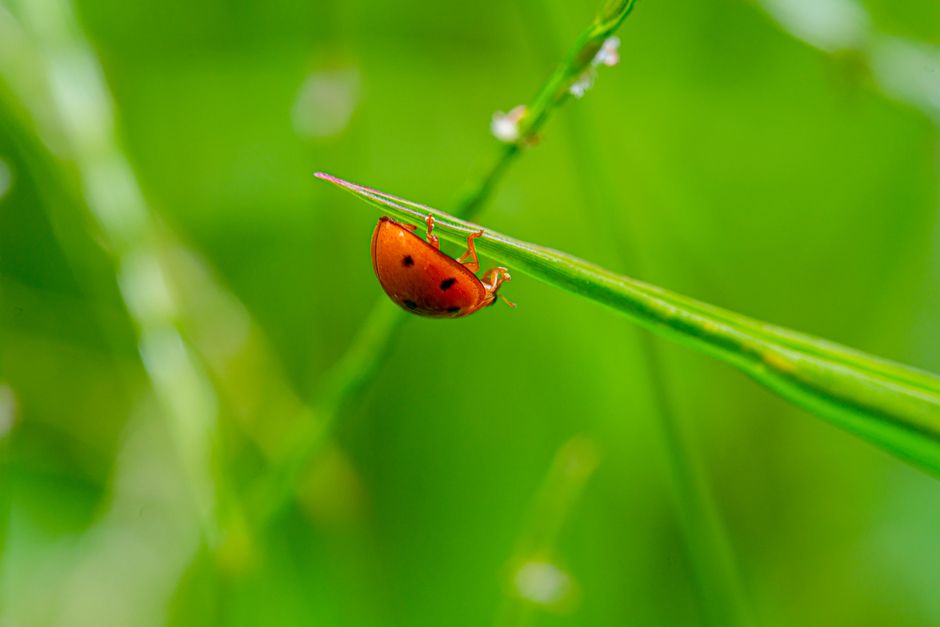
Lady bugs — also spelled ladybugs and known to entomologists as lady beetles — are not harmful to humans. They do not bite people in any meaningful way, they do not carry human diseases, and they are not venomous. In fact, most species are actively helpful in gardens because they eat plant pests like aphids.
That said, there is one real nuisance to know about. A particular species called the Asian lady beetle can invade homes in large numbers in fall, and it can cause mild allergic reactions in some people. It can also pinch human skin, though this is rare and not dangerous.
So the short answer is no, lady bugs are not harmful. But the details matter, especially if you live in an area where the invasive species shows up indoors every autumn.
Are Lady Bugs Harmful to Humans?
No. Lady bugs are not dangerous to people. There is no species of lady beetle in North America that bites, stings, or transmits disease to humans.
What people sometimes describe as a “bite” is usually a pinch. When handled roughly or trapped against skin, some lady beetles can pinch with their mouthparts. It feels like a small nip. It does not break the skin in most cases and does not inject venom.
The more relevant issue is the Asian lady beetle, known scientifically as Harmonia axyridis. This species was introduced to the United States decades ago to control agricultural pests and has since spread widely. It looks similar to native lady bugs but tends to be more orange, sometimes with a distinctive white “M” shape on the shield behind its head.
Unlike native species, the Asian lady beetle gathers indoors in fall, sometimes by the thousands. When they are disturbed, handled, or crushed, they can release a yellowish fluid from their leg joints. This fluid has a strong, unpleasant smell and can stain walls, fabrics, and furniture.
Some people who live in heavily infested homes report allergic symptoms — runny nose, itchy eyes, and sometimes asthma flare-ups. Research has documented allergic rhinitis and asthma symptoms associated with Asian lady beetle exposure in infested homes. This is not a common problem for most people, but it is real for those who experience it.
Why Do Lady Bugs Come Inside My House?
Native lady bugs do not typically come indoors. The Asian lady beetle does, and it does so for one reason: warmth.
In their native range in Asia, these beetles overwinter by gathering on rocky cliffs and other sheltered spots. Houses look like cliffs to them. As temperatures drop in fall, they seek out warm, light-colored surfaces and squeeze through small gaps around windows, doors, and siding.
Once inside, they cluster in wall voids, attics, and ceilings. On warm winter days, they may become active and move into living spaces.
The behavior is seasonal and predictable. If you had them last fall, you will likely see them again this fall unless you seal the entry points they use.
What Harm Can Lady Bugs Actually Cause?
The realistic harms are limited and mostly related to the Asian lady beetle. They are not medical emergencies, but they are worth knowing about.
- Home invasion: Large numbers can cluster indoors, creating a nuisance and requiring cleanup.
- Staining and odor: The defensive fluid they release can stain surfaces and leave a lingering smell.
- Allergic reactions: Some people develop nasal allergies or asthma symptoms in heavily infested homes. This has been documented in case reports and small studies, not in large population studies.
- Pinching: Rare, mild, and not dangerous.
- Wine contamination: In some wine-producing regions, beetles that end up in grape harvests can release compounds that affect flavor. This is an industry issue, not a consumer health risk.
What lady bugs do not do is spread human disease. They are not like ticks, mosquitoes, or fleas. There is no pathogen they carry that infects people.





Do Lady Bugs Bite?
Lady bugs can pinch, but they do not bite in the way most people mean. They have no mechanism for piercing skin and injecting venom or saliva the way a mosquito or spider does.
The pinch happens when a beetle is trapped against skin and uses its mandibles — the small mouthparts it uses to chew aphids — to try to free itself. It can feel like a tiny pinch or scrape. It is not a defensive attack and does not happen unless the insect is handled or pressed against skin.
Some people report a mild stinging sensation after handling many Asian lady beetles. This is likely related to the defensive fluid rather than a bite. If you have sensitive skin, the fluid can cause minor irritation.
If you are pinched, washing the area with soap and water is enough. There is no need for medical attention unless you develop an unusual reaction.
Are Lady Bugs Poisonous?
No. Lady bugs are not poisonous to humans. They do not produce venom, and they are not toxic if touched.
They do produce defensive chemicals, and this is where some confusion comes from. When threatened, lady beetles release alkaloids and other compounds from their leg joints. These chemicals taste bad and deter predators like birds and spiders. The bright red or orange coloring is a warning signal — a phenomenon biologists call aposematism.
These compounds are not dangerous to people in the amounts a beetle can produce. They can cause a bad taste, a smell, and sometimes minor skin irritation, but nothing more.
The one situation worth a note is pets. If a dog or cat eats a large number of Asian lady beetles, it can cause drooling, vomiting, or mouth irritation. This is uncommon but has been reported. If your pet eats a large quantity and shows signs of distress, contact your veterinarian.
Are Lady Bugs Harmful to Plants?
No. Lady bugs are beneficial to plants. Most species are predators that feed on aphids, scale insects, mites, and other pests that damage garden plants and crops.
A single lady beetle can eat dozens of aphids in a day. This is why gardeners and farmers often consider them allies. Some species are even sold commercially for pest control, though results in home gardens are mixed and depend on whether the beetles stay in the area.
A few species are plant eaters rather than predators. The Mexican bean beetle and the squash lady beetle are examples. These are still not harmful to humans, but they can damage specific crops. They are the exception, not the rule.
How Do I Get Rid of Lady Bugs in My House?
The best approach is prevention, not removal. Once Asian lady beetles are inside a wall void, there is no reliable way to eliminate them from the outside.
In late summer or early fall, seal gaps around windows, doors, utility lines, and siding. Check screens for tears. This is the most effective step and the one most people skip.
If beetles are already inside, vacuuming is the practical method. Use a vacuum with a bag, and empty it promptly to avoid odor. Avoid crushing them, which triggers the defensive fluid.
Indoor insecticide sprays are sometimes used by pest control professionals, but they are not a long-term fix. They may reduce visible numbers but do not address the source. If you have a severe infestation, a licensed pest control operator can advise on options. Some clinicians and pest control sources note that sealing entry points is more effective than any spray.
Do not use outdoor sprays on your garden to kill lady beetles. Native species are beneficial, and broad-spectrum insecticides harm them along with the pests.
When Should I Worry?
For most people, lady bugs are a non-issue. You do not need to worry about them.
There are a few situations where it makes sense to pay attention:
- You have a heavy indoor infestation and develop new allergy or asthma symptoms. Talk to a doctor.
- Your pet eats a large number of Asian lady beetles and shows signs of illness. Call your vet.
- You have an infant or young child in a home with a large infestation. The main concern is accidental ingestion, which can cause mouth irritation. This is uncommon but worth being aware of.
If none of these apply, seeing a lady bug in your house is not a reason for concern. It is a mild seasonal nuisance at worst.
Frequently Asked Questions
Are lady bugs harmful to humans?
No, lady bugs are not harmful to humans. They do not bite in a way that breaks skin, they carry no human diseases, and they are not venomous.
Can lady bugs bite you?
Lady bugs can pinch skin with their mouthparts if handled roughly, but this is rare and does not break the skin in most cases. It is not a true bite and carries no risk of disease.
Why are lady bugs in my house?
The Asian lady beetle, an invasive species, comes indoors in fall looking for warmth and shelter. Native lady bug species do not typically come inside.
Are lady bugs poisonous to dogs?
Lady bugs are not poisonous to dogs in small numbers. If a dog eats a large number of Asian lady beetles, it can cause drooling, vomiting, or mouth irritation, and you should contact your veterinarian.
