
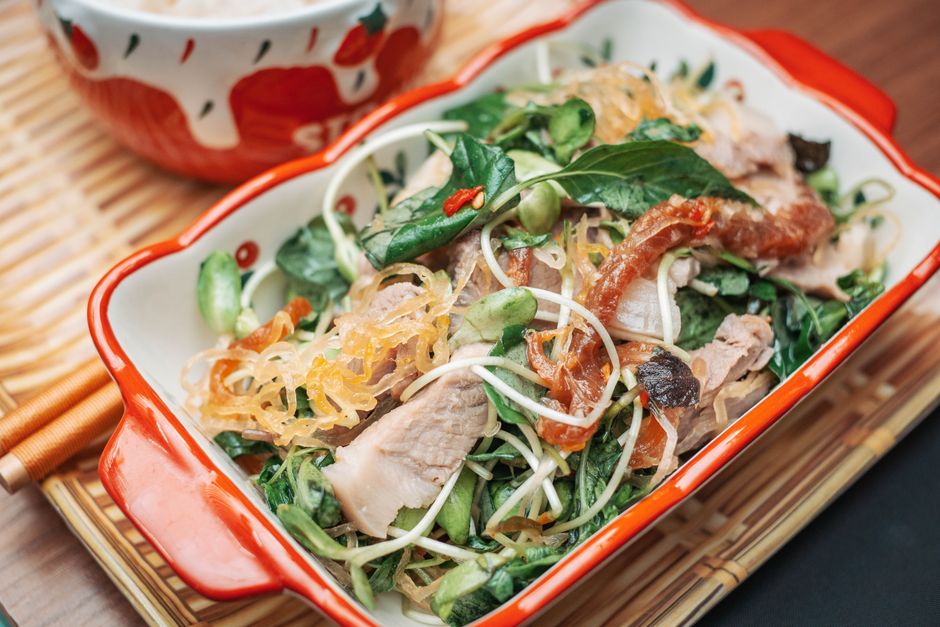
Glass noodles look light and delicate on the plate, and that appearance leads many people to assume they are a healthier choice than wheat pasta or white rice. The truth is more nuanced. Glass noodles are a simple starch with almost no protein, fiber, vitamins, or minerals, so they are not a nutrient-dense food. They are also not harmful on their own — they are low in fat and naturally gluten-free, which makes them useful for certain diets. Whether they count as “healthy” depends almost entirely on what you eat with them and how they fit into your overall plate.
What Are Glass Noodles Actually Made Of?
Glass noodles are made from starch and water, and that is essentially the whole ingredient list. The most common version uses mung bean starch, which gives the noodles their characteristic translucent, glassy look after cooking. Other versions are made from sweet potato starch, potato starch, or cassava starch, depending on the region and brand.
The starch itself is the key to understanding the nutrition. Starch is a carbohydrate — a long chain of glucose molecules. When you strip away the protein, fiber, and micronutrients that come with whole grains, you are left with a fairly pure carbohydrate source. That is not automatically bad, but it does mean glass noodles should not be mistaken for a whole food.
One detail worth knowing: the “glass” appearance comes from the way the starch gelatinizes and then sets. It is a physical property, not a sign of anything nutritionally special. The same chemistry happens with any purified starch.
Are Glass Noodles Healthy Compared to Regular Pasta?
Glass noodles and regular wheat pasta are both carbohydrate foods, but they differ in several practical ways. Glass noodles are gluten-free, lower in protein, and lower in fiber than most whole-wheat pasta. Regular semolina pasta contains some protein and, if whole wheat, a meaningful amount of fiber.
Here is the honest comparison. If you eat white pasta, the nutritional gap between it and glass noodles is smaller than you might expect. If you eat whole-wheat pasta, the whole-wheat version generally wins on fiber and protein. Glass noodles are not a superior health food — they are simply a different starch.
That said, glass noodles have a lower glycemic index than some starchy foods in certain preparations, largely because of how the starch is structured. The evidence on this is not uniform across all brands and cooking methods, so it is fair to say some research suggests a slower blood sugar rise, but the effect varies. It is not a reason to treat them as a blood-sugar-friendly food in unlimited amounts.
Are Glass Noodles Healthy for Weight Loss?
Glass noodles are low in calories per cooked cup, mostly because they are low in everything except carbohydrate and water. Cooked glass noodles generally contain fewer calories per cup than cooked wheat pasta, largely because they absorb a lot of water and contain less protein and fiber.
Low calorie density can help with weight management when it replaces higher-calorie foods in a meal. But calories are only part of the picture. Protein and fiber help you feel full, and glass noodles are low in both. A bowl of glass noodles alone may leave you hungry again quickly.
If weight loss is the goal, the more reliable approach is to pair glass noodles with protein and vegetables rather than to eat them as a standalone dish. The noodles are a vehicle, not a strategy.
Do Glass Noodles Have Any Nutritional Benefits?
Glass noodles do offer a few genuine advantages, though they are modest. They are naturally gluten-free, which matters for people with celiac disease or non-celiac gluten sensitivity. They are also low in fat and contain no cholesterol, which is true of most plain starches.
The main limitation is that they are nutritionally thin. A typical serving provides carbohydrate and very little else. Compared with whole grains, they contribute little in the way of B vitamins, iron, magnesium, or fiber. If glass noodles make up a large share of your diet, you may be displacing foods that would give you more nutrients.
One non-obvious point: the starch in glass noodles is not “resistant starch” in any meaningful amount after typical cooking. Some marketing implies otherwise, but the evidence does not support treating glass noodles as a significant source of resistant starch or prebiotic fiber.
How Do Glass Noodles Compare to Other Noodle Types?
The table below shows approximate differences in the main nutrients people care about. Values vary by brand, so treat these as general patterns rather than exact figures.
| Noodle Type | Main Ingredient | Protein | Fiber | Gluten |
|---|---|---|---|---|
| Glass noodles | Mung bean or other starch | Low | Very low | No |
| White wheat pasta | Semolina flour | Moderate | Low | Yes |
| Whole-wheat pasta | Whole wheat flour | Moderate | Moderate to high | Yes |
| Soba (100% buckwheat) | Buckwheat flour | Moderate | Moderate | No |
| Rice noodles | Rice flour | Low | Very low | No |
The takeaway is that glass noodles land near rice noodles on the nutrition spectrum — low in protein and fiber, gluten-free, and mostly carbohydrate. Whole-grain options generally provide more nutrients per bite.
Are Glass Noodles Healthy If You Have Diabetes?
Glass noodles are still a carbohydrate food, and carbohydrate affects blood sugar regardless of the source. The lower glycemic index seen in some studies does not mean they are free of impact. Portion size, what you eat with them, and your individual response all matter.
For people managing diabetes, the more useful approach is to count glass noodles as part of your carbohydrate budget and pair them with protein, fat, and non-starchy vegetables to blunt the blood sugar rise. Some clinicians suggest choosing whole grains over refined starches when possible, but individual tolerance varies.
No clinical guidelines single out glass noodles as either recommended or discouraged for diabetes. The general principles of carbohydrate management apply.
Are There Any Risks or Downsides to Glass Noodles?
For most people, glass noodles are not risky. The main downside is nutritional: if they replace more nutrient-dense foods often, your diet may become lower in protein, fiber, and micronutrients over time.
People with celiac disease should still check labels, because some glass noodle products are processed in facilities that also handle wheat. Cross-contamination is possible even when the ingredients themselves are gluten-free.
There is also a texture and choking consideration for some people, particularly young children or anyone with swallowing difficulty, because glass noodles are slippery and chewy. This is a general food safety point, not specific to glass noodles, but worth noting.
How Should You Eat Glass Noodles to Make Them Healthier?
The single biggest factor is what you put with them. Glass noodles are neutral in flavor and absorb whatever sauce or broth they are cooked in, which makes them a good base for a balanced meal.
- Add a protein source such as tofu, chicken, shrimp, or eggs to improve satiety.
- Load up on non-starchy vegetables like cabbage, carrots, peppers, and greens.
- Watch the sauce — many glass noodle dishes are high in sodium and added sugar.
- Keep portions moderate if you are managing blood sugar or weight.
A glass noodle stir-fry with plenty of vegetables and a protein is a reasonable meal. A large bowl of glass noodles in a sweet soy sauce with little else is mostly carbohydrate and sodium.
The Bottom Line on Glass Noodles and Health
Glass noodles are not a health food, and they are not a junk food. They are a simple starch with a few practical advantages — gluten-free, low in fat, low in calorie density — and some clear limitations — low in protein, fiber, and micronutrients.
Whether they are “healthy” for you depends on your goals and your plate. Used as part of a balanced meal with protein and vegetables, they can fit fine. Used as a staple that crowds out whole grains, legumes, and other nutrient-dense foods, they work against you.
Frequently Asked Questions
Are glass noodles healthier than rice?
Neither is clearly healthier — both are low-protein, low-fiber starches. White rice and glass noodles are nutritionally similar in most respects, while brown rice offers more fiber and nutrients than either.
Do glass noodles have any protein or fiber?
Glass noodles contain very little protein and almost no fiber because they are made from purified starch. This is why they are less filling than whole grains or legumes.
Are glass noodles good for weight loss?
They are low in calories per serving, which can help if they replace higher-calorie foods. But because they lack protein and fiber, they may not keep you full, so pair them with protein and vegetables.
Are glass noodles gluten-free?
Yes, glass noodles made from mung bean, potato, or cassava starch are naturally gluten-free. Check the label for cross-contamination warnings if you have celiac disease.
