
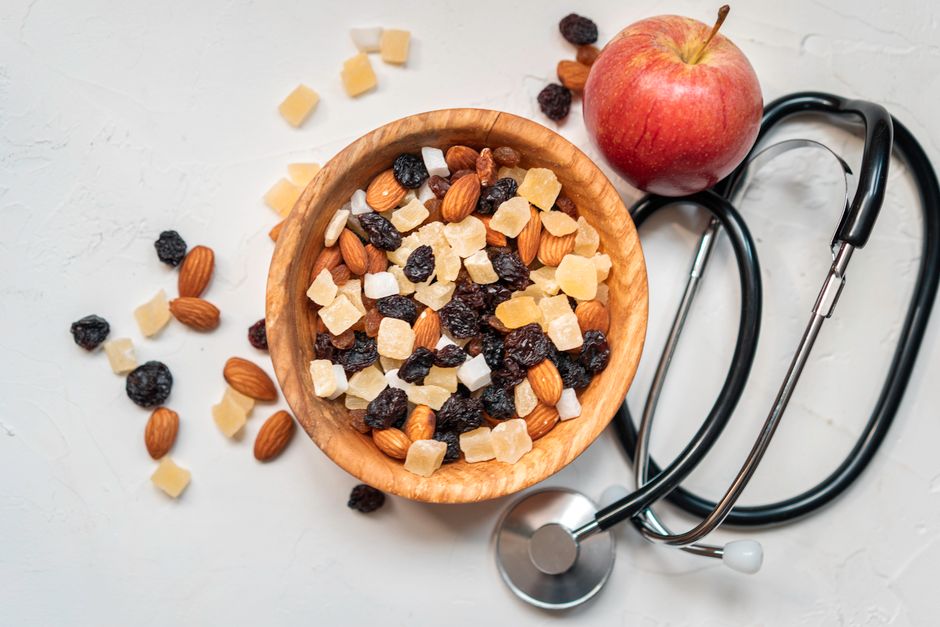
Freeze dried fruit is the crunchy stuff in trail mix that tastes like a strawberry but weighs almost nothing. The short answer: it is real fruit, and it keeps most of what makes fruit healthy. The catch is that it also concentrates the sugar and calories into a much smaller package, so portion size matters more than it does with fresh fruit.
Freeze drying removes water by freezing the fruit and then pulling the ice off as vapor under low pressure. Because the process never uses high heat, the fruit’s structure, color, and most nutrients survive largely intact. What you end up with is fruit minus roughly 80 to 90 percent of its water weight.
How Is Freeze Dried Fruit Different From Fresh Fruit?
The core nutrition stays. Water leaves, but fiber, vitamins, minerals, and plant compounds do not evaporate with it.
Water makes up most of the weight of fresh fruit. A fresh strawberry is around 90 percent water. Strip that water out and the same strawberry becomes a small, crisp piece that is mostly fiber, natural sugar, and micronutrients. This is why an ounce of freeze dried fruit can equal several ounces of fresh fruit in nutrition terms.
Vitamin C and other water-soluble vitamins are the nutrients most vulnerable to processing. Freeze drying generally preserves them better than canning, drying with heat, or cooking, because heat is what degrades these vitamins. Some loss still happens during freezing and storage, but the retention tends to be high compared with other preservation methods.
What changes most is not the nutrition per unit of fruit. It is the eating experience. Without water, the fruit is light and airy. You can eat a large volume of it quickly without feeling full, because there is far less bulk and water to signal fullness to your body.
Are Freeze Dried Fruits Healthy?
Yes, with one important condition: it depends on what else is in the bag.
Plain freeze dried fruit — just fruit, nothing added — is a legitimate way to eat fruit. It delivers fiber, vitamins, minerals, and antioxidants similar to what fresh fruit provides. For people who struggle to eat enough fruit, or who need a shelf-stable option that does not spoil, it is a reasonable choice.
The problem is that many products sold as freeze dried fruit are not just fruit. Some add sugar, syrup, or sweeteners. Some are coated in chocolate or yogurt. Some are freeze dried fruit pieces inside a snack that also contains candy, granola, or added oils. The fruit is real, but it comes with a lot of extra calories and added sugar.
Read the ingredient list. If it says one thing — the fruit — you are getting fruit. If it lists sugar, cane syrup, glucose, or a coating, you are getting a sweet snack that happens to contain fruit.
Does Freeze Drying Remove Nutrients?
It removes water. It does not remove fiber, minerals, or most vitamins.
Fiber is fully retained because it is part of the fruit’s physical structure and does not dissolve away with the water. Minerals like potassium and magnesium stay put. Antioxidants and plant pigments are also largely preserved, partly because freeze drying avoids the heat that breaks many of them down.
Vitamin C is the nutrient most worth noting. It is sensitive to heat, light, and oxygen. Freeze drying protects it better than heat-based drying, but not perfectly. Vitamin C content in freeze dried fruit tends to be lower than in fresh fruit picked and eaten immediately, but higher than in many other processed forms. The exact retention varies by fruit and by how the product was stored and handled.
One practical point: once the package is opened, oxygen and moisture get in. Freeze dried fruit that sits open for a long time will lose some vitamin C and go soft. Resealing the bag or moving it to an airtight container helps.





Is Freeze Dried Fruit High in Sugar?
Per piece, no. Per bite of a typical serving, yes — because the sugar is concentrated.
Freeze drying does not add sugar. A freeze dried strawberry has the same sugar as the fresh strawberry it came from, just in a smaller, denser package. The issue is how much you eat without noticing. A cup of fresh strawberries has a certain amount of sugar and a lot of water and volume. The equivalent amount of freeze dried strawberries takes up far less space and is easy to finish in a few bites.
This concentration effect is the main reason freeze dried fruit can quietly add up. It is not that the fruit became unhealthy. It is that the same sugar now fits in your hand instead of filling a bowl.
For people watching blood sugar, this matters. Freeze dried fruit still contains natural sugars and still affects blood glucose. It is not a “free” food. The fiber it contains may slow absorption somewhat compared with juice or candy, but it is still a source of carbohydrate.
Freeze Dried vs Fresh vs Regular Dried Fruit
| Type | Water content | Added sugar | Key difference |
|---|---|---|---|
| Fresh fruit | High (often ~80–90%) | None | Most filling; spoils quickly |
| Freeze dried | Very low | None if plain | Light, crunchy; nutrients largely retained |
| Regular dried (e.g., raisins) | Low | Often added | Chewy; heat drying may reduce some vitamins; frequently sweetened |
Regular dried fruit and freeze dried fruit are often lumped together, but they are made differently. Traditional drying uses heat, which can reduce heat-sensitive vitamins and often leads manufacturers to add sugar or sulfites. Freeze drying uses cold and vacuum, which preserves more nutrients and usually needs no added sugar to taste good. Both, however, concentrate sugar and calories by removing water.
Who Might Benefit From Freeze Dried Fruit?
It is a practical option in a few specific situations.
- People who want fruit that does not spoil and can be carried without refrigeration
- Campers, hikers, and travelers who need lightweight, shelf-stable food
- People who find fresh fruit hard to keep on hand or wasteful when it goes bad
- Anyone who dislikes the texture of fresh fruit but enjoys a crunchy snack
It is not a replacement for fresh fruit in every case. Fresh fruit provides water, volume, and a fullness signal that freeze dried fruit does not. For most people, the goal is simply to eat enough fruit overall, and freeze dried fruit can count toward that.
For children, freeze dried fruit can be a choking risk because the pieces are dry, hard, and can be difficult to chew. The pieces also absorb moisture and can clump. Supervision and age-appropriate pieces matter. No clinical guidelines set a specific age at which freeze dried fruit becomes safe, so treat it like other dry, hard foods and use judgment based on your child’s chewing ability.
How to Choose a Healthy Freeze Dried Fruit Product
The label tells you almost everything you need to know.
Look for a short ingredient list. Ideally it lists only the fruit. If sugar, syrup, juice concentrate, or a coating appears, the product is a sweetened snack, not plain fruit.
Check the serving size against the calories. Because the fruit is concentrated, a small serving can carry a meaningful number of calories. A serving that looks tiny may be closer to two or three servings of fresh fruit in sugar and energy.
Watch for added oils, especially in coated or flavored varieties. These add fat and calories that plain fruit does not have. None of this makes the product dangerous. It just means you are eating a snack food, not plain fruit.
Storage matters too. Keep the bag sealed. Freeze dried fruit absorbs moisture from the air and loses its crunch, and some vitamin content declines over time once exposed to air and light.
Frequently Asked Questions
Is freeze dried fruit as healthy as fresh fruit?
It retains most fiber, minerals, and vitamins, so nutritionally it is close to fresh fruit. It lacks the water and volume of fresh fruit, so it is less filling and easier to overeat.
Does freeze dried fruit have a lot of sugar?
Plain freeze dried fruit has no added sugar, but its natural sugar is concentrated because the water is removed. A small amount can equal the sugar of a much larger serving of fresh fruit.
Is freeze dried fruit good for weight loss?
It can fit into a weight loss plan, but it is easy to eat a large amount quickly because it is light and not filling. Portion control matters more than with fresh fruit.
Can kids eat freeze dried fruit?
Yes, but the dry, hard pieces can be a choking risk for young children. Supervision and age-appropriate piece sizes are important, and no specific age guideline exists.
