
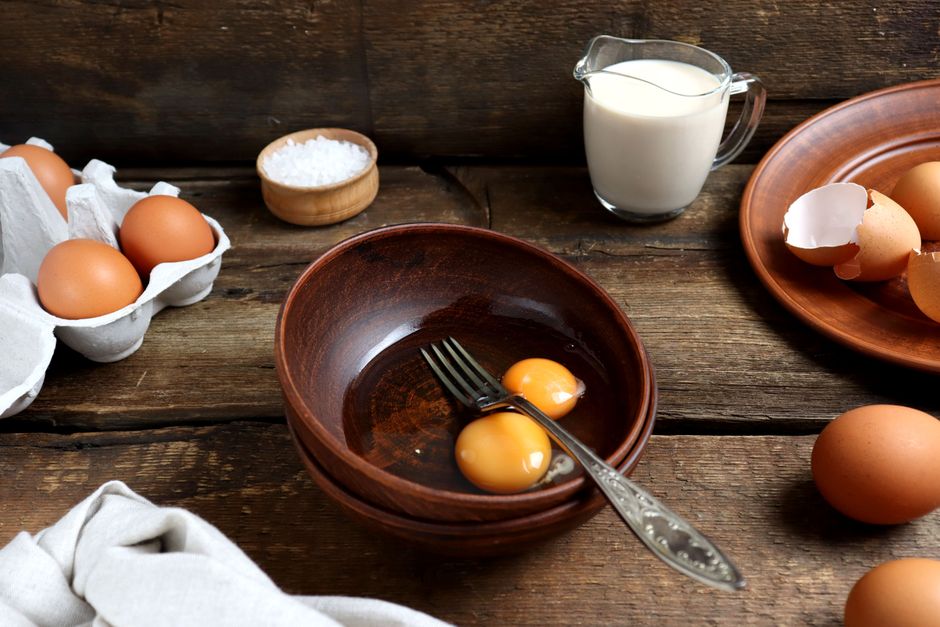
A chicken egg is a single cell before it is fertilized. That surprises most people, because a hen’s egg is one of the largest single cells on Earth. The yolk is the actual cell. The white, the shell membrane, and the shell are all structures built around it, not part of the cell itself.
The confusion comes from the word “egg.” In a nest, the whole thing looks like one unit. Biologically, the true cell is just the yolk — a single cell packed with nutrients and holding one set of genetic material. Everything else exists to protect it or feed a developing embryo.
Are Eggs One Cell Yes And The Yolk Is Proof?
Yes. The yolk is the cell, and the white and shell are packaging around it. That is the simplest way to answer the question.
Inside an unfertilized yolk sits a tiny disc of cytoplasm on the surface, called the germinal disc. This is where the cell’s nucleus sits. In a fertilized egg, that disc is where the embryo begins to develop. The rest of the yolk is stored food — mostly fat and protein — that would fuel growth if fertilization had occurred.
Most eggs people buy and eat are unfertilized. No rooster was involved, so no embryo forms. The germinal disc is still there, and the yolk is still a living cell with its own genetic material, but it will never develop into a chick.
Why the yolk is the cell and not the white
The egg white, called albumen, is not part of the cell. It is a separate layer of water and protein that cushions the yolk and provides extra nutrients. The shell membrane and the hard shell are built by the hen’s reproductive tract as the egg travels through it. None of these are the cell.
So when someone says a chicken egg is one cell, they mean the yolk. The white and shell are additions the hen wraps around that single cell before laying it.
How Can One Cell Be So Large?
A chicken egg yolk can measure several centimeters across, which makes it one of the largest single cells known. Most cells are microscopic. The yolk is the exception because it stores so much food.
Cell size usually stays small because a cell needs enough surface area to move nutrients and waste across its membrane. A huge cell has trouble doing that efficiently. The egg yolk gets around this by being mostly inactive storage material. It does not need to run a busy metabolism the way a typical cell does.
This is a useful clarification: the yolk is not a typical working cell. It is a cell specialized for storage and, if fertilized, for starting a new organism. Its size is possible because most of its volume is inert nutrient reserve rather than active cellular machinery.
What Is the Difference Between a Fertilized and Unfertilized Egg?
The difference is whether an embryo can form. A fertilized egg contains genetic material from both a hen and a rooster, and it can develop into a chick if kept warm. An unfertilized egg contains only the hen’s genetic material and will never develop.
On the plate, the two look nearly identical. A fertilized yolk has a slightly larger and more distinct germinal disc, sometimes called the blastoderm, but you would need a close look to notice. There is no reliable way to tell them apart by taste or smell.
Commercially sold eggs in the United States are almost always unfertilized. Hens in commercial flocks are kept without roosters, so fertilization cannot happen. Eggs sold as fertilized are a specialty product, and some people seek them out for cultural or personal reasons. Nutritionally, the two are essentially the same.
Does the Yolk Being a Cell Affect How You Store or Cook Eggs?
No. The fact that the yolk is a cell has no practical effect on food safety or cooking. What matters for safety is temperature control and handling, not the biology of the cell.
Eggs are a known source of Salmonella bacteria, which can cause foodborne illness. The Centers for Disease Control and Prevention advises cooking eggs until both the white and yolk are firm, and keeping eggs refrigerated at 40°F (4°C) or below. These steps reduce risk. They apply whether or not the yolk is technically a living cell.
For dishes that use raw or lightly cooked eggs, the safer choice is pasteurized eggs. This matters most for people at higher risk of serious illness from foodborne infection, including pregnant women, young children, older adults, and people with weakened immune systems.
Is the Yolk the Most Nutritious Part of the Egg?
The yolk holds most of the egg’s vitamins, minerals, and fat. The white is mostly protein and water. Both parts are nutritious, but they contribute different things.
The yolk carries fat-soluble vitamins like A, D, E, and K, along with choline and lutein. It also contains cholesterol. The white provides a concentrated source of high-quality protein with almost no fat.
For years, concerns about dietary cholesterol led people to avoid yolks. Current understanding is more nuanced. For most healthy adults, dietary cholesterol from eggs has a modest effect on blood cholesterol compared with saturated fat and trans fat. People with certain health conditions, such as diabetes or existing heart disease, may be advised to be more careful about cholesterol intake. Anyone with specific concerns should talk with their doctor rather than relying on general rules.
Do All Eggs Start as a Single Cell?
Yes. Every bird egg begins as a single cell, and the same basic pattern holds across most animals that lay eggs. The cell is the ovum released by the female, and the yolk is its stored food supply.
What varies is how much yolk the cell carries and what surrounds it. A frog’s egg is a single cell too, but it is small and jelly-coated. A chicken egg is a single cell wrapped in layers the hen builds around it. A human egg is also a single cell, but it is microscopic and has almost no yolk because the developing embryo gets nutrition from the mother instead.
This common thread is worth knowing: the word “egg” describes both the cell and the whole package in everyday speech. In biology, the cell is the ovum. The shell and white are protective additions, not the cell itself.
The Bottom Line
A chicken egg is a single cell, and the yolk is that cell. The white and shell are structures the hen adds around it. This is well established in basic biology and does not depend on whether the egg was fertilized.
The size of the yolk is unusual but explained by its role as stored food. And the biology has no bearing on how you should store, handle, or cook eggs — food safety guidance stands on its own.
Frequently Asked Questions
Is a whole egg one cell or many cells?
An unfertilized egg is one cell, the yolk, wrapped in non-cellular layers of white and shell. Once an egg is fertilized and begins to develop, it becomes many cells as the embryo grows.
Is the egg white part of the cell?
No. The egg white is a separate protective and nutrient layer the hen builds around the yolk. The yolk is the actual cell.
Can you eat a fertilized egg?
Yes, fertilized eggs are safe to eat if handled and cooked properly. Most fertilized eggs sold for eating have not developed into an embryo.
Why is a chicken egg so much bigger than other cells?
The yolk is large because most of its volume is stored food rather than active cell machinery. That lets it grow far beyond the size of a typical cell.
