
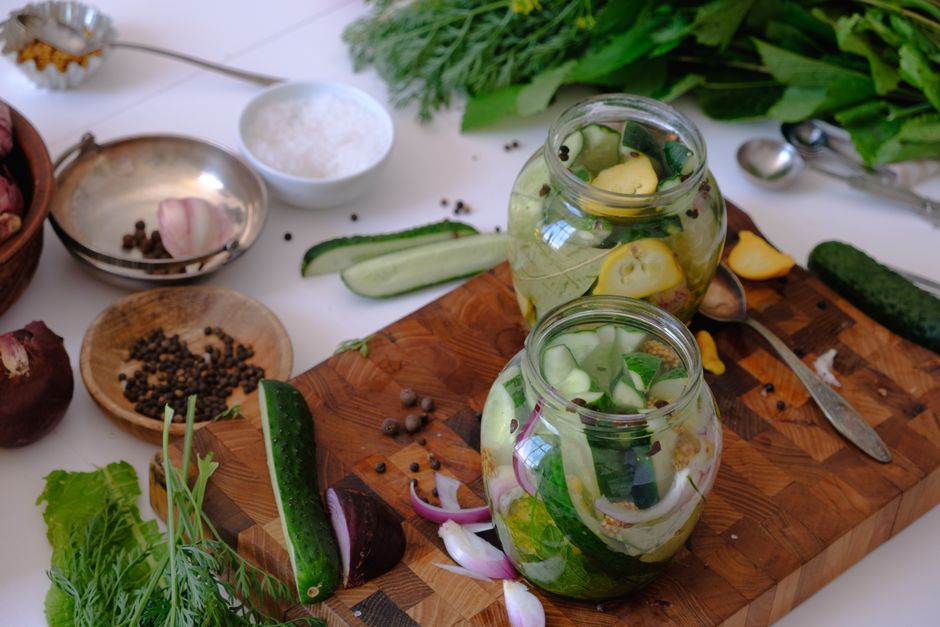
Dill pickles are cucumbers that have been preserved in brine, and the answer to whether they are nutritious is not a simple yes or no. They contain almost no calories, provide some vitamin K and vitamin A, and deliver sodium in amounts that can be substantial. The nutrition story depends almost entirely on how they were made and how many you eat.
Are Dill Pickles Nutritious?
Dill pickles are low in calories and fat, and they retain small amounts of certain vitamins from the cucumber. A typical dill pickle spear contains roughly 4 calories, less than 1 gram of protein, and almost no fat or carbohydrates. That makes them a low-calorie food, but low-calorie is not the same as nutrient-dense.
The cucumber itself is mostly water. Once it is pickled, the vitamin content changes. Vitamin C, which is present in fresh cucumbers, is largely lost during the pickling process because it is heat-sensitive and water-soluble. Some vitamin K and vitamin A remain. The brine adds sodium, and that is where the nutritional picture gets more complicated.
So dill pickles are not a significant source of most vitamins and minerals. They are not a health food in the way that leafy greens or legumes are. They are a condiment or a snack with a specific nutritional profile that matters mostly because of what they add to your diet — sodium — and what they lack.
What Nutrients Do Dill Pickles Actually Contain?
The nutrients in a dill pickle come from two sources: the cucumber and the brine. What survives the pickling process is a modest amount of vitamin K, some vitamin A, and small amounts of calcium and potassium. The amounts vary by brand and recipe.
According to USDA nutritional data, one medium dill pickle (about 65 grams) provides approximately:
- Calories: 4
- Protein: less than 1 gram
- Fat: less than 1 gram
- Carbohydrates: less than 1 gram
- Fiber: less than 1 gram
- Sodium: roughly 280 to 350 milligrams, depending on the brand
- Vitamin K: a small percentage of the daily value
- Vitamin A: a small percentage of the daily value
The sodium figure is the one that matters most for most people. A single pickle can contain a meaningful share of the daily sodium limit recommended by U.S. dietary guidelines, which is 2,300 milligrams per day for most adults. Some brands pack considerably more sodium than others, so reading the label is the only reliable way to know what you are getting.
The fiber content is negligible. Fresh cucumbers with the peel provide some fiber, but pickling does not preserve it in any meaningful amount. If you are eating pickles for fiber, you will not get it.
Why Is the Sodium in Pickles a Concern?
Sodium is the nutrient in pickles that has the clearest and most consistent relationship to health outcomes. High sodium intake is associated with elevated blood pressure in people who are salt-sensitive, and elevated blood pressure is a risk factor for heart disease and stroke. That relationship is well established.
What is less straightforward is how much a few pickles per day matters for any individual person. Sodium sensitivity varies. Some people experience meaningful blood pressure changes with modest sodium intake; others do not. The evidence supports reducing sodium across a population, but individual responses differ.
For people with diagnosed hypertension, heart failure, or kidney disease, sodium intake is often a clinical concern that their doctor monitors. Pickles are a concentrated sodium source, and a single spear can contribute a noticeable amount. For people without those conditions, an occasional pickle is unlikely to be a problem in the context of an otherwise balanced diet.
If you are watching your sodium, look for reduced-sodium or no-salt-added pickle varieties. They exist and they taste reasonably similar. The trade-off is that some reduced-sodium pickles use potassium chloride instead of sodium chloride, which changes the flavor slightly and adds potassium — something to be aware of if you have kidney disease and have been told to limit potassium.



Are Fermented Pickles Different From Vinegar Pickles?
Yes, and the difference is significant. Most pickles sold in U.S. grocery stores are made with vinegar, not by fermentation. Vinegar pickles are preserved by adding acid directly. Fermented pickles, sometimes called sour pickles or deli-style pickles, are made by submerging cucumbers in saltwater and allowing naturally occurring bacteria — primarily lactic acid bacteria — to produce acid over time.
Fermented pickles contain live bacteria, which are sometimes called probiotics. Vinegar pickles do not, because the vinegar kills or prevents bacterial growth. If a pickle jar is shelf-stable and has been pasteurized, it contains no live cultures regardless of how it was made.
Whether the live bacteria in fermented pickles provide meaningful health benefits is an area where the evidence is still developing. Some studies suggest that fermented foods can influence the gut microbiome, but the specific effects of pickle consumption on human health outcomes have not been well studied in large trials. It is reasonable to say that fermented pickles contain live microorganisms. It is not accurate to say that eating them has been proven to improve digestive health or immune function.
To find fermented pickles, look for jars labeled “fermented” or “naturally fermented,” or check the refrigerated section. If the ingredients list vinegar, it is a vinegar pickle. If it lists only cucumbers, water, salt, and spices, it may be fermented.
Do Pickles Have Any Health Benefits?
Pickles are not a therapeutic food. The claims made about them online — that they relieve muscle cramps, support gut health, or help with hydration — deserve scrutiny.
The muscle cramp claim comes from the idea that pickle juice replaces electrolytes lost through sweat. Some small studies have looked at pickle juice and muscle cramps, and the results are mixed. The mechanism proposed in some research is not electrolyte replacement but a reflex triggered by the sour taste in the mouth. That research is preliminary. It does not establish pickle juice as a reliable treatment for cramps.
The hydration claim is also weak. Pickle juice contains water and sodium, but so does most food. Drinking pickle juice for hydration adds a lot of sodium without the balanced electrolyte profile of an actual sports drink or plain water with food.
The gut health claim applies only to fermented pickles, and as noted above, the evidence for specific benefits is limited. No large human trials have confirmed that eating fermented pickles improves gut health outcomes.
What can be said accurately is that pickles add flavor to food without adding calories, and that they contain small amounts of certain vitamins. That is a modest nutritional role, and it is the honest one.
Who Should Be Careful With Pickles?
People with certain health conditions have reason to limit pickles or choose low-sodium versions. The sodium content is the main issue.
- People with hypertension — sodium reduction is a standard part of blood pressure management, and pickles are a concentrated source.
- People with heart failure — fluid retention is a concern, and sodium intake is typically monitored closely.
- People with kidney disease — sodium and potassium both require attention, and some reduced-sodium pickles use potassium chloride.
- People taking lithium — sodium intake affects lithium levels in the blood, and changes in sodium intake can affect lithium concentration. This is a clinical concern that should be discussed with a prescribing doctor.
- People on a low-sodium diet for any reason — pickles are usually not compatible with strict sodium restriction unless specifically made without added salt.
For everyone else, pickles can be part of a normal diet. The question is frequency and portion. A pickle spear on a sandwich is different from eating half a jar.
How Do Dill Pickles Compare to Other Snacks?
Compared to chips, crackers, or most processed snacks, pickles are lower in calories and fat. That is a real difference. Compared to fresh vegetables, they are higher in sodium and lower in most vitamins and fiber.
The comparison that matters most is to the cucumber they came from. A fresh cucumber is high in water, provides some vitamin K and potassium, and contains almost no sodium. A pickled cucumber has lost much of its vitamin C, gained significant sodium, and retained only a fraction of its original nutrient profile.
That does not make pickles a bad food. It makes them a different food. They are a condiment with a long shelf life and a strong flavor. They are not a substitute for fresh vegetables, and they are not a health food. They are also not dangerous for most people in normal amounts.
If you enjoy pickles, the practical approach is to eat them as you would any salty condiment — with awareness of how much sodium you are getting from all sources, not just the pickle. If you are watching your blood pressure or have been told to limit sodium, check the label and consider reduced-sodium options. If you are otherwise healthy and eat a varied diet, an occasional pickle is not something to worry about.
Frequently Asked Questions
Are dill pickles good for you?
Dill pickles are low in calories but also low in most nutrients, and they are high in sodium. They can fit into a healthy diet in small amounts, but they are not a significant source of vitamins, minerals, or fiber.
How much sodium is in a dill pickle?
A typical medium dill pickle contains roughly 280 to 350 milligrams of sodium, though this varies widely by brand. Some varieties contain considerably more, so checking the nutrition label is the only reliable way to know.
Are fermented pickles healthier than vinegar pickles?
Fermented pickles contain live bacteria that vinegar pickles do not, but no large human trials have confirmed specific health benefits from eating them. The evidence for gut health effects is still developing.
Can you eat pickles every day?
For most healthy adults, eating a pickle daily is unlikely to cause harm, but it adds sodium to your total intake. If you have high blood pressure, heart failure, or kidney disease, talk to your doctor about whether pickles fit your sodium limits.
