
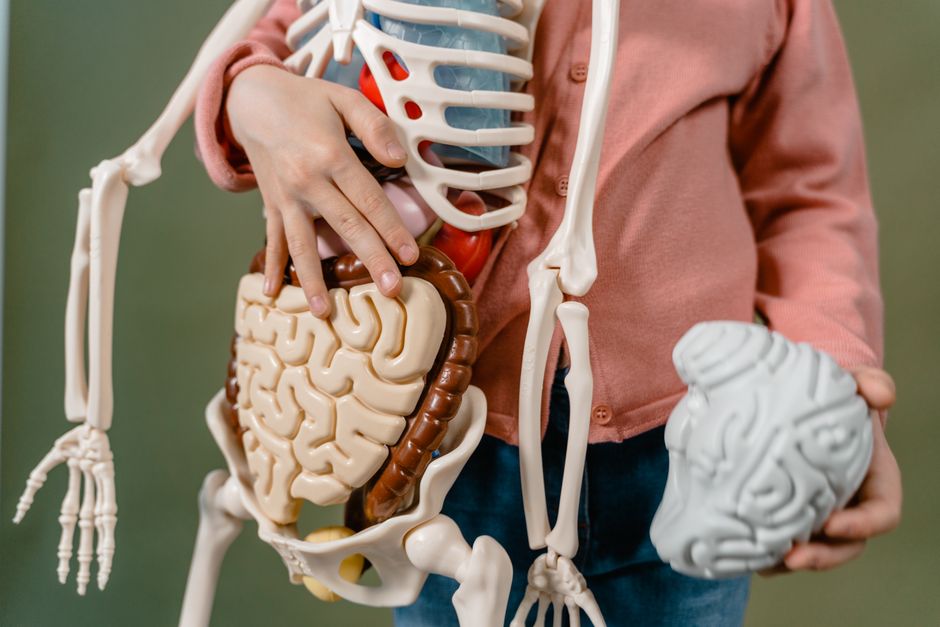
Digestive enzymes are proteins your body makes to break food down into pieces small enough to absorb. Your salivary glands, stomach, pancreas, and small intestine produce them around the clock. Whether taking them as a supplement is “good for you” depends entirely on why you are taking them. For some medical conditions, enzyme replacement is a proven treatment. For general digestive comfort in otherwise healthy people, the evidence is much thinner than the marketing suggests.
The short answer: digestive enzyme supplements are genuinely helpful for specific diagnosed conditions such as pancreatic insufficiency. For everyday bloating or occasional indigestion in people with a normal digestive system, no strong evidence shows they fix the underlying problem. They are not harmful for most people, but “not harmful” is different from “effective.”
What Do Digestive Enzymes Actually Do?
Digestion is a chain of chemical reactions. Each link in that chain needs a specific enzyme. Your body makes thousands of them, but the main digestive ones fall into a few groups.
- Amylases break starches into sugars. They start working in your mouth.
- Proteases break proteins into amino acids. They work mainly in the stomach and small intestine.
- Lipases break fats into fatty acids. The pancreas is the primary source.
- Lactase breaks down lactose, the sugar in milk.
Each enzyme has a preferred environment. Stomach acid destroys most enzymes that are not built to survive it. This matters for supplements: an enzyme swallowed in a capsule has to survive stomach acid, reach the small intestine intact, and still be active when it gets there. Many products on the market do not clearly demonstrate that they do.
The pancreas does most of the heavy lifting. It releases enzymes into the small intestine through a duct, and those enzymes handle the bulk of fat, protein, and starch digestion. When the pancreas works normally, your body already produces far more enzyme than it needs for a typical meal.
Are Digestive Enzymes Good for You If Your Body Already Makes Them?
For most healthy people, the honest answer is that there is no clear evidence of benefit. Your pancreas and small intestine already produce a large surplus of enzymes. Adding more through a supplement does not typically speed digestion or improve nutrient absorption in someone whose system is working.
This is where marketing and physiology part ways. Supplement labels often claim to “support digestion” or “reduce bloating.” Those phrases are not held to the same standard as drug claims. A product can make general wellness statements without proving they are true in a controlled trial.
Some small studies have looked at enzyme blends for bloating and gas. Results have been mixed, and many of these studies were short, small, or funded by the companies selling the products. That does not mean the findings are false. It means the evidence is not strong enough to say these products reliably work for the general population.
One non-obvious point: occasional bloating after a large or high-fat meal is usually not an enzyme deficiency. It is more often related to eating speed, swallowed air, portion size, or specific foods your gut handles less well. An enzyme pill does not address those causes.
When Are Digestive Enzyme Supplements Proven to Help?
There are real medical conditions where enzyme replacement is not optional. It is treatment.
Exocrine pancreatic insufficiency (EPI) is the clearest example. In EPI, the pancreas does not release enough enzymes into the small intestine. This can happen with chronic pancreatitis, cystic fibrosis, pancreatic cancer, or after pancreatic surgery. Without enough enzymes, the body cannot properly absorb fat and other nutrients. Symptoms include greasy, foul-smelling stools, weight loss, and nutrient deficiencies. Prescription pancreatic enzyme replacement is the standard treatment, and the evidence supporting it is strong.
Lactose intolerance is another case with reasonable support. Lactase supplements can help people who cannot digest lactose, though results vary by person and by product. Some people find they help; others do not notice a difference.
These are diagnosed conditions. They are not the same as feeling bloated after a big dinner.





What About Over-the-Counter Enzyme Supplements?
Over-the-counter enzyme products are regulated as dietary supplements in the United States, not as drugs. That means they do not need to prove effectiveness before they are sold. The FDA oversees supplements for safety and labeling, but it does not review them for efficacy the way it reviews medications.
This creates two problems for consumers.
First, what is on the label may not match what is in the capsule. Independent testing of supplements has repeatedly found that some products contain less of the listed ingredient than claimed, or contain ingredients not listed. This is not unique to enzymes, but it applies to them.
Second, “enzyme activity” is measured in units that vary by enzyme. A product listing “protease” without a clear activity unit tells you little about how much active enzyme you are actually getting. Reputable manufacturers list activity units, but the labels can be confusing even when accurate.
None of this means every product is unreliable. It means you cannot assume a supplement works just because it is on a shelf.
Can Digestive Enzymes Cause Side Effects?
For most people, digestive enzyme supplements cause few or no side effects. When reactions do occur, they tend to be mild.
- Nausea or stomach discomfort
- Diarrhea or loose stools
- Abdominal cramping
- Allergic reactions in people sensitive to an ingredient, such as certain fruits or fungi used as enzyme sources
People with specific conditions should be more careful. If you have a history of pancreatitis, a pancreatic disorder, or an allergy to any ingredient in a supplement, talk to a clinician before taking one. High-dose enzyme products are not casual items for these groups.
Enzyme supplements can also interact with certain medications in ways that are not fully studied. If you take prescription drugs, especially ones that affect digestion or blood sugar, check with a pharmacist or doctor first.
Do You Need Them If You Have IBS or Bloating?
Irritable bowel syndrome (IBS) is a common reason people try enzyme supplements. The logic seems reasonable: if digestion is uncomfortable, maybe adding enzymes helps. But IBS is not caused by an enzyme shortage. It involves how the gut and brain communicate, gut motility, and sensitivity to certain foods.
Some studies have tested specific enzyme blends in people with IBS. Results have been inconsistent, and the studies are generally small. Some people report feeling better; others do not. Because IBS symptoms fluctuate on their own, it is hard to know whether a supplement is responsible for any improvement.
For bloating specifically, the evidence is similar — limited and mixed. Some products combine enzymes with other ingredients like simethicone or probiotics, which makes it even harder to tell what, if anything, is doing the work.
If bloating is persistent, painful, or comes with weight loss, blood in the stool, or changes in bowel habits that last more than a few weeks, that is a reason to see a doctor. These symptoms can signal conditions that need proper diagnosis, not a supplement.
How Do You Know If a Digestive Enzyme Is Right for You?
You do not diagnose yourself. That is the honest starting point.
If you have ongoing digestive symptoms, the useful step is a medical evaluation, not a supplement. A clinician can check for conditions like EPI, celiac disease, lactose intolerance, or IBS. Each has different treatments, and only some involve enzymes.
If you have a diagnosed condition that calls for enzyme replacement, that is a conversation to have with your doctor. Prescription enzymes are dosed specifically and monitored. Over-the-counter products are not a substitute for that.
If you are otherwise healthy and simply curious whether an enzyme supplement might help with occasional discomfort, the evidence does not strongly support it. That does not mean you cannot try one. It means you should not expect a proven benefit, and you should not use it to avoid getting real symptoms checked.
Digestive enzymes are not good or bad in the abstract. They are a treatment for specific problems, and a weakly supported supplement for everyone else. Knowing which category you fall into is the part that matters.
Frequently Asked Questions
Are digestive enzymes good for you?
They are genuinely helpful for people with diagnosed conditions like exocrine pancreatic insufficiency, where the body does not make enough enzymes on its own. For healthy people without a diagnosed digestive disorder, the evidence does not show a clear benefit.
Can I take digestive enzymes every day?
Most people tolerate them without problems, but daily use without a medical reason is not supported by strong evidence. If you have a diagnosed condition, follow your doctor’s guidance on dosing and duration.
Do digestive enzymes help with bloating?
The evidence is limited and mixed. Bloating usually has causes other than enzyme shortage, such as eating habits, specific foods, or gut sensitivity, and an enzyme pill does not address those.
What is the difference between prescription and over-the-counter digestive enzymes?
Prescription pancreatic enzyme products are FDA-approved drugs with proven effectiveness for conditions like pancreatic insufficiency. Over-the-counter enzymes are regulated as supplements and do not have to prove they work before being sold.
