
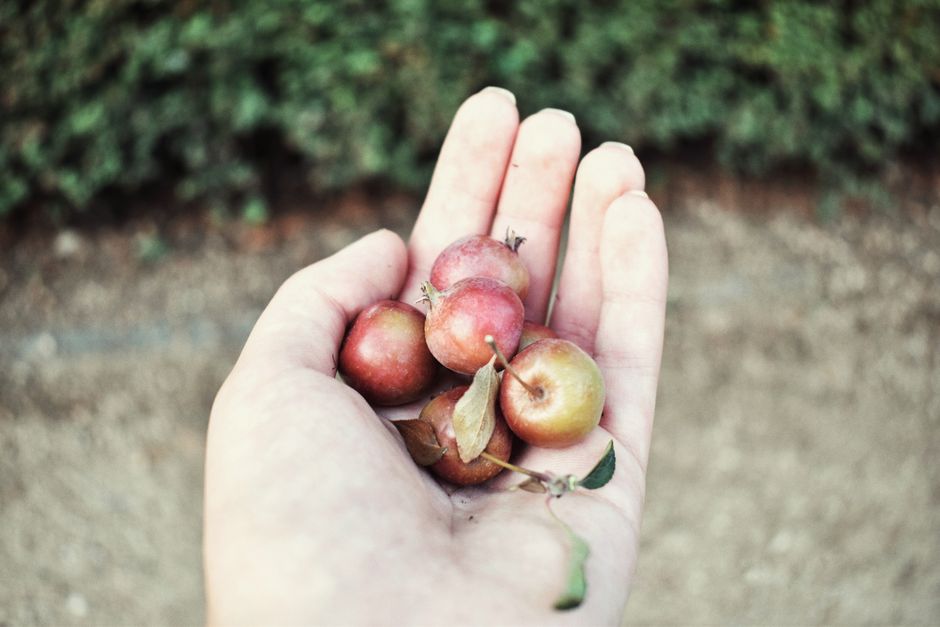
Crab apples are edible. They are not poisonous, and people have eaten them for centuries. The catch is that most are mouth-puckeringly sour and astringent when raw, which is why they are more often cooked, preserved, or turned into jelly than eaten straight off the tree.
If you have ever bitten into one and immediately regretted it, nothing was wrong with the fruit. That sharp, drying sensation is just how crab apples are built. They contain the same basic nutrients as the apples you buy at the store, only in a smaller, tarter package.
What Exactly Is a Crab Apple?
A crab apple is a small apple, usually from the species Malus, and the word “crab” is not a botanical category so much as a size label. In most of the world, any apple under roughly two inches across is called a crab apple. Larger ones are simply called apples. They belong to the same genus, share the same ancestry, and can even grow on the same family tree.
This matters because people sometimes assume crab apples are a different, possibly toxic fruit. They are not. Crab apples and eating apples are close relatives. Many crab apple trees are grown specifically for their spring blossoms and used in landscaping, while others produce fruit that is genuinely good for cooking.
The reason crab apples taste so tart comes down to chemistry. They tend to be high in acidity and in compounds called tannins. Tannins are the same class of molecules that make strong tea and unripe persimmons feel dry in your mouth. They bind to proteins in your saliva, which is why a raw crab apple can leave your mouth feeling chalky or tight.
Are All Crab Apples Safe to Eat?
The fruit itself is safe. The seeds are a different story. Apple seeds, including crab apple seeds, contain a compound that releases small amounts of cyanide when crushed or chewed. This is true of regular apples too.
Occasional accidental swallowing of a few whole seeds is not a medical emergency, because the hard seed coat protects the contents. The danger comes from chewing or crushing large numbers of seeds. For context, it would take a substantial quantity of thoroughly chewed seeds to cause harm in an adult, and cases of serious poisoning from apple seeds are rare. The practical takeaway is simple: spit the seeds out, and do not blend whole crab apples into a smoothie.
One more consideration applies to foraging. If you pick crab apples from a tree in a park, along a roadside, or in someone’s yard, you cannot know what was sprayed on it or what it absorbed. Trees treated with pesticides, or growing near heavy traffic or industrial soil, may carry residues you would rather not eat. Fruit from a tree you know and trust is the safer choice.
Why Do Crab Apples Taste So Sour?
The sourness is real and it is not a sign of spoilage. Crab apples generally contain more acid and more tannins than dessert apples, and less sugar. That combination produces a flavor that is bracing rather than sweet.
Some varieties are far more palatable than others. Certain cultivars have been selected over generations for lower tannin levels and better flavor, and a few are mild enough to eat fresh. But the average crab apple from an ornamental tree will be intensely tart. If you taste one and it is unbearable raw, that is normal, not a defect.
Here is a detail worth knowing: tannin levels often drop as the fruit ripens fully, and a frost can soften the astringency in some varieties. This is why traditional recipes sometimes call for crab apples picked after the first cold snap. The change is gradual and variety-dependent, so it will not turn a sour crab apple into a sweet one, but it can make the difference between inedible and workable.
How Are Crab Apples Usually Eaten?
Cooking solves the astringency problem. Heat breaks down some of the tannins and softens the fruit, and added sugar balances the acid. This is why crab apples show up most often in cooked and preserved forms.
- Jelly is the classic use. Crab apples are naturally high in pectin, the gelling agent that makes jam set, so they thicken beautifully with little added help.
- Jams and butters cook the fruit down into a spreadable preserve.
- Baking works well in pies, tarts, and crumbles, where sugar and other fruits offset the tartness.
- Pickling and preserving turns whole small crab apples into a tangy condiment.
- Cider and vinegar take advantage of the high acid and tannin content, which are assets in fermentation.
If you want to try one raw, pick a fully ripe fruit from a variety known to be milder, and take a small bite first. There is no harm in tasting. There is just a good chance you will reach for the sugar bowl afterward.
Are Crab Apples Nutritious?
Crab apples carry the same general nutritional profile as regular apples. They provide fiber, vitamin C, and various plant compounds, including the tannins and flavonoids that contribute to their color and flavor. The fruit is mostly water and carbohydrates, with very little fat or protein.
What is not well established is whether crab apples offer any health benefit beyond that of ordinary apples. You will find claims online that they support digestion or provide unusual antioxidant power. Those claims are not backed by strong human research. The honest position is that crab apples are a real food with real nutrients, and eating them in cooked form is a reasonable part of a varied diet, but no clinical evidence shows they treat or prevent any disease.
One practical note: because crab apple recipes usually involve significant added sugar, the jelly on your toast is not a health food. The fruit brings nutrients, but the sugar brings calories. That does not make it bad. It just means the preserve is a treat, not a supplement.
How Do Crab Apples Compare to Regular Apples?
The two are close cousins with different jobs. The table below summarizes the main differences people care about.
| Feature | Crab Apple | Regular Eating Apple |
|---|---|---|
| Typical size | Under about 2 inches | Usually larger |
| Raw taste | Tart to very astringent | Sweet to mildly tart |
| Acid and tannin content | Generally higher | Generally lower |
| Pectin content | High, good for jelly | Varies by variety |
| Common uses | Jelly, preserves, cider, baking | Fresh eating, baking, juice |
| Edible? | Yes, seeds excluded | Yes, seeds excluded |
Neither fruit is superior in a general sense. They simply suit different purposes. A crab apple shines when you cook it. A good eating apple shines when you do not.
Can You Grow Your Own Crab Apples?
Crab apple trees are hardy and often grown for their blossoms, which appear in spring and feed pollinators. Many varieties are cold-tolerant and low-maintenance compared with some fruit trees. If you plant one, you get ornamental value and a potential harvest.
Whether the fruit is worth eating depends entirely on the variety. Some are grown purely for looks and produce fruit that is extremely tart. Others are selected for flavor. If you are choosing a tree with eating or cooking in mind, look for a variety described as good for culinary use rather than one bred only for flowers.
As with any homegrown fruit, avoid eating from trees that have been sprayed with chemicals not intended for food crops, and wash what you harvest.
The Bottom Line
Crab apples are edible, safe, and genuinely useful in the kitchen. Their reputation for being inedible comes from how sour and astringent they taste raw, not from any danger. Cook them, sweeten them, and they earn their place. Eat them straight off the tree and you will understand why most people do not.
Just leave the seeds alone, know where your fruit came from, and treat any claim that crab apples do something special for your health with healthy skepticism.
Frequently Asked Questions
Are crab apples safe to eat raw?
Yes, the flesh is safe to eat raw, though most varieties are extremely tart and astringent. The seeds should not be chewed or crushed, since they contain a compound that releases small amounts of cyanide.
Are crab apples poisonous?
No, the fruit is not poisonous. Only the seeds pose a concern, and that requires chewing or crushing a large number of them to matter.
What do crab apples taste like?
They taste sharply sour and often astringent, with a drying sensation in the mouth caused by tannins. Some varieties are milder, but most are far more tart than regular apples.
Can you eat crab apples from any tree?
You can eat the fruit from any crab apple tree, but you should avoid trees that may have been sprayed with pesticides or grown near heavy traffic or contaminated soil. Fruit from a tree you know is the safer choice.
