
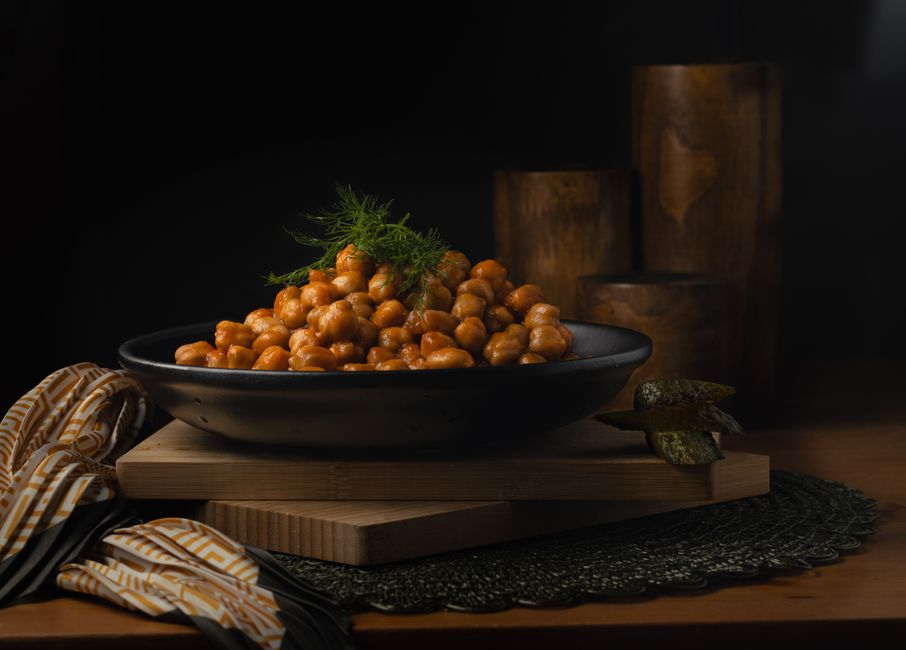
Chickpeas can fit into an IBS diet, but the amount you eat and how you prepare them matter more than most people realize. A small serving — roughly two to four tablespoons of cooked chickpeas — is often better tolerated than a large bowl. Canned chickpeas that are drained and rinsed tend to cause fewer symptoms than dried chickpeas cooked from scratch, because rinsing removes some of the fermentable compounds that trigger bloating and gas.
Are Chickpeas IBS Friendly Serving Sizes Prep? Key Facts
Chickpeas are not off-limits for most people with irritable bowel syndrome. They are a moderate source of fermentable carbohydrates, which means portion size plays a bigger role than the food itself.
The IBS challenge with chickpeas comes from two groups of carbohydrates: galacto-oligosaccharides (GOS) and, to a lesser extent, fructose. These are fermentable oligosaccharides, disaccharides, monosaccharides, and polyols — the FODMAPs that draw water into the gut and get fermented by bacteria in the colon. For people with a sensitive gut, that fermentation produces gas, bloating, and cramping.
But here is what many people miss: the dose changes everything. A food is only “high FODMAP” at a certain serving size. Eat below that threshold and the same food may cause no symptoms at all. Chickpeas are a textbook example of this principle.
Preparation matters just as much. The canning process and rinsing step reduce the concentration of GOS in the chickpeas you actually eat. That is why canned, drained, and rinsed chickpeas are generally better tolerated than chickpeas cooked from dried.
Why Do Chickpeas Cause Gas and Bloating?
Chickpeas contain GOS, a type of carbohydrate your small intestine cannot fully break down. Humans lack the enzyme needed to digest GOS. So it travels intact to the colon, where gut bacteria ferment it.
That fermentation produces hydrogen, methane, and carbon dioxide. In most people, this is harmless and even beneficial — it feeds beneficial bacteria. In people with IBS, the colon is more sensitive to stretching and gas. The same volume of gas that causes no symptoms in one person can trigger pain and bloating in another.
This is a key point about IBS: it is not that your gut makes more gas than everyone else’s. Research consistently shows that people with IBS often have a heightened visceral sensitivity — their nerves register normal gut activity as painful. The gas is real, but the reaction to it is amplified.
Chickpeas also contain some fructose. Fructose is absorbed less efficiently when it arrives without roughly equal amounts of glucose. In chickpeas the amounts are modest, so GOS is the main driver of symptoms, not fructose.
What Serving Size of Chickpeas Is Usually Tolerated?
Small servings are the practical starting point. Many people with IBS tolerate about two to four tablespoons of cooked chickpeas — roughly a quarter cup or less — without significant symptoms.
Larger portions are more likely to trigger problems. A full cup of chickpeas delivers a much bigger GOS load than a quarter cup. That is the core of the serving size question: it is not whether chickpeas are “allowed,” it is how much.
Monash University, which developed and maintains the FODMAP food database, classifies chickpeas by serving size. Smaller servings fall into the low-FODMAP range while larger servings cross into moderate or high. This is why two people can eat the same chickpea salad and have completely different reactions.
A few practical notes:
- Start with one to two tablespoons and see how your body responds over the next 24 hours.
- Increase gradually rather than jumping to a large portion.
- Eat chickpeas with other foods rather than alone — a mixed meal may slow digestion and change the response.
- Keep a simple food and symptom log so you can connect cause and effect.
Individual tolerance varies widely. Some people handle a half cup with no issue. Others react to a single tablespoon. There is no universal number that fits everyone.
Does Preparation Change How Chickpeas Affect IBS?
Yes. How chickpeas are prepared and processed can change how much GOS you end up eating. This is one of the most useful things to understand about chickpeas and IBS.
Canned chickpeas are generally better tolerated than dried chickpeas cooked at home. The canning process and, importantly, the rinsing step remove some of the water-soluble GOS. Draining and rinsing canned chickpeas can meaningfully lower the FODMAP content compared with using the chickpeas straight from the can with their liquid.
If you cook dried chickpeas, a long soak and thorough cooking help. Discarding the soaking water rather than cooking in it reduces some of the fermentable compounds. Some people also find that cooking chickpeas until very soft improves tolerance, though the evidence on this specific point is limited.
What does not reliably help: adding a gas-reducing supplement and assuming it solves the problem. Some products containing the enzyme alpha-galactosidase, sold under brand names like Beano, are marketed to reduce gas from beans. Whether they meaningfully reduce symptoms from chickpeas in people with IBS is not well established in large human trials. Some people report benefit; the evidence is not strong enough to present it as a reliable fix.
Quick comparison: canned vs. dried chickpeas
| Factor | Canned, drained, rinsed | Dried, home-cooked |
|---|---|---|
| GOS content | Lower after rinsing | Higher |
| Typical tolerance | Often better | More variable |
| Prep effort | Minimal | Soaking and long cooking |
| Key tip | Rinse well before eating | Discard soaking water |
Are Chickpeas Good for You If You Have IBS?
Chickpeas are a genuinely nutritious food. They provide plant protein, fiber, folate, iron, and several minerals. For people who tolerate them, they are a valuable part of a balanced diet.
This matters because IBS diets can become unnecessarily restrictive. The low-FODMAP diet is designed as a short-term elimination and reintroduction process, not a permanent way of eating. Cutting out entire food groups long-term can reduce fiber intake and nutritional variety. A dietitian can help you reintroduce foods and find your personal tolerance levels.
Chickpeas also feed gut bacteria. Their GOS content acts as a prebiotic, meaning it nourishes beneficial bacteria in the colon. That is the same property that causes gas in sensitive people. The effect that makes chickpeas troublesome for some is the same effect that makes them beneficial for gut health in others.
If you have IBS, the goal is usually not to avoid chickpeas forever. It is to find the serving size and preparation method your gut accepts, then build from there.
When Should You Be Careful With Chickpeas?
During an active IBS flare, even small amounts of chickpeas may provoke symptoms. When your gut is already sensitive, it is reasonable to pause higher-FODMAP foods and reintroduce them once things settle.
People in the elimination phase of a low-FODMAP diet are typically advised to avoid chickpeas or keep servings very small, then test them during the reintroduction phase. This staged approach is how the diet is meant to work — you learn your own triggers rather than following a permanent list.
If you have another digestive condition alongside IBS — such as small intestinal bacterial overgrowth or inflammatory bowel disease — your tolerance may differ. These conditions need their own medical management. Do not assume that IBS guidance applies directly to them.
Severe or worsening symptoms, blood in the stool, unexplained weight loss, or symptoms that wake you at night are not typical of IBS. These warrant medical evaluation rather than dietary tweaking.
How Do You Add Chickpeas Back Without Symptoms?
Reintroduce chickpeas slowly and one change at a time. This is the most reliable way to learn your personal limit.
Start with a small amount of well-rinsed canned chickpeas — one or two tablespoons. Eat them on a day when your symptoms are calm. Wait a day or two and note what happens. If you tolerate that, increase gradually at your next attempt.
Keep other variables steady. If you test chickpeas on a day you also try three other new foods, you will not know what caused a reaction. Change one thing at a time.
If a serving consistently triggers symptoms, that does not mean chickpeas are permanently off your list. Tolerance can shift over time, and preparation changes — better rinsing, smaller portions, different cooking methods — may change the outcome. A registered dietitian familiar with IBS can guide this process more precisely than trial and error alone.
Frequently Asked Questions
Are chickpeas high FODMAP?
Chickpeas are high in FODMAPs at larger serving sizes and lower at small ones. A serving of roughly a quarter cup or less is generally better tolerated than a full cup.
How many chickpeas can I eat with IBS?
Many people with IBS tolerate about two to four tablespoons of cooked chickpeas, but individual tolerance varies widely. Start small and increase gradually to find your own limit.
Are canned chickpeas better than dried for IBS?
Canned chickpeas that are drained and rinsed are often better tolerated because rinsing removes some fermentable compounds. Dried chickpeas cooked at home tend to have a higher FODMAP load.
Do chickpeas cause bloating in everyone?
No. Chickpeas produce gas during normal digestion, but only people with a sensitive gut typically notice bloating or pain. The same serving can cause no symptoms in one person and clear discomfort in another.
