
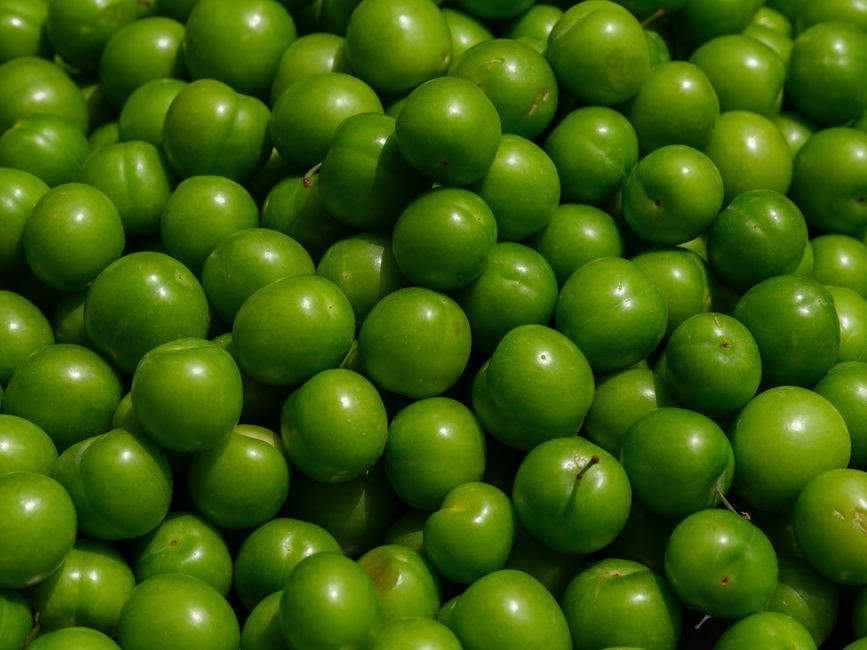
Yes, cherry plums are edible. The small, round fruits that look like a cross between a cherry and a plum are a real fruit — and people eat them fresh, cooked, and dried all over the world. The confusion usually comes from the name, because “cherry plum” gets used for two different things. One is a true species with its own fruit. The other is a modern hybrid sold in grocery stores. Both can be eaten, but they are not the same plant, and knowing which one you are looking at changes how you identify it and what to expect from the taste.
Are Cherry Plums Edible How To Identify And Enjoy Them?
Cherry plums are safe to eat. They are not a toxic look-alike, and no part of the ripe fruit is poisonous. The main caution is about the pit, not the flesh.
The two fruits people call cherry plums come from different places. The traditional cherry plum is Prunus cerasifera, a small tree that produces fruit roughly the size of a cherry. It grows across Europe, western Asia, and parts of North America, often in hedgerows and along roadsides. The other is a hybrid — a cross between a plum and a cherry developed for commercial sale, usually larger and sweeter than the wild type.
To identify a true cherry plum, look at the fruit and the tree together:
- Size: Small, usually around the size of a large cherry, sometimes a little bigger.
- Color: Ranges from yellow and orange to deep red and purple, depending on the variety.
- Skin: Smooth and thin, often with a light dusty bloom like a grape.
- Shape: Round to slightly oval, with a faint seam running down one side.
- Pit: A single stone in the center, pointed and slightly ridged, not a cluster of small seeds.
- Tree: Small, often with thorny branches, and one of the first trees to flower in spring — sometimes before the leaves appear.
That last detail matters. A fruit tree blooming very early, with white or pale pink flowers on bare branches, is a strong clue. The flesh inside the fruit is usually yellow or red, and it clings to the pit in some varieties.
What Is the Difference Between a Cherry Plum and a Regular Plum?
Cherry plums are smaller and tarter than the plums most Americans buy at the store. That is the short version. The longer version is about species and breeding.
Regular grocery store plums are usually Prunus domestica or the Japanese plum Prunus salicina. They have been bred for size, sweetness, and shelf life. Cherry plums are either a wild species that was never bred for those traits, or a deliberate hybrid between a plum and a cherry. The hybrid tends to be sweeter and juicier than the wild species, which can be quite sour.
One clarification worth making: a cherry plum is not a cherry. Cherries belong to a different species within the same genus. The two are related — both are stone fruits in the rose family — but they are distinct. The name comes from the size and appearance, not from being an actual cherry.
Can You Eat Cherry Plums Raw?
Yes, and raw is how most people eat them. Ripe cherry plums can be eaten straight off the tree, skin and all. The flesh is the part you eat. The pit gets discarded.
Flavor varies a lot. Wild cherry plums can be sharply tart, sometimes mouth-puckering, especially if picked before they are fully ripe. Hybrid varieties sold in stores are usually sweeter and milder. If you are picking from a tree you do not recognize, taste one small piece first to gauge how sour it is.
Ripeness shows in the feel and the color. A ripe cherry plum gives slightly when pressed and pulls away from the branch with light pressure. Fruit that is rock hard is not ready. Fruit that is mushy or leaking juice is past its best.





Is the Pit of a Cherry Plum Safe?
The pit should not be eaten. Like the seeds of cherries, apricots, and bitter almonds, cherry plum pits contain a compound that releases cyanide when the seed is crushed or chewed. This is a real concern, not a myth.
The amount in a single pit is small, and swallowing a pit whole is unlikely to cause harm because the hard shell keeps the compound contained. The danger comes from crushing, grinding, or chewing the kernels — and from eating them in quantity. No established clinical guidance supports eating cherry plum kernels, and there is no safe established dose for them.
The practical takeaway is simple: eat the flesh, spit out or cut around the pit. Do not blend whole cherry plums into smoothies, and do not grind the kernels into anything. This same caution applies to apricot kernels, which some people consume for claimed health reasons despite the cyanide risk. Regulatory and poison control guidance consistently warns against eating them.
How Do You Cook and Preserve Cherry Plums?
Cherry plums hold up well to cooking, and heat tames their tartness. Cooking also breaks down the flesh so the pit is easy to remove afterward.
Common ways people use them:
- Jams and jellies: Their natural pectin content helps them set, and their tartness balances added sugar.
- Sauces and chutneys: Cooked down with sugar, vinegar, and spices, they work like a plum sauce.
- Baking: Halved and pitted, they go into tarts, cakes, and crumbles.
- Drying: Halve, pit, and dry them for a chewy snack similar to a dried plum.
- Stewing: Simmered with a little sugar and water for a simple dessert.
When cooking, pit them first if the recipe calls for it. If you are cooking them whole to soften them, remember to remove the pits before eating or blending.
Are There Look-Alikes You Should Avoid?
Cherry plums are not easily confused with anything dangerous in North America. The bigger risk is not poisoning — it is picking fruit from a tree you do not own or that has been sprayed.
Roadside and hedgerow trees may be treated with herbicides or pesticides, and fruit near busy roads can carry residue from vehicle exhaust. If you are foraging, the safest approach is to pick from areas you know are not sprayed and away from heavy traffic. If you cannot confirm a tree’s history, leave the fruit alone.
Identification itself is usually straightforward once you have the fruit in hand. A small round stone fruit with a single pointed pit, growing on a small early-flowering tree, is a cherry plum. If the fruit has multiple small seeds, a segmented interior, or grows in a cluster unlike a plum, it is something else and should not be eaten unless you can identify it confidently.
What Do Cherry Plums Offer Nutritionally?
Cherry plums are a source of vitamin C, vitamin A, and dietary fiber, and like other stone fruits they contain antioxidants. That is the general picture for plums and related fruits.
Exact nutrient values vary widely by variety, ripeness, and growing conditions, and there is no single authoritative nutrient profile that covers all cherry plums because the category includes both a wild species and commercial hybrids. For that reason, specific numbers are best taken from a labeled product or a documented database entry for the exact fruit in front of you rather than from a general claim.
What can be said confidently is that they are a low-calorie fruit with fiber and some vitamins, similar in broad terms to other plums. They are not a medicinal food, and no clinical evidence supports cherry plums treating or preventing any disease.
Frequently Asked Questions
Are cherry plums safe to eat raw?
Yes, the flesh of ripe cherry plums is safe to eat raw. Avoid the pit, which contains a compound that releases cyanide when crushed or chewed.
Can you eat cherry plum seeds or kernels?
No, cherry plum kernels should not be eaten. Like apricot and cherry seeds, they contain a compound that releases cyanide, and no safe established dose exists for them.
How can you tell a cherry plum from a regular plum?
Cherry plums are smaller, usually about the size of a large cherry, and tend to be tarter than store-bought plums. They also grow on small, often thorny trees that flower very early in spring.
Do cherry plums taste like cherries?
No, they taste like a tart plum, not a cherry. The name comes from their small size, not from their flavor or their species.
