
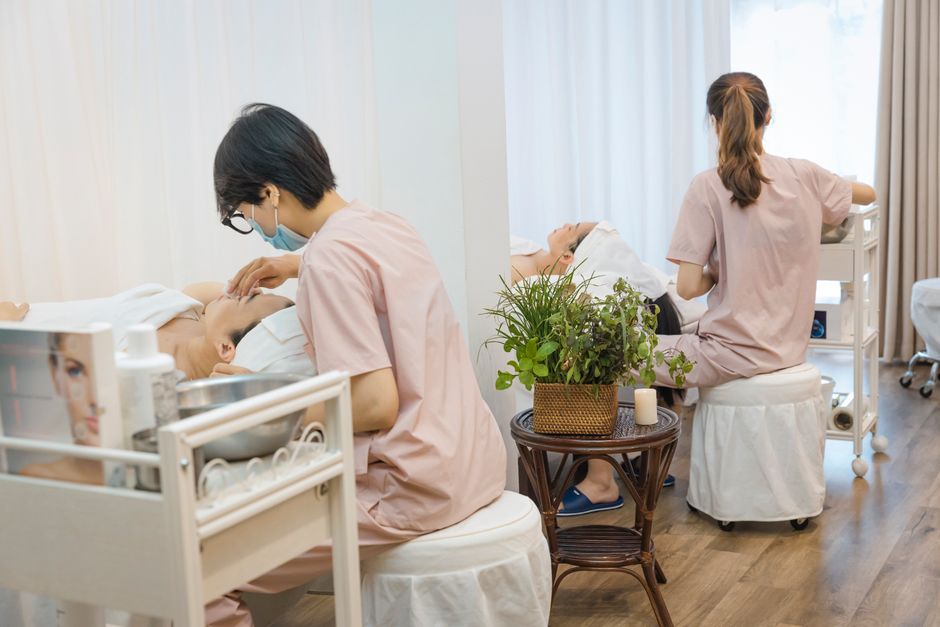
Chemical peels are safe when they match your skin type, your skin’s current condition, and the skill of the person applying them. The same acid that smooths fine lines at the right strength can cause burns, scarring, or lasting color changes at the wrong one. Safety is not a property of the peel itself. It comes from correct assessment, correct depth, and correct aftercare.
That distinction matters because peels are often marketed as simple spa treatments. In reality they are controlled chemical injuries to the skin, and the body’s healing response is what produces the result. Understanding how that works is the best way to judge whether a peel is safe for you.
How Does a Chemical Peel Actually Work?
A chemical peel applies an acid solution that loosens the bonds holding dead and damaged skin cells together. The outer layers lift away, and the skin repairs itself by building new tissue. Depth is everything. A peel that only removes the outermost layer behaves very differently from one that reaches the dermis.
Peels are generally grouped into three depths:
- Superficial: affects only the epidermis. Typically uses alpha-hydroxy acids such as glycolic or lactic acid, or low-strength salicylic acid. Little to no downtime.
- Medium: reaches into the upper dermis. Often uses trichloroacetic acid (TCA) in moderate concentrations. Causes visible peeling and several days of recovery.
- Deep: reaches the deeper dermis, usually with high-concentration TCA or phenol. Significant recovery time and higher risk. Generally reserved for specific cases and performed by physicians.
One clarification worth knowing: the tingling and stinging during a peel is not a sign it is working better. It is a sign the acid is penetrating. More discomfort does not mean a better result. It can mean the opposite.
Are Chemical Peels Safe for All Skin Types?
No. Skin type and skin color change the risk profile substantially, and this is where most problems occur. People with darker skin tones have a higher risk of post-inflammatory hyperpigmentation, where the skin responds to injury by producing excess pigment. That risk exists with any peel but rises with depth and with improper technique.
Other factors that raise risk:
- A recent history of isotretinoin use, which thins the skin and impairs healing
- Active acne with open lesions, or any broken skin in the treatment area
- A history of cold sores, since peels can trigger reactivation
- Recent waxing, laser treatment, or exfoliation
- Keloid scarring tendency
- Pregnancy or breastfeeding, where elective cosmetic peels are generally deferred
For pregnancy and breastfeeding specifically, there are no clinical guidelines establishing the safety of cosmetic chemical peels. Most clinicians simply postpone them. That is a precaution based on caution, not on evidence of harm.
Are At-Home Chemical Peels Safe?
At-home peels carry real risk, and the evidence here is limited because these products are not held to the same standards as clinical procedures. The core problem is that a consumer cannot reliably judge depth. A product labeled “gentle” can still cause a chemical burn if left on too long, applied to damp skin, or layered with other acids.
Over-the-counter peels are typically low-concentration and designed for superficial use. Used exactly as directed on healthy skin, many people tolerate them. But several common mistakes turn a mild product into an injury:
- Leaving it on longer than instructed to get a “better” result
- Combining with retinoids, vitamin C, or other exfoliants in the same routine
- Applying to skin that is already irritated
- Using a higher-strength product than your skin has adapted to
Professional peels are not automatically safer, but the person applying them can assess your skin, choose an appropriate agent, and neutralize it at the right moment. That judgment is the safety margin.
What Are the Real Risks and Side Effects?
Most side effects are temporary and expected. Redness, tightness, dryness, and flaking are part of the normal healing process. Superficial peels usually resolve within a few days. Medium peels can involve a week or more of visible peeling.
The serious risks are less common but well documented:
- Chemical burns from too high a concentration or too long a contact time
- Scarring, particularly with deeper peels or poor aftercare
- Pigment changes, either darkening or lightening, sometimes lasting months
- Infection, including cold sore reactivation
- Cardiac effects with phenol peels, which is why deep phenol peels require medical monitoring
Phenol deserves a specific mention. It is absorbed systemically and has been associated with heart rhythm effects. This is why phenol peels are performed by physicians with monitoring, not in a spa setting. The risk is not theoretical.
How Do You Reduce the Risk of a Chemical Peel?
The single biggest factor is who performs it and whether they assess your skin first. A careful practitioner asks about your history, examines your skin, and starts conservative. Depth can always be increased in a later session. It cannot be undone in the moment.
Practical steps that reduce risk:
- Be honest about retinoid use, recent sun exposure, and past reactions to peels
- Tell the practitioner if you get cold sores, so antiviral prevention can be considered
- Avoid sun exposure and stop exfoliating in the days before a peel
- Follow aftercare instructions exactly, especially sun protection
- Do not pick or peel flaking skin, which can cause scarring
Sun protection after a peel is not optional. Freshly resurfaced skin is more vulnerable to ultraviolet damage, and unprotected sun exposure is a leading cause of the pigmentation problems people blame on the peel itself.
Are Chemical Peels Safe?
For most healthy adults with realistic expectations, superficial and medium peels performed by a qualified professional are considered safe. The evidence supporting their safety in those settings is reasonably consistent. Deep peels carry higher risk and belong in medical hands.
The honest limits: long-term safety data on repeated peels over many years is limited, and results vary widely between individuals. Peels are not appropriate for everyone, and no peel is risk-free. A consultation that screens for contraindications is not a formality. It is the part that keeps the procedure safe.
If you are unsure whether a peel suits your skin, that uncertainty is worth resolving before the appointment, not after.
Frequently Asked Questions
Are chemical peels safe for dark skin?
They can be, but the risk of pigment changes is higher and depends heavily on peel depth and technique. Superficial peels performed by an experienced professional are generally considered lower risk than deeper ones.
Can you do a chemical peel at home safely?
Low-strength at-home peels can be safe when used exactly as directed on healthy skin, but the margin for error is narrow. You cannot reliably judge depth yourself, and misuse can cause burns.
How often is it safe to get a chemical peel?
There is no single safe interval, because it depends on peel depth and how your skin heals. Superficial peels are often spaced weeks apart, while medium and deep peels require longer recovery, so follow the guidance of the clinician performing it.
What should you avoid after a chemical peel?
Avoid sun exposure, picking or peeling flaking skin, and harsh exfoliants or retinoids until the skin has healed. These steps reduce the risk of scarring and pigmentation problems.
