
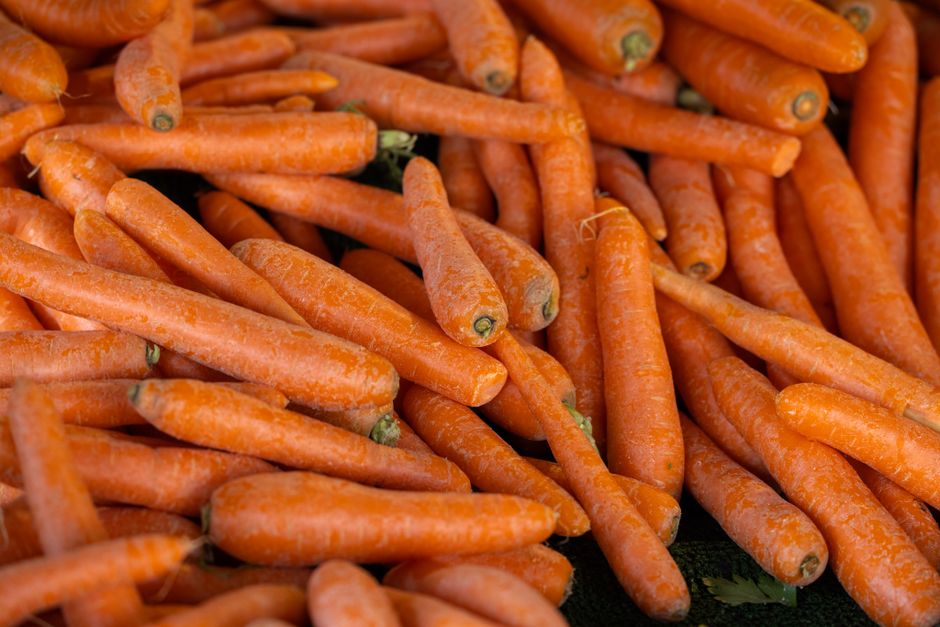
Carrots are low FODMAP. A standard serving of carrots contains only trace amounts of fermentable carbohydrates, which is why carrots appear on the “safe to eat” lists used in the low FODMAP diet for irritable bowel syndrome. That said, “low FODMAP” and “guaranteed to help your IBS” are two different claims. Carrots are unlikely to trigger symptoms. Whether eating them eases your IBS is a separate question with a more complicated answer.
Are Carrots Low FODMAP Facts For IBS Relief?
Yes. Carrots are classified as low FODMAP in the food lists used by dietitians who work with IBS patients. The reason comes down to what FODMAPs actually are.
FODMAP stands for fermentable oligosaccharides, disaccharides, monosaccharides, and polyols. These are short-chain carbohydrates and sugar alcohols that are poorly absorbed in the small intestine. When they reach the large intestine, gut bacteria ferment them. For some people, that fermentation produces gas, bloating, cramping, and changes in bowel habits.
Carrots contain very little of these compounds. They have some fructans, which fall into the oligosaccharide group, but at low levels in a normal serving. The main sugar in carrots is sucrose, which is absorbed normally by most people. That combination is why carrots land on the low FODMAP side of the line.
One practical detail worth knowing: portion size still matters. Most low FODMAP food lists set a threshold serving for each food. A small serving of a low FODMAP vegetable is low FODMAP. A very large serving of the same vegetable can push total FODMAP intake higher. This is not unique to carrots, but it is easy to forget when you are focused on the food itself.
What Makes a Food Low FODMAP in the First Place?
A food is low FODMAP when its content of fermentable short-chain carbohydrates stays below a threshold that most sensitive people tolerate. The threshold is not a single universal number. It depends on the specific FODMAP compound and on the person.
There are five main FODMAP groups:
- Fructans — found in wheat, onions, garlic, and some vegetables
- Galacto-oligosaccharides (GOS) — found in beans, lentils, and some nuts
- Lactose — found in milk and some dairy products
- Fructose — found in honey, apples, and some sweeteners
- Polyols — found in stone fruits, some sugar-free gums, and certain vegetables
Carrots are not a major source of any of these. That is the whole story behind their low FODMAP status. It is not that carrots contain a special ingredient that calms the gut. It is that they contain very little of the compounds that tend to cause trouble.
A common misunderstanding: low FODMAP does not mean “good for IBS.” It means “unlikely to trigger FODMAP-related symptoms.” Those are different statements, and the difference matters.
Does Eating Carrots Actually Relieve IBS Symptoms?
No evidence shows that carrots treat IBS or relieve symptoms directly. What the evidence supports is narrower: carrots are unlikely to make FODMAP-related symptoms worse.
That distinction is important. IBS is a functional disorder. It involves how the gut and brain communicate, how the gut moves, and how sensitive the gut lining is to normal stimuli. Removing trigger foods can reduce symptoms for some people. Adding a specific food usually does not fix the underlying problem.
Carrots do contain fiber, mostly soluble fiber in the form of pectin. Fiber can affect stool consistency and gut transit. For some people with IBS, more fiber helps. For others, especially those with constipation-predominant IBS, certain types of fiber can worsen bloating. The type and amount matter.
So the honest position: carrots are a safe low FODMAP choice. They are not a treatment.
How Do Carrots Compare to Other Common Vegetables?
Not all vegetables sit at the same FODMAP level. Some that seem similar are quite different in how they affect sensitive guts.
| Vegetable | FODMAP Status | Main FODMAP Concern |
|---|---|---|
| Carrots | Low | None at normal servings |
| Zucchini | Low (small servings) | Fructans at larger servings |
| Green beans | Low (small servings) | Fructans at larger servings |
| Onions | High | Fructans |
| Garlic | High | Fructans |
| Cauliflower | High | Mannitol (a polyol) |
| Mushrooms | High | Mannitol |
The pattern is worth noticing. Onions and garlic are high FODMAP because of fructans. Cauliflower and mushrooms are high because of polyols. Carrots avoid both problems at normal serving sizes.
This is also why “eat more vegetables” is not useful advice for someone with IBS without more detail. Some vegetables are fine. Others reliably cause symptoms in sensitive people.
How Should You Eat Carrots on a Low FODMAP Diet?
Carrots can be eaten raw, roasted, steamed, boiled, or added to soups and stews. Cooking does not meaningfully change their FODMAP content, because FODMAPs are water-soluble carbohydrates, not something destroyed by heat.
A few practical points:
- Plain carrots are low FODMAP. Carrots mixed into a dish with onion or garlic are not, because the other ingredients carry the FODMAP load.
- Carrot juice is low FODMAP in small amounts, but juice concentrates the sugars and removes the fiber. It is not the same food as a whole carrot.
- Canned carrots are generally low FODMAP if they are packed in water without added high FODMAP ingredients.
- Carrot cake, carrot muffins, and similar baked goods are usually not low FODMAP because of wheat flour, dried fruit, and sweeteners.
The low FODMAP diet is not meant to be permanent. It is typically used in phases: a restriction phase, a reintroduction phase, and a personalization phase. The goal is to identify which specific FODMAPs trigger your symptoms, not to avoid all of them forever. Long-term restriction can reduce fiber intake and affect the gut microbiome, which is why working with a registered dietitian is often recommended.
What Else Should You Know About Carrots and IBS?
Carrots are not a trigger food for most people with IBS. They are also not a cure. Both things are true at once.
If you have IBS and you are trying to figure out which foods work for you, carrots are a reasonable choice to keep in your rotation. They are inexpensive, widely available, and unlikely to cause FODMAP-related problems.
What they will not do is resolve the underlying condition. IBS management usually involves more than one strategy: dietary changes, stress management, sleep, and sometimes medication. No single vegetable changes that picture.
One more clarification that surprises people: the low FODMAP diet was developed and tested primarily in adults with IBS. Its use in other conditions, and in children, is less well established. If you are managing IBS in a child or during pregnancy, the calculus is different and should involve a clinician.
Frequently Asked Questions
Are carrots low FODMAP?
Yes, carrots are classified as low FODMAP at normal serving sizes. They contain only trace amounts of fermentable carbohydrates, which is why they appear on standard low FODMAP food lists.
Can carrots cause bloating in IBS?
Carrots are unlikely to cause FODMAP-related bloating because their fermentable carbohydrate content is low. If bloating occurs after eating carrots, other ingredients in the meal are a more likely cause.
How many carrots can you eat on a low FODMAP diet?
Most low FODMAP food lists do not set a strict limit on carrots because their FODMAP content is low even at larger servings. Portion guidance varies by source, so check the specific list you are using.
Do cooked carrots have the same FODMAP content as raw?
Cooking does not meaningfully change the FODMAP content of carrots because FODMAPs are water-soluble carbohydrates, not compounds destroyed by heat. Raw and cooked carrots are both low FODMAP.
