
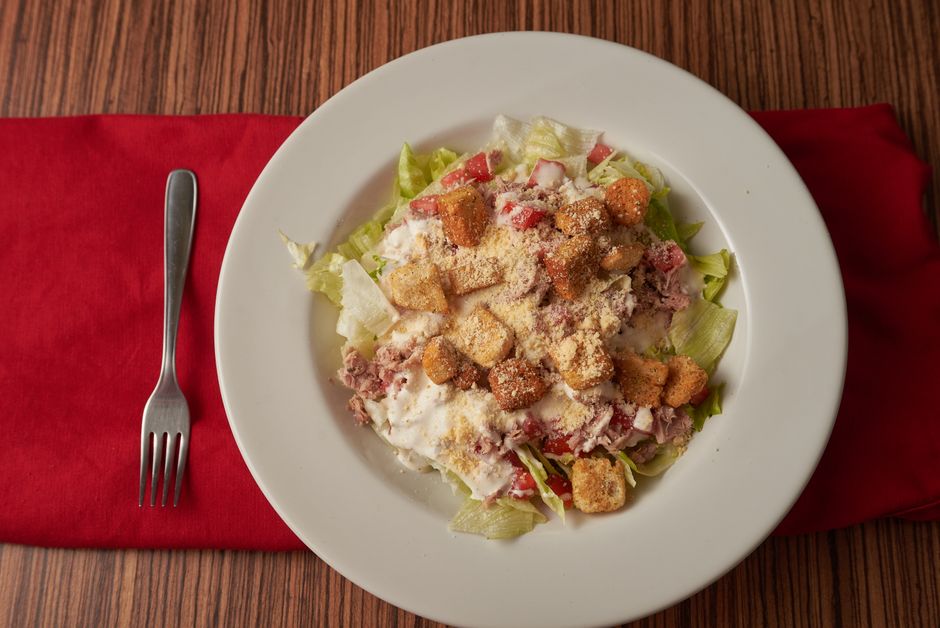
A Caesar salad can be one of the healthiest things on a restaurant menu, or it can carry more calories, sodium, and saturated fat than a fast-food burger and fries. The difference comes down to how it is made. The romaine, Parmesan, and protein are not the problem. The dressing, the croutons, and the portion size usually are.
The classic recipe combines romaine lettuce, Parmesan cheese, croutons, and a dressing built on egg yolk, olive oil, anchovy, lemon, and garlic. Restaurants often add grilled chicken or shrimp. Each of those pieces changes the nutrition math in a meaningful way.
What Is Actually in a Caesar Salad?
The traditional version has four parts, and each one brings something different to the bowl.
- Romaine lettuce — mostly water and fiber, with vitamin A, vitamin K, folate, and some vitamin C
- Parmesan cheese — concentrated protein and calcium, but also a lot of sodium and saturated fat per ounce
- Croutons — refined white bread toasted in oil, with little fiber or micronutrient value
- Dressing — the largest variable, ranging from a light vinaigrette-style version to a thick, mayonnaise-heavy cream
Romaine is a genuinely nutritious green. A few cups deliver a meaningful share of daily vitamin A and vitamin K. That part of the salad is not in question.
The dressing is where things shift. Traditional Caesar dressing is an emulsion of oil, egg yolk, and cheese. Some versions use raw or coddled egg. Commercial versions often replace much of the olive oil with soybean or canola oil and add sugar, modified food starch, and preservatives to extend shelf life.
Are Caesar Salads Healthy? The Answer Depends on the Dressing
A Caesar salad’s nutrition profile swings more widely than almost any other common salad, and the dressing is the reason. Two tablespoons of a creamy restaurant-style Caesar dressing can add roughly 150 to 190 calories and around 300 to 400 milligrams of sodium. Some dressings push higher. A lighter vinaigrette-based version can land under 100 calories for the same volume.
That gap matters because restaurant Caesar salads often arrive with far more than two tablespoons of dressing. A generous pour can double or triple those numbers before you count a single crouton.
There is a useful clarification here that surprises many people. Caesar dressing is not inherently unhealthy because of the egg or the anchovy. Anchovies add protein, omega-3 fatty acids, and a lot of sodium, but the amount used per serving is small. The egg yolk contributes fat and some vitamins. The real driver is total oil volume and added sodium, and those scale with how much dressing lands on the plate.
If you want to judge a specific Caesar salad, the dressing is the first thing to look at, not the lettuce.
How Many Calories Are in a Caesar Salad?
There is no single number, because the range is enormous. A small side salad with a light dressing might land near 100 to 150 calories. A large entrée Caesar with creamy dressing, a heavy hand of Parmesan, and a full cup of croutons can exceed 700 calories before any protein is added.
Adding grilled chicken typically adds around 150 to 200 calories for a standard 4-ounce portion, depending on how it is cooked and whether oil or butter is used. Fried chicken or crispy chicken strips can add considerably more.
Because restaurant recipes vary so much, published calorie counts for “a Caesar salad” are close to meaningless on their own. Chain restaurants in the US are generally required to post calorie information for standard menu items, and that number reflects the specific recipe and portion the kitchen uses. It is the most reliable figure available for that particular salad.





Is Caesar Salad Dressing Bad for You?
Caesar dressing is high in fat and sodium, and that is a fair description rather than a moral judgment. Fat is not the enemy here. The issue is quantity and type.
Olive oil, the traditional base, is mostly monounsaturated fat and is generally considered a heart-healthy fat when it replaces saturated fat in the diet. Many commercial Caesar dressings use blends that include more saturated fat and add sugar. Reading the label is the only way to know which you are getting.
Sodium is the more consistent concern. Creamy Caesar dressings and Parmesan both carry significant sodium, and a large dressed salad can contribute a substantial share of the daily limit. US dietary guidance generally recommends keeping sodium under 2,300 milligrams per day for most adults, and many people exceed that without realizing it.
Raw egg is another consideration in traditional recipes. Commercial dressings are pasteurized, so the risk is negligible. Homemade versions using raw egg carry a small but real risk of Salmonella, which is a greater concern for pregnant women, young children, older adults, and people with weakened immune systems. Coddled or pasteurized eggs reduce that risk.
How Does Caesar Salad Compare to Other Salads?
Compared with a garden salad with a light vinaigrette, a traditional Caesar is usually higher in calories, fat, and sodium. Compared with a salad loaded with candied nuts, dried fruit, and a sweet dressing, it can actually be lower in added sugar.
The comparison that matters most is not salad versus salad. It is what the salad replaces. A Caesar salad with grilled chicken is often a better choice than a fried chicken sandwich, a plate of pasta with cream sauce, or a burger. It is not automatically better than a simple green salad with olive oil and lemon.
How to Make a Caesar Salad Healthier
Small changes move the numbers without ruining the dish.
- Ask for dressing on the side and use about half of what is served
- Choose grilled chicken, shrimp, or salmon instead of fried or crispy toppings
- Skip the croutons or ask for them on the side — they add calories and sodium with little nutritional return
- Request extra romaine and lighter cheese
- At home, try a yogurt-based dressing or a simple olive oil, lemon, and garlic mix
None of these changes make the salad a “health food” in every case. They shift it toward a better balance of vegetables, protein, fat, and sodium, which is the realistic goal.
Who Should Be Careful With Caesar Salad?
People watching their sodium should pay attention to both the dressing and the Parmesan, since the two stack. People managing saturated fat intake may want to check the dressing label, because commercial versions vary widely.
Anyone who is pregnant, immunocompromised, or feeding young children should avoid homemade Caesar dressing made with raw egg unless the egg is pasteurized or cooked. This is standard food safety guidance, not a judgment about the recipe.
People with a fish allergy should know that traditional Caesar dressing contains anchovy. Some people with dairy sensitivity or lactose intolerance tolerate aged Parmesan better than fresh cheeses because it is low in lactose, but individual tolerance varies.
For most healthy adults, a Caesar salad is neither a problem nor a cure. It is a vehicle for vegetables and protein that happens to come with a heavy dressing. How you handle that dressing is most of the story.
Frequently Asked Questions
Are Caesar salads healthy or unhealthy?
They can be either, depending mainly on the dressing and portion size. A Caesar with grilled chicken and light dressing is a reasonable meal, while a large one with creamy dressing and croutons can exceed 700 calories.
How many calories are in a Caesar salad?
There is no single figure because recipes vary so much. A small side salad may be around 100 to 150 calories, while a large entrée version with creamy dressing and croutons can top 700 before adding protein.
Is Caesar dressing bad for you?
It is high in fat and sodium, but fat itself is not inherently harmful. The bigger concerns are total oil volume, sodium content, and whether the recipe uses raw egg.
Can I eat Caesar salad on a diet?
Yes, with adjustments. Asking for dressing on the side, choosing grilled protein, and skipping croutons lowers calories and sodium while keeping the vegetables and protein.
