
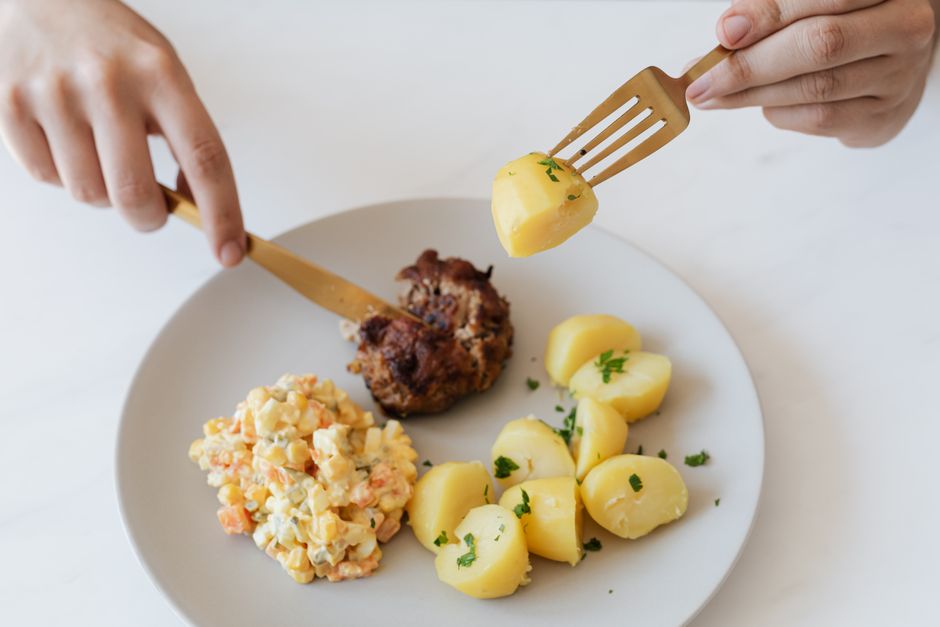
Boiled potatoes are one of the gentlest foods you can eat when your stomach is upset. They are bland, soft, low in fat, and easy to digest. That combination makes them a common choice during short bouts of nausea, diarrhea, or general stomach discomfort.
But “gentle” is not the same as “treatment.” Boiled potatoes can be a comfortable food to eat while your stomach settles. They do not fix the cause of the problem. And in some situations, they are not the right choice at all.
Why Are Boiled Potatoes Easy on an Upset Stomach?
Boiled potatoes are mostly water and starch. That simple makeup is exactly why they tend to sit well when digestion is off.
Starch is a carbohydrate the body breaks down gradually. Cooked potato starch is soft and easy for digestive enzymes to reach. Boiling also breaks down the potato’s cell walls, so your gut has less mechanical work to do. Fat slows stomach emptying and can worsen nausea for some people. Boiled potatoes contain almost no fat. That matters when you feel queasy.
Potatoes also have very little fiber compared to many other vegetables, especially without the skin. Fiber is generally good for you, but a large fiber load can be uncomfortable during an acute stomach upset. A plain boiled potato is low in the compounds that tend to irritate a sensitive gut.
One clarification worth making: a boiled potato is not the same as a fried potato, a potato chip, or a potato loaded with butter and cheese. Those add fat and can make nausea and indigestion worse. The plain boiled version is the one that tends to be well tolerated.
What Does the BRAT Diet Have to Do With Potatoes?
You may have heard of the BRAT diet: bananas, rice, applesauce, and toast. These are all bland, low-fiber, easy-to-digest foods. Boiled potatoes fit the same general idea, even though they are not in the acronym.
The BRAT diet was once routinely recommended for diarrhea and stomach upset. Guidance has shifted over the years. Most clinicians no longer suggest staying on such a limited diet for long, because it lacks protein and other nutrients. Current thinking generally favors resuming a normal, balanced diet as soon as you can tolerate it.
That does not mean bland foods have no role. During the worst of an upset stomach, when you are not ready for a full meal, a plain boiled potato can be a reasonable bridge food. It gives you some energy without asking much of your gut. The key word is bridge. It is a short-term comfort food, not a long-term eating plan.
Are Boiled Potatoes Good for Nausea and Vomiting?
Bland, starchy foods are often better tolerated than rich or spicy foods when you feel nauseated. Boiled potatoes fit that description. Many people find they can keep them down when heavier foods feel impossible.
There is a limit to what any single food can do here. If you are actively vomiting, the priority is fluids and electrolytes, not solid food. Dehydration is the main concern with vomiting and diarrhea, especially in young children and older adults. Trying to eat a potato while you are still vomiting frequently is unlikely to help and may come back up.
Once vomiting has settled and you feel hungry again, starting with something bland like a boiled potato is a reasonable step. If a food makes nausea worse, stop and try again later. Your body’s tolerance is a better guide than any general rule.
When Should You Not Eat Boiled Potatoes?
Boiled potatoes are not the right choice for everyone with stomach trouble. There are several situations where they can do more harm than good.
- If you have kidney disease. Potatoes are high in potassium. People with advanced kidney disease often need to limit potassium, and a doctor or dietitian should guide that decision.
- If you have diabetes and monitor blood sugar. Potatoes are a starchy carbohydrate and can raise blood sugar. Boiling does not remove that effect. Portion and preparation matter.
- If potatoes make your symptoms worse. Some people with irritable bowel syndrome or other gut conditions react to certain carbohydrates in foods. If a potato reliably triggers bloating or pain, it is not helping you.
- If a potato has sprouted or turned green. Green skin and sprouts can contain higher levels of a natural toxin called solanine. Do not eat those parts. This is a food safety issue, not a stomach-upset issue.
None of these are reasons to fear potatoes in general. They are reasons to match the food to the person.
How Should You Prepare Potatoes for a Sensitive Stomach?
How you prepare the potato matters as much as the potato itself. The goal is to keep it simple.
Peel the potato and boil it in water until soft. Skip butter, cream, cheese, and heavy sauces. A small amount of salt is usually fine. Some people do better with the skin removed, since the skin carries more fiber. Others tolerate it without issue.
Mashing is fine if you mash with a little of the cooking water or a small amount of a low-fat liquid rather than a lot of butter or milk. If dairy tends to bother your stomach, keep it out.
Avoid frying, roasting in oil, or adding rich toppings during an upset stomach. Those changes add fat and can undo the reason the potato was gentle in the first place.
What Else Helps an Upset Stomach Besides Potatoes?
No single food resolves an upset stomach. What helps most depends on what is causing it.
For short-term nausea or diarrhea, the basics tend to matter more than any specific food. Drink fluids to replace what you are losing. Plain water helps, but if you are losing a lot through diarrhea or vomiting, an oral rehydration solution replaces salts and sugar more effectively than water alone. Eat small amounts when you feel able. Rest.
Other bland foods can serve the same role as a boiled potato. Plain crackers, toast, rice, and bananas are common options. The best choice is usually whatever you can tolerate without making symptoms worse.
If your stomach upset lasts more than a couple of days, comes with a high fever, severe pain, blood in your stool or vomit, or signs of dehydration, that is a reason to see a doctor rather than adjust your diet. Those signs point to something that food choices will not fix.
Do Boiled Potatoes Actually Treat a Stomach Problem?
No. Boiled potatoes do not treat the underlying cause of an upset stomach. They are a food that is often well tolerated, which is a different thing from a treatment.
This distinction matters. If your upset stomach is caused by a viral infection, a food intolerance, a medication, or something more serious, a potato does not change any of that. It may simply be easier to eat than other foods while your body handles the cause.
There is also no strong body of clinical research showing that boiled potatoes speed recovery from stomach upset. The reasoning behind using them rests on their physical and nutritional properties, which are well understood, not on trials proving they cure anything. That is an honest limit worth stating.
So the practical answer is this: boiled potatoes are a sensible, gentle food to eat when your stomach is upset and you feel ready to eat something. They are not medicine. They will not fix a problem that needs medical care. And they are not right for everyone.
Frequently Asked Questions
Are boiled potatoes good for an upset stomach?
Yes, they are often well tolerated because they are bland, soft, low in fat, and easy to digest. They can be a comfortable food to eat while your stomach settles, but they do not treat the cause of the upset.
Can boiled potatoes help with nausea?
Bland, starchy foods like boiled potatoes are often easier to keep down than rich or spicy foods when you feel nauseated. If you are actively vomiting, fluids and electrolytes matter more than solid food.
Should you eat boiled potatoes with the skin on or off?
The skin carries more fiber, so peeling the potato may be easier on a sensitive stomach. Either way, keep the preparation plain and skip butter, cream, and heavy sauces.
When should you see a doctor for an upset stomach?
See a doctor if symptoms last more than a couple of days or come with a high fever, severe pain, blood in your stool or vomit, or signs of dehydration. Those signs point to something diet changes will not fix.
