
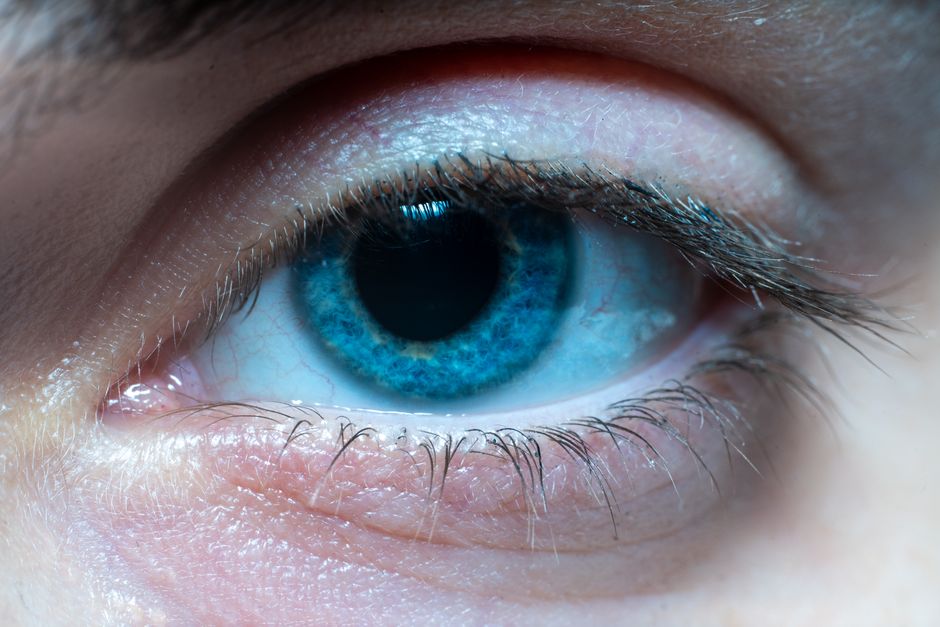
If you have blue eyes, you might feel like sunlight hits you harder than it does other people. You are not imagining things. The short answer is yes — blue eyes are more sensitive to light. This is not a myth or a marketing trick. It comes down to the biology of how your eyes are built. Research shows that people with lighter colored irises tend to experience more discomfort in bright conditions. The reason lies in the amount of pigment, or melanin, inside the eye. Less pigment means less natural protection against sunlight and glare.
What Makes Blue Eyes Different From Brown Eyes?
The color of your eyes comes from the iris, which is the colored part around your pupil. Brown eyes have a lot of melanin pigment. Blue eyes have very little. In fact, blue eyes contain almost no melanin at all. The blue color you see is actually an optical effect. Light scatters off the back of the iris, much like the sky looks blue for the same reason.
This lack of pigment matters for light sensitivity. Melanin absorbs light. It acts like a natural pair of sunglasses inside your eye. With less melanin, more light passes through the iris and reaches the retina. The retina is the light-sensitive tissue at the back of your eye. More light hitting the retina means more stimulation. For some people, this causes discomfort, squinting, or even pain in bright environments.
According to the American Academy of Ophthalmology, people with lighter eye colors may be more sensitive to bright light. This is not a hard rule for every person, but the biological mechanism is well understood. Less pigment equals less protection. It is that simple.
Does Light Sensitivity Affect All Blue-Eyed People Equally?
No. Light sensitivity, or photophobia, varies from person to person. Some blue-eyed individuals have no trouble in bright sunlight. Others find it difficult to be outside without sunglasses even on cloudy days. The amount of melanin in your iris is only one factor.
Other things play a role too. Your overall eye health matters. People with dry eyes, migraines, or certain medications can be more sensitive to light regardless of eye color. Age also changes how your eyes handle light. As you get older, the lens inside your eye can become cloudier, which scatters light more and increases sensitivity.
One non-obvious point worth noting is that eye color is not a fixed number. There is a spectrum. Some blue eyes have a tiny bit more pigment than others. Hazel and green eyes fall somewhere in between blue and brown. So even within people who say they have blue eyes, there is real variation in melanin levels. This explains why some blue-eyed people report severe light sensitivity while others barely notice it.
What Does Research on Are Blue Eyes More Sensitive To Light Show?
Several studies have looked at the connection between eye color and light sensitivity. A 2014 study published in the journal Cephalalgia found that people with lighter colored eyes reported more sensitivity to light during migraine attacks. The researchers measured pupil responses and found that lighter irises let more light through to the retina.
Another study from the University of Louisville examined how eye color affects tolerance to bright light. Participants with blue eyes reported greater discomfort from glare compared to those with brown eyes. The study also found that blue-eyed participants took longer to recover their vision after being exposed to a bright flash.
The National Eye Institute, part of the National Institutes of Health, explains that melanin in the iris and the retinal pigment epithelium helps absorb excess light. Less melanin means more light reaches the photoreceptor cells. This can lead to a stronger visual response, which for some people feels uncomfortable.
It is important to be honest about the limits of this research. Most studies are small. Light sensitivity is subjective — what bothers one person may not bother another. But the pattern across multiple studies is consistent. Blue eyes are linked to higher light sensitivity on average.




Are Blue Eyes More Sensitive To Light Than Green or Hazel Eyes?
Green and hazel eyes contain more melanin than blue eyes but less than brown eyes. So they fall in the middle. People with green or hazel eyes may experience some light sensitivity, but typically less than someone with true blue eyes.
Here is a simple comparison of how eye color relates to melanin levels and typical light sensitivity:
| Eye Color | Melanin Level | Typical Light Sensitivity |
|---|---|---|
| Blue | Very low | Highest |
| Green | Low to moderate | Moderate |
| Hazel | Moderate | Moderate |
| Brown | High | Lowest |
This table is a general guide. Individual variation exists within each group. But the trend is clear. More melanin means more built-in protection from bright light.
What Can You Do If You Have Light Sensitivity?
If bright light bothers you, there are practical steps that can help. The most obvious one is wearing sunglasses. But not all sunglasses are the same. Look for ones that block 99 to 100 percent of both UVA and UVB rays. Polarized lenses are especially helpful because they cut down on glare from flat surfaces like roads, water, and snow.
You might also consider photochromic lenses. These are lenses that darken automatically when you go outside. They adjust to changing light conditions, which can be more comfortable than switching between regular glasses and sunglasses.
Some people find that wearing a wide-brimmed hat or a cap with a visor helps reduce the amount of light entering the eyes from above. This is a simple, low-cost option that works well alongside sunglasses.
Indoor light sensitivity can be managed too. Use dimmer switches to lower overhead lighting. Position your computer screen so it does not face a window. Many devices now have a blue light filter setting that reduces harshness. While the evidence for blue light glasses is mixed, reducing screen brightness itself is helpful.
If light sensitivity is severe or comes on suddenly, see an eye doctor. It could be a sign of something else, like inflammation inside the eye, a corneal abrasion, or a neurological condition. Do not assume it is just your eye color if the problem is new or getting worse.
Common Misconceptions About Blue Eyes and Light Sensitivity
There is a lot of misinformation online about this topic. One common claim is that blue eyes are always more sensitive to light. That is not true. Eye color is one factor among many. Some blue-eyed people have no issues with bright light at all. Others with brown eyes can be very sensitive due to migraines, medication side effects, or eye conditions.
Another myth is that light sensitivity means your eyes are damaged or unhealthy. Most of the time, it is just a normal variation in how your eyes are built. It does not mean you have a disease or that your vision is worse.
Some people claim that wearing sunglasses all the time makes your eyes more sensitive. There is no strong evidence for this. Your eyes can adapt to different light levels, but wearing sunglasses when needed does not cause permanent harm. The bigger risk is not protecting your eyes from UV damage over a lifetime.
A final misconception is that blue eyes are a recent genetic mutation that happened only a few thousand years ago. That part is actually true — blue eyes likely originated from a single common ancestor around 6,000 to 10,000 years ago. But that does not make them weaker or more fragile. They are simply different. And with that difference comes a slightly higher need for light protection.
What to Avoid When Managing Light Sensitivity
Some products and advice are not worth your time. Avoid cheap sunglasses that claim to block UV but do not have a label confirming it. Your pupils dilate behind dark lenses. If the lenses do not block UV, more harmful radiation enters your eye than if you wore no sunglasses at all.
Be skeptical of supplements that claim to cure light sensitivity. As of 2026, there is no clinical evidence that any vitamin or herbal product eliminates photophobia. Some nutrients like lutein and zeaxanthin support overall eye health, but they do not change how your iris handles light.
Do not assume that tinted glasses for night driving are safe. Very dark lenses reduce visibility in low light and can be dangerous. If you struggle with oncoming headlights, ask your eye doctor about anti-reflective coatings instead.
Also, avoid wearing sunglasses indoors for extended periods unless your doctor recommends it. Your eyes need exposure to natural light cycles to regulate your sleep-wake rhythm. Overusing dark lenses indoors can disrupt that.
Frequently Asked Questions
Are blue eyes more sensitive to light than brown eyes?
Yes, on average. Blue eyes have less melanin pigment, which means more light reaches the retina. This can cause greater discomfort in bright conditions.
Can light sensitivity be a sign of something serious?
Sometimes. If light sensitivity is sudden, severe, or comes with eye pain, headache, or vision changes, see an eye doctor. It could indicate an infection, inflammation, or a neurological issue.
Do blue-eyed people need special sunglasses?
Not special, but good ones. Look for sunglasses that block 99 to 100 percent of UVA and UVB rays. Polarized lenses help reduce glare and are especially useful for people with light sensitivity.
Does eye color change over time and affect sensitivity?
Eye color can shift slightly in the first year of life but is generally stable after that. Sensitivity can change with age due to other factors like cataracts or dry eye, not because the iris pigment changes.
