
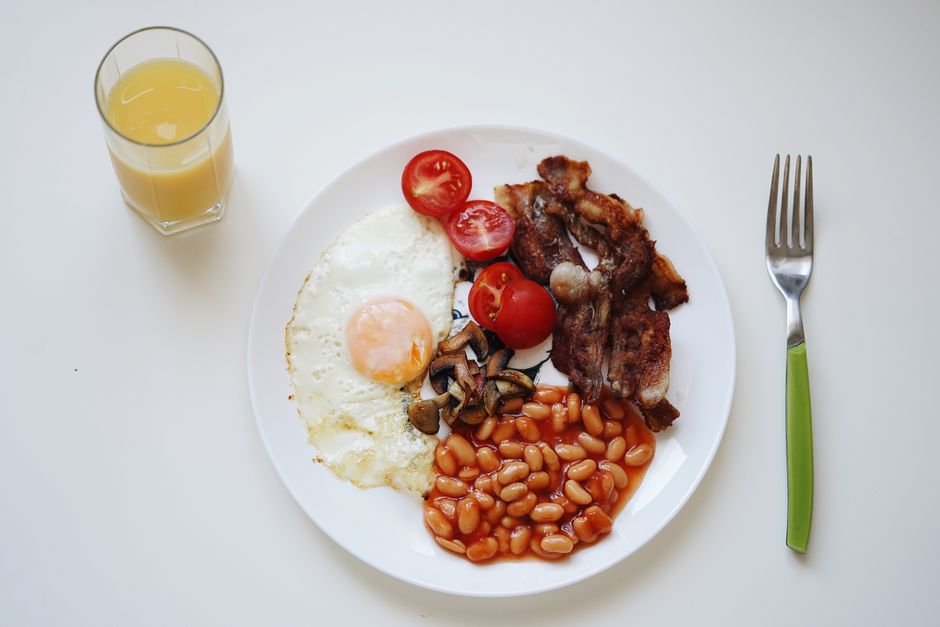
Baked beans are a pantry staple for millions of Americans, but their reputation is mixed. Some call them a healthy source of fiber and protein. Others warn they are loaded with sugar and salt. The short answer is that plain baked beans can be a nutritious food, but most canned versions come with trade-offs. Whether they are good for you depends entirely on which brand you buy and how you eat them.
What Is Actually in Baked Beans?
A standard serving of canned baked beans — about half a cup — contains roughly 120 to 160 calories. The main ingredients are navy beans, tomato sauce, sugar or corn syrup, and salt. Some brands add pork, molasses, or modified corn starch for texture.
The beans themselves are the real nutritional asset. Navy beans are a type of white bean rich in soluble fiber, plant protein, and several minerals. A half-cup serving provides about 6 grams of fiber and 6 grams of protein. That is more fiber than a slice of whole wheat bread and about the same protein as an egg.
But the sauce is where things get complicated. Most commercial baked beans add sugar or high-fructose corn syrup. A single half-cup serving from a leading brand contains around 12 grams of added sugar — that is three teaspoons. The American Heart Association recommends women limit added sugar to 25 grams per day and men to 36 grams. One serving of sweetened baked beans uses up nearly half that allowance for women.
Sodium is another concern. Many canned baked beans contain 400 to 600 milligrams of sodium per half-cup. The CDC reports that the average American consumes about 3,400 milligrams of sodium daily, well above the recommended limit of 2,300 milligrams. If you eat a full cup of baked beans, you could be getting half your daily sodium in one sitting.
Are Baked Beans Good For U Compared to Other Protein Sources?
Compared to processed meats like bacon or sausage, baked beans are clearly the better option. They provide fiber and plant protein without the saturated fat and nitrates found in cured meats. Research published in the journal Nutrients found that replacing red and processed meat with legumes like beans is linked to lower risk of heart disease and type 2 diabetes.
Compared to other plant proteins like lentils or chickpeas, baked beans are less straightforward. Lentils and chickpeas contain no added sugar and very little sodium when cooked from dry. A half-cup of cooked lentils has about 8 grams of fiber and less than 5 milligrams of sodium. Baked beans have similar fiber but far more sodium and sugar.
If you compare baked beans to animal proteins like chicken breast or eggs, the difference is in what you get alongside the protein. Chicken breast has no fiber and no sugar. Baked beans give you fiber and complex carbohydrates but also the added sugar and salt. Neither is inherently better — they serve different nutritional roles in a meal.
What Does the Research Say About Baked Beans and Health?
Several studies have looked at bean consumption broadly, not baked beans specifically. A 2019 analysis in the journal Advances in Nutrition found that people who eat beans regularly have higher intakes of fiber, potassium, magnesium, and iron. They also tend to have lower body weight and smaller waist circumference compared to non-bean eaters.
The soluble fiber in navy beans is well studied. Soluble fiber dissolves in water and forms a gel-like substance in your digestive tract. This slows digestion and helps lower LDL cholesterol — the type linked to heart disease. The FDA states that eating at least 5 to 10 grams of soluble fiber per day as part of a low-fat diet can reduce cholesterol levels. A half-cup of baked beans provides about 2 to 3 grams of soluble fiber.
Beans also have a low glycemic index, meaning they do not spike blood sugar as much as refined carbohydrates. A study in the American Journal of Clinical Nutrition found that adding beans to a high-carb meal reduced the post-meal blood sugar rise by nearly 30 percent. This effect holds for baked beans as long as the added sugar is not excessive.
No major studies have specifically tested whether canned baked beans cause harm. The evidence is indirect. The concern is that regularly eating foods high in added sugar and sodium — even if they contain healthy ingredients — can contribute to high blood pressure, weight gain, and insulin resistance over time.



How to Choose a Healthier Can of Baked Beans
Not all baked beans are the same. Reading the nutrition label is the only way to know what you are getting. Here is what to look for:
- Added sugar under 6 grams per serving. Some brands now offer “reduced sugar” versions with 4 to 6 grams. That is roughly one teaspoon instead of three.
- Sodium under 350 milligrams per serving. This keeps a half-cup serving within reasonable limits. Some brands go as high as 600 milligrams.
- Fiber at least 5 grams per serving. Navy beans naturally provide this. If a brand has less, it likely means fewer beans and more sauce.
- No high-fructose corn syrup. This is not necessarily worse than regular sugar, but it signals a more processed product. Many better brands use molasses or cane sugar instead.
Several national brands now sell lower-sugar versions. Bush’s Best offers a “Reduced Sugar” variety with 5 grams of sugar per serving. Heinz makes a “No Added Sugar” version. Store brands like those from Whole Foods or Trader Joe’s often have simpler ingredient lists with less sugar and salt.
You can also make baked beans from scratch. Dried navy beans cost about a dollar per pound and require only water, salt, and a little time in a slow cooker. Homemade versions let you control every ingredient. If you want the sweetness without the sugar, add a small amount of unsweetened applesauce or a pinch of cinnamon instead.
Table: Nutritional Comparison of Common Baked Bean Brands (Per Half-Cup)
| Brand | Calories | Fiber (g) | Protein (g) | Sugar (g) | Sodium (mg) |
|---|---|---|---|---|---|
| Bush’s Original | 140 | 6 | 6 | 12 | 480 |
| Bush’s Reduced Sugar | 130 | 6 | 6 | 5 | 450 |
| Heinz Original | 160 | 5 | 6 | 12 | 550 |
| Heinz No Added Sugar | 120 | 6 | 6 | 1 | 520 |
| Trader Joe’s Organic | 130 | 6 | 7 | 6 | 290 |
This table shows that sugar content varies more than any other nutrient. Fiber and protein stay fairly consistent across brands because the beans themselves provide them. Sodium is also variable. Trader Joe’s version stands out for having the lowest sodium and moderate sugar. Heinz No Added Sugar has the least sugar but still high sodium.
What Are the Downsides of Eating Baked Beans Often?
Eating baked beans every day can lead to two main issues: excess sodium and excess sugar. The Dietary Guidelines for Americans recommend keeping added sugar below 10 percent of daily calories. For someone eating 2,000 calories a day, that is 50 grams maximum. One serving of sweetened baked beans provides nearly a quarter of that. If you eat two servings — a full cup — you are close to half your daily limit.
Sodium adds up fast with beans. A half-cup of standard baked beans contains roughly the same sodium as a small order of fast-food french fries. If your diet already includes bread, cheese, deli meat, or restaurant food, adding canned beans daily could push your sodium intake well over the recommended limit. High sodium intake over time raises blood pressure and increases the risk of stroke and heart attack.
Some people also experience digestive discomfort from beans. Navy beans contain oligosaccharides — complex sugars that humans cannot fully digest. When these sugars reach the large intestine, gut bacteria ferment them and produce gas. This is normal and harmless, but it can cause bloating or discomfort in people not used to eating high-fiber foods. Cooking beans thoroughly and rinsing canned beans before eating can reduce this effect.
One more thing: the “pork” in pork and beans is often minimal and high in fat. Most brands use a small amount of rendered bacon fat or salt pork for flavor. This adds saturated fat without meaningful protein. If you are watching saturated fat intake, check the label. Some vegetarian versions actually have a better fat profile.
Common Misconceptions About Baked Beans
Some people believe baked beans are a complete protein. They are not. Beans are low in the amino acid methionine, which is needed for protein synthesis. They pair well with grains like rice or whole wheat bread, which provide the missing amino acids. A baked bean sandwich on whole wheat bread is a complete protein. Baked beans alone are not.
Another myth is that all canned baked beans are highly processed and unhealthy. This is not accurate. The beans themselves are minimally processed — they are simply cooked navy beans. The processing comes from the sauce ingredients. Some brands use clean ingredient lists with nothing beyond beans, water, tomato paste, salt, and a small amount of sweetener. The key is reading labels rather than assuming all cans are the same.
Some people also think rinsing baked beans removes the sauce and therefore the nutrients. Rinsing does remove some sodium and sugar, but it also removes water-soluble vitamins like folate and thiamine that are naturally present in the beans. If you are rinsing to cut sodium, you are also losing some B vitamins. A better approach is to choose a lower-sodium brand from the start.
Frequently Asked Questions
Are baked beans good for weight loss?
Baked beans can support weight loss because they are high in fiber and protein, which help you feel full longer. But choose reduced-sugar versions to avoid extra calories from added sugar.
Can diabetics eat baked beans?
Yes, baked beans have a low glycemic index and the fiber helps slow blood sugar spikes. However, diabetics should choose brands with less than 6 grams of sugar per serving to keep blood sugar stable.
Are canned baked beans already cooked?
Yes, canned baked beans are fully cooked and ready to eat. You can heat them or eat them cold straight from the can, though heating improves the flavor.
Do baked beans count as a vegetable serving?
Beans count as both a protein and a vegetable in dietary guidelines, but they do not replace green vegetables. The USDA considers beans part of the “protein foods” group and the “vegetable” group, but they should not be your only vegetable.
