
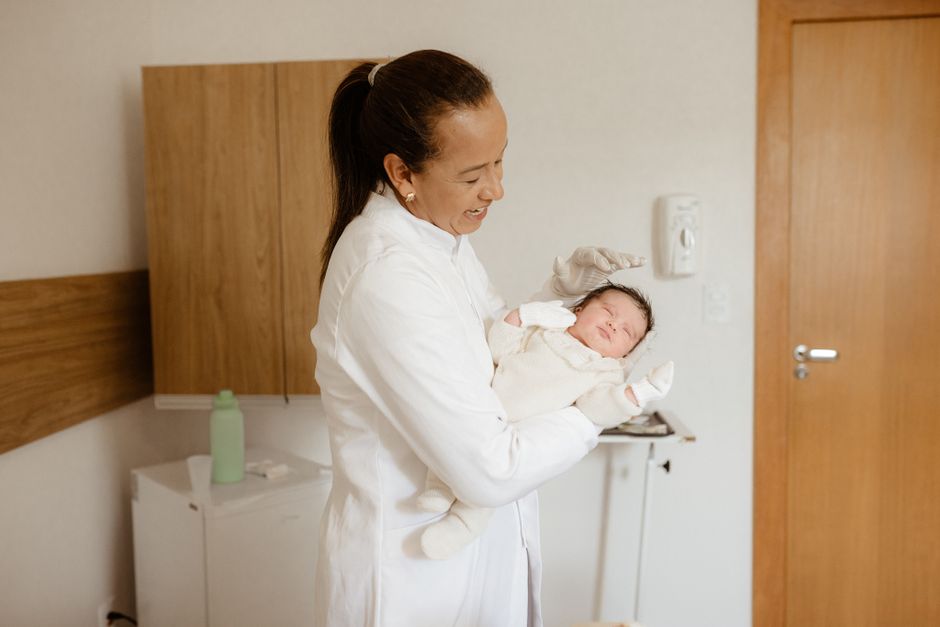
Yes, most babies are born with hair. Some arrive with a full head of it, others with a thin fuzz, and a small number are born completely bald. All of these are normal. Whether a newborn has a lot of hair or almost none says nothing about their health, and it does not predict what their hair will look like later in childhood.
The hair a baby is born with is called lanugo while it is still developing in the womb, and it is usually shed before birth. What you see on a newborn’s head is different — it is the beginning of the hair they will keep growing throughout life.
Are Babies Born With Hair?
Most newborns have some hair on their heads at birth, though the amount varies widely from baby to baby.
Hair begins forming on a fetus around the fifth month of pregnancy. By the time a baby is born, they typically have a layer of fine hair on their scalp. Some babies have thick, dark hair. Others have a light, barely visible fuzz. A few are born with no visible scalp hair at all, and that is still within the range of normal.
The amount of hair at birth is not a sign of anything wrong. It does not reflect nutrition during pregnancy, and it is not a marker of future health. It is largely a matter of genetics and individual variation.
What Is Lanugo and Does It Stay?
Lanugo is a fine, soft hair that covers a fetus in the womb. It is not the same as the hair a baby is born with on their scalp.
Lanugo typically develops around the fifth month of pregnancy and covers much of the fetal body. Its purpose is thought to help insulate the skin and help the sticky substance called vernix cling to the skin. In most pregnancies, lanugo is largely shed before birth, usually in the final weeks. A baby born early may still have visible lanugo on their shoulders, back, or face because they did not have time to shed it in the womb.
If a full-term baby has some lanugo left, it usually falls out on its own within the first few weeks after birth. It does not need to be treated or removed.
Why Do Some Babies Have More Hair Than Others?
The main reason one newborn has a thick head of hair and another has almost none comes down to genetics and timing, not anything the parents did or did not do during pregnancy.
Several factors play a role:
- Genetics. Hair traits tend to run in families. If both parents were born with a lot of hair, their baby is more likely to be too.
- Gestational age. Babies born closer to their due date have had more time for hair to grow and for lanugo to shed. Premature babies often have less scalp hair and more leftover lanugo.
- Individual variation. Even siblings can be born with very different amounts of hair. This is normal.
Race and ethnicity can also influence hair texture and how much hair is visible at birth, but the range within any group is wide.





Will My Baby Lose Their Hair After Birth?
Many babies lose some or all of their birth hair in the first few months. This is normal and temporary.
Newborn hair loss happens for a few reasons. Hormones passed from the mother during pregnancy can affect the baby’s hair growth cycle. After birth, as those hormone levels drop, some hair enters a resting phase and falls out. This is similar to the hair shedding many women experience after giving birth.
Babies also spend a lot of time lying on their backs, which can rub hair off the back of the head. This creates a bald patch that can look alarming to parents but is harmless. It fills back in as the baby becomes more mobile and spends less time in one position.
New hair usually starts growing in within a few months. The color and texture of the new hair can be different from the birth hair. A baby born with dark hair may grow in lighter hair, or the reverse. This is common and not a cause for concern.
When Does a Baby’s Hair Texture and Color Become Permanent?
A baby’s final hair color and texture are not set at birth. They often change over the first few years of life.
Many children are born with one hair color and end up with another. Light-haired babies sometimes darken as they grow. Curly hair can become straighter, or straight hair can become curly. These changes happen because hair follicles mature over time and because the genes that control hair traits express themselves gradually.
For most children, hair color and texture are largely settled by around age two to three, though some changes can continue into early childhood. There is no reliable way to predict a baby’s adult hair from what they are born with.
Does Hair at Birth Mean Anything About Health?
The amount of hair a baby is born with is not a reliable indicator of health. It is a normal variation, not a medical sign.
That said, there are a few situations where hair patterns can be part of a broader clinical picture. For example, unusually thick hair covering the lower back, sometimes with a dimple or patch of darker skin, can occasionally be associated with certain spinal conditions. This is uncommon, and doctors check for it during newborn exams. If you notice a distinct patch of hair on your baby’s lower back, mention it to your pediatrician. Most of the time it is harmless, but it is worth a look.
In general, a baby’s overall health is assessed through weight, feeding, breathing, muscle tone, and other factors, not by how much hair they have.
Should You Do Anything to Care for a Newborn’s Hair?
Newborn hair needs very little care. It is delicate and does not require special products.
Washing with a mild baby shampoo a few times a week is enough. Daily washing is not necessary and can dry out the scalp. Use a soft brush or comb if needed, and be gentle. Avoid tight hairstyles, harsh chemicals, and heavy products.
Some parents notice cradle cap, which looks like scaly or crusty patches on the scalp. It is common and not caused by poor hygiene. It usually clears up on its own, though gentle washing and soft brushing can help. If it looks severe or does not improve, ask your pediatrician about it.
Frequently Asked Questions
Are all babies born with hair?
No, not all babies are born with hair. Most have some, but a small number are born completely bald, and both are normal.
Why are some babies born with a full head of hair?
It comes down mostly to genetics and how close the baby was to their due date. Babies born later in pregnancy have had more time for scalp hair to grow.
Do babies lose their birth hair?
Many babies lose some or all of their birth hair in the first few months. This is normal and new hair usually grows back within a few months.
Can a baby’s hair color change after birth?
Yes, a baby’s hair color and texture often change over the first few years. Many children end up with hair that looks different from what they were born with.
