
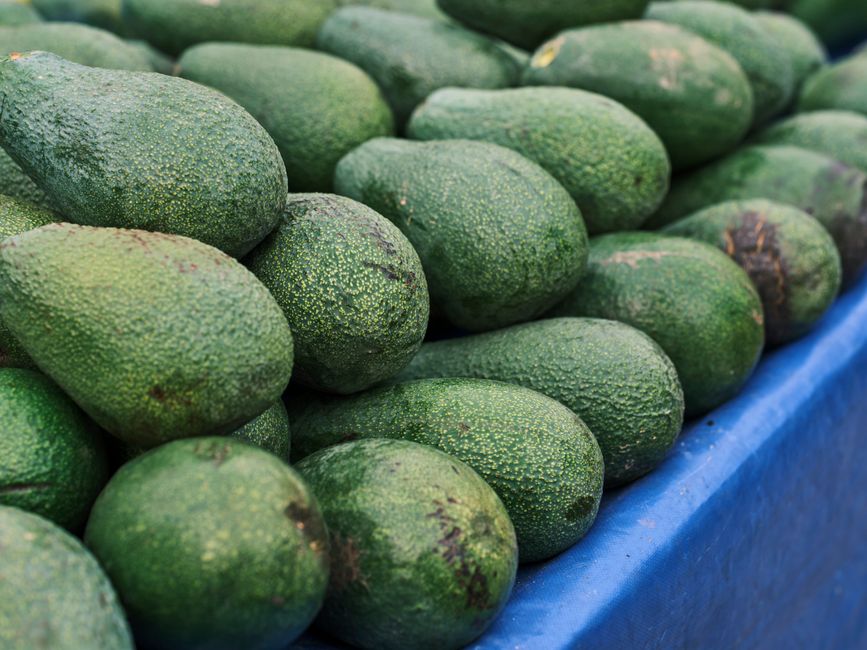
An avocado pear is not fattening on its own. What determines whether it adds to weight gain is how many you eat, what you eat them with, and what they replace in your diet. An avocado is an energy-dense fruit — roughly 240 calories in a medium one — but calorie density and weight gain are not the same thing.
The confusion comes from a real fact: avocados are high in fat. About 77% of their calories come from fat. That sounds like a problem until you look at what kind of fat it is and how the body handles it. Fat is the most calorie-dense macronutrient at 9 calories per gram, compared with 4 calories per gram for both protein and carbohydrates. So a food that is mostly fat will carry more calories per bite. That is arithmetic, not a verdict on your waistline.
How Many Calories Are in an Avocado Pear?
A whole medium avocado contains around 240 calories, about 22 grams of fat, 3 grams of protein, and roughly 10 grams of fiber. The exact numbers shift with size, variety, and ripeness, but that range is reliable across most nutrition databases.
Here is the part that trips people up. A “medium” avocado in nutrition data is not the same as the large, glossy Hass avocados sold in most US supermarkets. Many of those weigh 200 grams or more and can run 300 to 350 calories. If you are tracking intake, weighing once is more useful than guessing.
For comparison, here is how a medium avocado stacks up against a few common foods:
| Food | Calories | Fat | Fiber |
|---|---|---|---|
| 1 medium avocado | ~240 | ~22 g | ~10 g |
| 1 medium banana | ~105 | ~0.4 g | ~3 g |
| 1 tablespoon olive oil | ~120 | ~14 g | 0 g |
| 1 ounce almonds | ~165 | ~14 g | ~3.5 g |
Notice that a tablespoon of olive oil has about half the calories of an avocado but almost none of the fiber or micronutrients. That difference matters for how full you feel afterward.
Are Avocado Pears Fattening Because of Their Fat Content?
No. Dietary fat does not automatically become body fat. This is one of the most persistent myths in nutrition, and it has been corrected in the research literature for decades.
Body fat accumulates when you consistently take in more calories than you burn, regardless of whether those calories come from fat, carbohydrate, or protein. The macronutrient source affects other things — satiety, blood sugar response, muscle retention — but the fundamental energy balance still governs weight change over time.
The fat in avocados is mostly monounsaturated fat, primarily oleic acid. This is the same type of fat that dominates olive oil. Research consistently links diets rich in monounsaturated fat to favorable blood lipid profiles when they replace saturated fat. That is a heart-health finding, not a weight-loss claim, and the two should not be blurred together.
What fat does do is slow digestion and increase satiety. A meal with avocado tends to keep you full longer than the same meal without it. Some studies suggest this effect helps people eat less later, though the evidence on whether that translates into meaningful weight loss over months is mixed.
Does Eating Avocado Make You Gain Weight?
Only if it pushes your total calorie intake above what you burn. An avocado added on top of an unchanged diet adds roughly 240 to 350 calories. Do that daily and the math is straightforward: about 1,700 to 2,450 extra calories per week.
The key word is “added.” Most weight gain from avocado comes from putting it on top of what you already eat rather than using it to replace something else. Half an avocado spread on toast instead of butter is roughly calorie-neutral. A whole avocado mashed into a bowl of guacamole eaten alongside a full meal is not.
There is a second, less obvious factor. Avocados are often eaten with foods that carry their own calorie load — tortilla chips, white bread, sugary dressings. The avocado gets blamed, but the chips are usually the bigger contributor.
Some research has looked at avocado intake and body weight directly. Findings have generally not shown that people who eat avocados weigh more. Several observational studies found avocado eaters tend to have better diet quality and similar or lower body weight, but observational data cannot prove cause and effect. People who eat avocados may simply have other habits that support a healthy weight.





What About the “Healthy Fat” Label?
Calling avocado a healthy fat is accurate but incomplete. It is a whole food that happens to be fat-rich, and it brings fiber, potassium, folate, vitamin E, and vitamin K along with the fat.
One medium avocado provides more potassium than a medium banana. Potassium is a mineral most Americans do not get enough of, and it plays a role in blood pressure regulation. That is a genuine nutritional strength.
The fiber content is also worth noting. At around 10 grams per medium avocado, it delivers a meaningful chunk of the 25 to 38 grams of daily fiber recommended in US dietary guidelines. Fiber supports digestive health and helps with satiety.
None of this makes avocado a free food. “Healthy” describes the nutrient package, not a license to eat unlimited amounts. Olive oil is also a healthy fat, and nobody drinks it by the cup.
How Much Avocado Is Reasonable?
A common portion in nutrition guidance is about one-third to one-half of a medium avocado, roughly 80 to 120 calories. That is enough to spread on toast, add to a salad, or blend into a smoothie without dominating your daily calorie budget.
Whether a whole avocado fits your day depends on your total intake and activity level. There is no universal rule. A person eating 2,500 calories a day has more room than someone eating 1,600.
If weight is your concern, the practical approach is substitution rather than addition:
- Use avocado instead of butter or mayonnaise on sandwiches
- Replace some cheese or creamy dressing in a salad with sliced avocado
- Swap sour cream for mashed avocado on tacos or chili
- Skip the chips and eat guacamole with raw vegetables
Each swap keeps calories roughly level while improving the nutrient profile of the meal.
Are There Any Downsides to Eating Avocado?
Calories are the main one for most people. There are a few others worth knowing.
Avocados are high in potassium. For most people that is beneficial. For people with advanced kidney disease who have been told to limit potassium, avocado may need to be restricted. This is a conversation to have with a nephrologist or registered dietitian, not something to decide from an article.
Avocado is also a source of sorbitol and fermentable fiber. Some people with irritable bowel syndrome find it triggers bloating or gas, particularly in larger amounts. Individual tolerance varies widely.
Rarely, people with a birch pollen allergy or latex allergy can react to avocado. This is called oral allergy syndrome and typically causes itching or tingling in the mouth. It is uncommon but documented.
None of these are reasons to avoid avocado for the general population. They are reasons the “more is better” framing does not hold for everyone.
The Bottom Line on Avocado and Weight
An avocado pear is not fattening by itself. It is a nutrient-dense, calorie-dense fruit that fits comfortably into most diets when portions are reasonable and it replaces rather than adds to other foods.
The fat it contains is mostly monounsaturated, the same kind found in olive oil. That fat does not convert directly to body fat. Excess calories do, from any source.
If you enjoy avocado, there is no strong reason to cut it out for fear of weight gain. If you are watching your weight, the amount and the context matter more than the fruit itself. Weigh one once to see what your typical avocado actually costs you. Most people are surprised.
Frequently Asked Questions
Is it OK to eat avocado every day?
Yes, for most people, as long as the calories fit your overall intake. One-third to one-half of a medium avocado daily is a reasonable portion for many adults.
Does avocado burn belly fat?
No. No food burns fat. Some studies suggest avocado may support satiety, but no clinical evidence confirms that eating avocado directly reduces belly fat.
How many calories are in a whole avocado?
A medium avocado has about 240 calories. Large Hass avocados sold in US stores often weigh more and can reach 300 to 350 calories.
Is avocado good for weight loss?
It can be part of a weight-loss diet when it replaces higher-calorie or lower-nutrient foods. The evidence that avocado itself causes weight loss is mixed and not established.
