
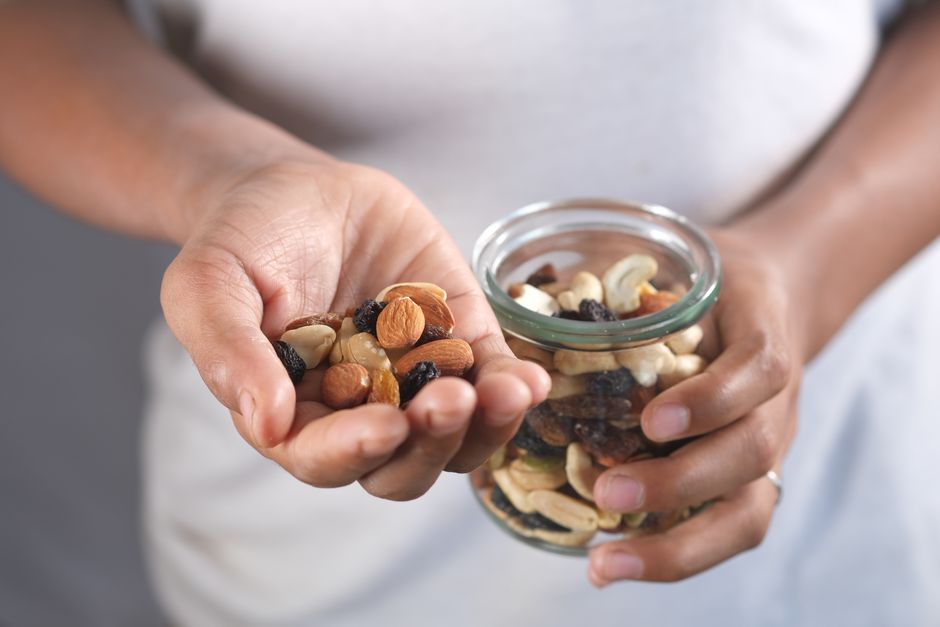
Almonds are not bad for your thyroid. There is no established evidence that eating almonds harms thyroid function in people who have a normal thyroid, an underactive thyroid, or an overactive thyroid. The concern you may have seen online usually traces back to two separate ideas — almond compounds called goitrogens, and almond “milk” that is really a processed drink — and both get stretched well past what the science actually shows.
What matters far more for thyroid health is iodine, selenium, and whether your thyroid medication is absorbed properly. Almonds do not interfere with any of those in a way that has been demonstrated in humans at normal intakes. Let’s walk through where the worry comes from, what the research actually says, and the few situations where a real conversation with your doctor is worth having.
Where Does the Idea That Almonds Are Bad for Your Thyroid Come From?
The fear starts with a real category of compounds called goitrogens. These are substances that can interfere with the thyroid’s ability to take up iodine, which the gland needs to make thyroid hormone. When iodine uptake is blocked, the thyroid can enlarge as it tries to compensate — a swelling in the neck historically called a goiter.
Goitrogens do exist in food. The best-studied examples are found in raw cruciferous vegetables like cabbage, Brussels sprouts, broccoli, and kale, and in soy. They work by interfering with an enzyme called thyroid peroxidase, which the thyroid uses to build hormone. In laboratory and animal studies, large amounts of these compounds can suppress thyroid function.
Almonds are not a classic goitrogen. They contain small amounts of compounds in the same broad family — including traces of cyanogenic glycosides, which can release tiny amounts of cyanide when the raw nut is digested. This is where a lot of internet confusion enters. Cyanide is toxic, so the reasoning goes, and therefore almonds must stress the thyroid. That reasoning skips several steps.
The amount of cyanogenic compounds in sweet almonds — the kind sold in grocery stores — is very low. Bitter almonds, a different variety, contain much more and are not sold raw for direct eating in the US. For ordinary sweet almonds, the human body detoxifies these trace amounts routinely, and there is no evidence that eating them affects thyroid hormone production.
Do Goitrogens in Food Actually Affect Your Thyroid?
For most people, no. This is one of the most misunderstood points in thyroid nutrition.
Goitrogens in food become a genuine concern mainly when three things line up: a very high intake of the raw food, an iodine deficiency, and often an existing thyroid condition. In people who get enough iodine, the thyroid has enough raw material to work with, and the modest goitrogen load from normal eating is not enough to cause measurable harm.
Even for the strongest food goitrogens, the effect depends on dose and preparation. Cooking deactivates much of the enzyme activity in cruciferous vegetables. Fermenting soy reduces its goitrogenic potential. In other words, the food itself is rarely the problem — the combination of huge amounts, raw, in an iodine-deficient person is.
Almonds sit far below even that threshold. They are not a meaningful source of goitrogens in the way cabbage or raw soy is. If you are worried about goitrogens, almonds are not where your attention belongs.
Does Almond Milk Interfere With Thyroid Medication?
This is a more useful question, and the answer is different from the almond question.
Levothyroxine — the standard replacement hormone for an underactive thyroid — is notoriously sensitive to what is in your stomach when you take it. Calcium, iron, and certain other minerals can bind the medication and reduce how much your body absorbs. This is well established and is why most prescribing information tells people to take levothyroxine on an empty stomach and wait before eating.
Many commercial almond milks are fortified with calcium. A fortified almond milk with a high calcium content, taken at the same time as levothyroxine, could plausibly reduce absorption the same way a calcium supplement or a glass of cow’s milk would. So the issue is not “almond” at all — it is the calcium in the product, and the timing.
The practical takeaway is about timing, not avoidance. If you take levothyroxine, space it out from calcium-containing foods and drinks, including fortified almond milk, according to your prescriber’s instructions. This is standard advice for the medication itself, not a special warning about almonds.
One clarification worth making: almond milk is not a thyroid medication issue because of almonds. It is a calcium issue. Unfortified almond milk, which contains little calcium, would not carry the same concern.





What Does the Evidence Say About Almonds and Thyroid Function?
There is no body of human research showing that almonds harm the thyroid. That absence matters, but it should be stated honestly rather than dressed up as proof of safety.
What we can say with confidence is this. Almonds are not classified as goitrogenic foods in clinical nutrition references. They contain no iodine, so they neither help nor hurt iodine status. Their trace cyanogenic content is handled by normal metabolism at typical intakes. And no major thyroid guideline lists almonds as a food to avoid.
We cannot point to large trials that specifically tested “almonds versus no almonds” and measured thyroid hormone. That study has not been done, and it probably never will be, because there is no strong biological reason to suspect harm. When evidence is absent, the honest position is that no clinical evidence currently confirms a risk — not that a risk has been ruled out by dedicated trials.
For context, here is how almonds compare to foods that genuinely carry goitrogen concerns:
| Food | Goitrogen concern | Relevance to thyroid |
|---|---|---|
| Sweet almonds | Not a recognized goitrogen | No established effect at normal intake |
| Raw cruciferous vegetables | Yes, in large raw amounts | Can matter mainly with iodine deficiency |
| Soy (raw, unfermented) | Yes, in large amounts | Effect reduced by cooking and fermentation |
| Fortified almond milk | Not a goitrogen | Calcium can reduce levothyroxine absorption if taken together |
Are There Any Real Risks of Eating Almonds?
Yes, but they are not thyroid risks. Almonds are calorie-dense, so portion size matters for weight management. They are a common allergen, and for people with a tree nut allergy, almonds can cause serious reactions. And as noted, raw bitter almonds contain enough cyanogenic compounds to be genuinely dangerous — but those are not the almonds you buy in a bag at the store.
There is also a real but narrow medication interaction to keep in mind. Because almonds contain some calcium and other minerals, eating a large handful at the same moment you take levothyroxine is not ideal — the same caution that applies to any mineral-rich food. This is a timing issue, not a reason to avoid almonds.
For the vast majority of people, almonds are a nutritious food. They provide protein, fiber, vitamin E, magnesium, and unsaturated fat. None of that is in conflict with thyroid health.
Should You Avoid Almonds If You Have a Thyroid Condition?
No established guidance tells people with thyroid conditions to avoid almonds. Not for hypothyroidism, not for hyperthyroidism, not for Hashimoto’s thyroiditis or Graves’ disease. If you have seen a claim otherwise, it is not supported by clinical guidelines.
That said, a few practical points are worth knowing if you are managing a thyroid condition.
- Take levothyroxine on an empty stomach and separate it from calcium-rich foods and drinks, including fortified almond milk, per your prescriber’s instructions.
- Get your iodine from a reliable source. Iodized salt is the simplest. Iodine deficiency is what makes goitrogens matter in the first place.
- Do not rely on any single food — almond or otherwise — to “fix” or “break” your thyroid. Thyroid function is governed mainly by iodine status, selenium, autoimmune disease, medications, and genetics.
- If you have a diagnosed thyroid condition, follow the monitoring schedule your clinician sets rather than adjusting your diet based on internet claims.
If you are genuinely unsure whether something in your diet is affecting your thyroid, the useful step is a blood test, not a food elimination. Thyroid-stimulating hormone, or TSH, is the standard first-line marker. That gives you real information instead of guesswork.
The Bottom Line on Almonds and Your Thyroid
Almonds are not bad for your thyroid. The goitrogen worry does not apply to them, and the medication worry is really about calcium and timing, not about almonds specifically. If you enjoy almonds, there is no thyroid-related reason to stop.
The bigger picture is that thyroid misinformation online tends to cluster around eliminating whole food groups for reasons the evidence does not support. Almonds are a frequent casualty of that pattern. The foods and factors that genuinely matter for thyroid health — iodine, selenium, autoimmune disease, and proper medication timing — deserve your attention far more than a handful of nuts.
Frequently Asked Questions
Are almonds bad for your thyroid?
No. Almonds are not recognized as goitrogenic, and no clinical evidence shows they harm thyroid function at normal intakes.
Can almond milk affect thyroid medication?
Fortified almond milk contains calcium, which can reduce levothyroxine absorption if taken at the same time. The issue is the calcium and the timing, not the almonds themselves.
Do almonds contain goitrogens?
Almonds are not classified as goitrogenic foods, unlike raw cruciferous vegetables and unfermented soy. Their trace cyanogenic compounds are handled by normal metabolism at typical intakes.
Should I stop eating almonds if I have Hashimoto’s?
No established guidance tells people with Hashimoto’s or any thyroid condition to avoid almonds. Follow your clinician’s monitoring plan rather than eliminating foods based on unverified claims.
