
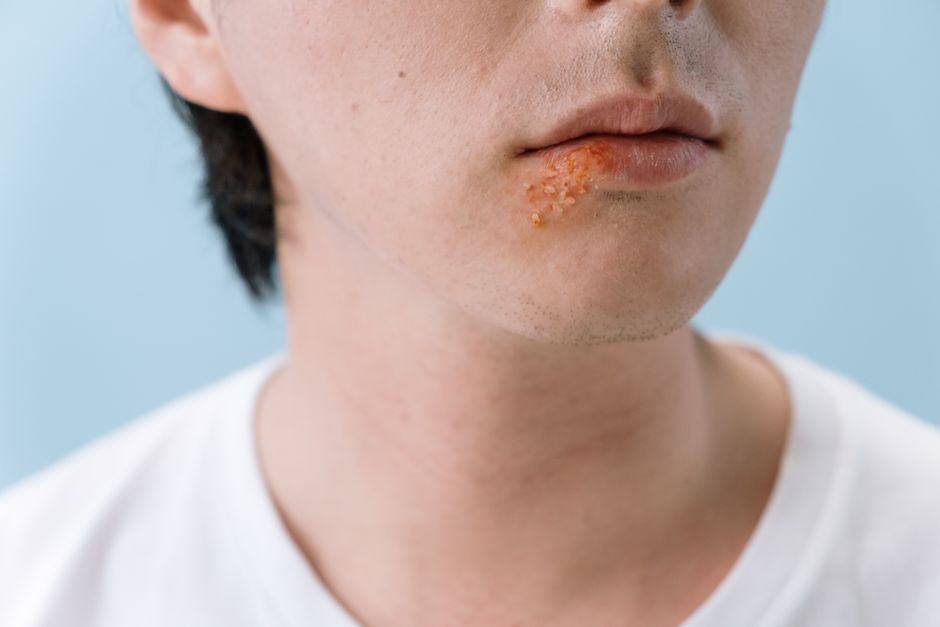
Not all sores around the mouth are cold sores, and not all cold sores come from the same virus. Cold sores are caused by herpes simplex virus type 1 (HSV-1) in most cases, though herpes simplex virus type 2 (HSV-2) can also cause them through oral contact. A canker sore, a pimple, chapped lips, or a bacterial infection can look similar but has a different cause and needs different care.
That distinction matters because the word “cold sore” gets used loosely. People point to any bump near the lips and call it a cold sore. Some of those bumps are contagious and some are not. Some clear up on their own and some need a doctor’s attention.
What Actually Causes a Cold Sore?
Cold sores are caused by the herpes simplex virus. HSV-1 is responsible for most oral cases. HSV-2, which is more commonly linked to genital herpes, can also cause oral sores through mouth-to-mouth or mouth-to-genital contact.
Once HSV-1 enters the body, it does not leave. The virus travels along nerve endings to a cluster of nerve cells called a ganglion, where it stays dormant. Most of the time it causes no symptoms. When something reactivates it — stress, illness, sun exposure, a weakened immune system, or sometimes nothing identifiable — the virus travels back down the nerve and produces a sore at or near the same spot as before.
This is a key point people often miss. Cold sores tend to recur in roughly the same location each time because the virus lives in the same nerve branch. A sore that keeps appearing in a brand-new spot each episode is worth having looked at.
HSV-1 is very common. The World Health Organization estimates that a large share of the global population under age 50 carries HSV-1. Many carriers never develop noticeable sores.
Are All Cold Sores the Same Virus?
No. Most oral cold sores are HSV-1, but HSV-2 can cause them too. The two viruses are closely related, and the sores they produce can look identical to the eye.
The distinction matters for how the infection is managed and how it spreads. HSV-2 is more often transmitted through sexual contact, while HSV-1 is usually passed through non-sexual contact like kissing or sharing utensils, especially during childhood. Both can be passed to either site through oral or genital contact.
Testing can tell the two apart, but it is not routinely done for a typical cold sore. A doctor may order a test when the diagnosis is unclear, when sores appear in unusual locations, or when a person has a weakened immune system.
What Does a Cold Sore Look Like at Each Stage?
A cold sore usually follows a predictable pattern over roughly one to two weeks. The stages tend to go like this:
- Tingling or itching. Many people feel a warning sensation — a tingle, burn, or itch — at the spot a few hours to a day before anything is visible.
- Blistering. Small, fluid-filled blisters form, often clustered together on or near the lip.
- Weeping and crusting. The blisters break, release fluid, and form a yellowish crust.
- Healing. The crust dries and flakes off, and the skin underneath heals, usually without a scar.
The first outbreak is often the worst. It can come with fever, swollen lymph nodes, and several sores at once, sometimes inside the mouth as well as outside. Later outbreaks are usually milder and shorter.
Cold sores most often appear on or around the outer lip, the edge of the mouth, or the skin just below the nose. Sores inside the mouth on the gums, tongue, or inner cheek are more typical of a first HSV-1 infection in children, or of a different condition entirely.
What Else Looks Like a Cold Sore?
Several common conditions get mistaken for cold sores. Getting the identification right affects whether you need treatment and whether you need to avoid close contact with others.
| Condition | Typical location | Contagious? |
|---|---|---|
| Cold sore (HSV-1 or HSV-2) | Outer lip, mouth edge, under nose | Yes, especially while blistered |
| Canker sore | Inside the mouth — gums, tongue, inner cheek | No |
| Pimple or acne | Anywhere on the skin, often with a white head | No |
| Angular cheilitis | Corners of the mouth, often cracked and painful | Usually not, unless infected by bacteria or yeast |
| Bacterial skin infection | Anywhere, often spreading redness and warmth | Varies |
Canker sores are the most common source of confusion. They are not caused by herpes, are not contagious, and appear inside the mouth rather than on the lip. The confusion is understandable because both are painful sores near the mouth, but the treatment and the risk to others are completely different.
A single sore that does not heal, keeps growing, or bleeds should be checked by a clinician. Sores that persist for weeks are not typical of a cold sore and need a proper look.
How Do Cold Sores Spread?
Cold sores spread through direct skin-to-skin contact with a sore or with the fluid inside it. Kissing, sharing utensils, sharing lip balm, or touching a sore and then touching another person or your own eye can pass the virus.
The virus can also be shed from the skin even when no sore is visible. This is called asymptomatic shedding, and it is one reason the infection spreads so widely. Many people carry HSV-1 without ever knowing it.
The highest risk of passing it on is while a sore is present, especially during the blistering and weeping stages. Avoiding close contact during that window reduces the chance of spreading it to others.
One non-obvious point: touching a cold sore and then rubbing your eye can spread the virus to the eye. That is a real risk and one reason hand washing matters during an outbreak. Eye involvement needs prompt medical attention.
When Should You See a Doctor?
Most cold sores clear up on their own and do not need medical care. Some situations call for a doctor’s input.
Seek care if a sore appears near or in the eye, if sores are widespread, if a person has a weakened immune system, or if a sore lasts longer than a couple of weeks without healing. Newborns and infants with sores around the mouth should be seen quickly, because HSV infection in a very young baby can be serious.
Prescription antiviral medicines are available and can shorten an outbreak and reduce how often sores return in people who get them frequently. They work best when started early, ideally during the tingling stage. Whether they are right for you depends on how often you get sores and how severe they are, which is a conversation for a clinician.
Over-the-counter creams and pain relievers can ease discomfort. No product currently cures the infection or removes the virus from the body, and any product claiming to do so is overstating what is possible.
Can You Prevent Cold Sores From Coming Back?
You cannot eliminate the virus once you have it, but you can reduce how often it reactivates. Known triggers include sun exposure, physical or emotional stress, illness, and fatigue. Using lip balm with sun protection and managing stress are reasonable steps for people who notice those triggers set off their sores.
Getting enough sleep and staying generally healthy may help, though the evidence linking lifestyle factors to outbreak frequency is not strong enough to promise results. Some people find certain foods trigger outbreaks; the evidence for specific dietary triggers is limited and largely anecdotal.
For people with frequent outbreaks, a clinician may recommend daily antiviral medicine to reduce recurrence. This is a well-established approach for people who get sores often enough that it affects their quality of life.
The bottom line is that cold sores are common, usually manageable, and caused by a virus that stays in the body. Not every sore near the mouth is a cold sore, and getting the identification right is the first step toward handling it well.
Frequently Asked Questions
Are all cold sores caused by herpes?
Yes, cold sores are caused by herpes simplex virus, most often HSV-1. A sore that is not caused by herpes is not a cold sore, even if it looks similar.
How can you tell a cold sore from a canker sore?
Cold sores usually appear on or around the outer lip and are contagious, while canker sores form inside the mouth and are not contagious. Location is the most reliable visual clue.
Are cold sores contagious when there is no blister?
The virus can be shed from the skin even without a visible sore, so transmission is possible. The risk is highest while a blister is present.
Do cold sores ever go away for good?
The virus stays in the body for life, but sores can stop appearing for long stretches. Some people have very few outbreaks after the first one.
