
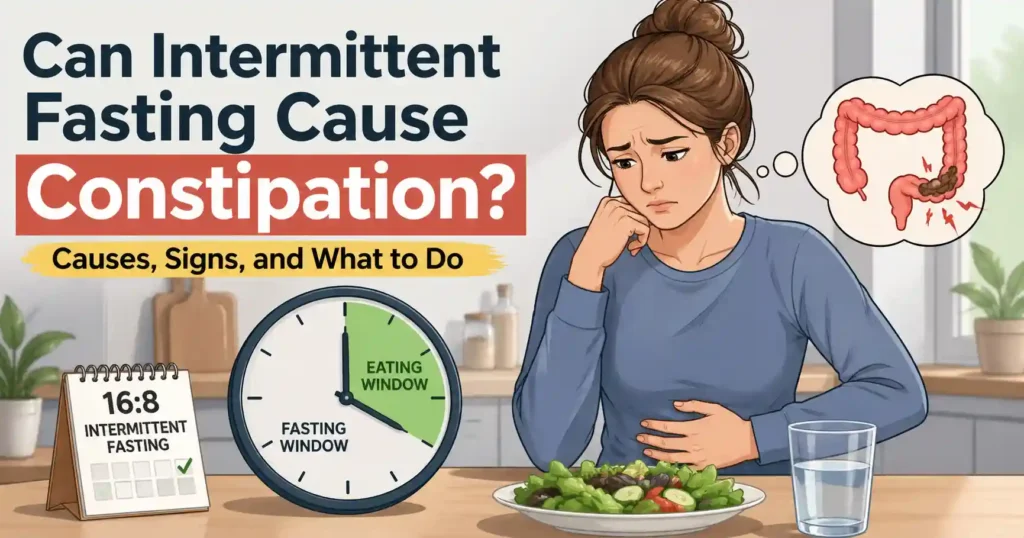
Yes, intermittent fasting can cause constipation. It usually happens when food intake drops, fiber intake falls, and hydration isn’t enough. In many cases, this is temporary and improves once eating patterns stabilize.
Key Takeaways
- Intermittent fasting can cause constipation, especially early on.
- The main triggers are low fiber intake and poor hydration.
- Gut movement naturally slows when meal frequency drops.
- Bloating and diarrhea usually come from how meals are handled during the eating window.
- Results improve significantly when food quality improves.
What Is Intermittent Fasting?
Intermittent fasting is an eating pattern based on timing, not food rules. You eat within a set window and fast the rest of the day.
The most common formats:
- 16:8 (16 hours fasting, 8 hours eating)
- OMAD (one meal a day)
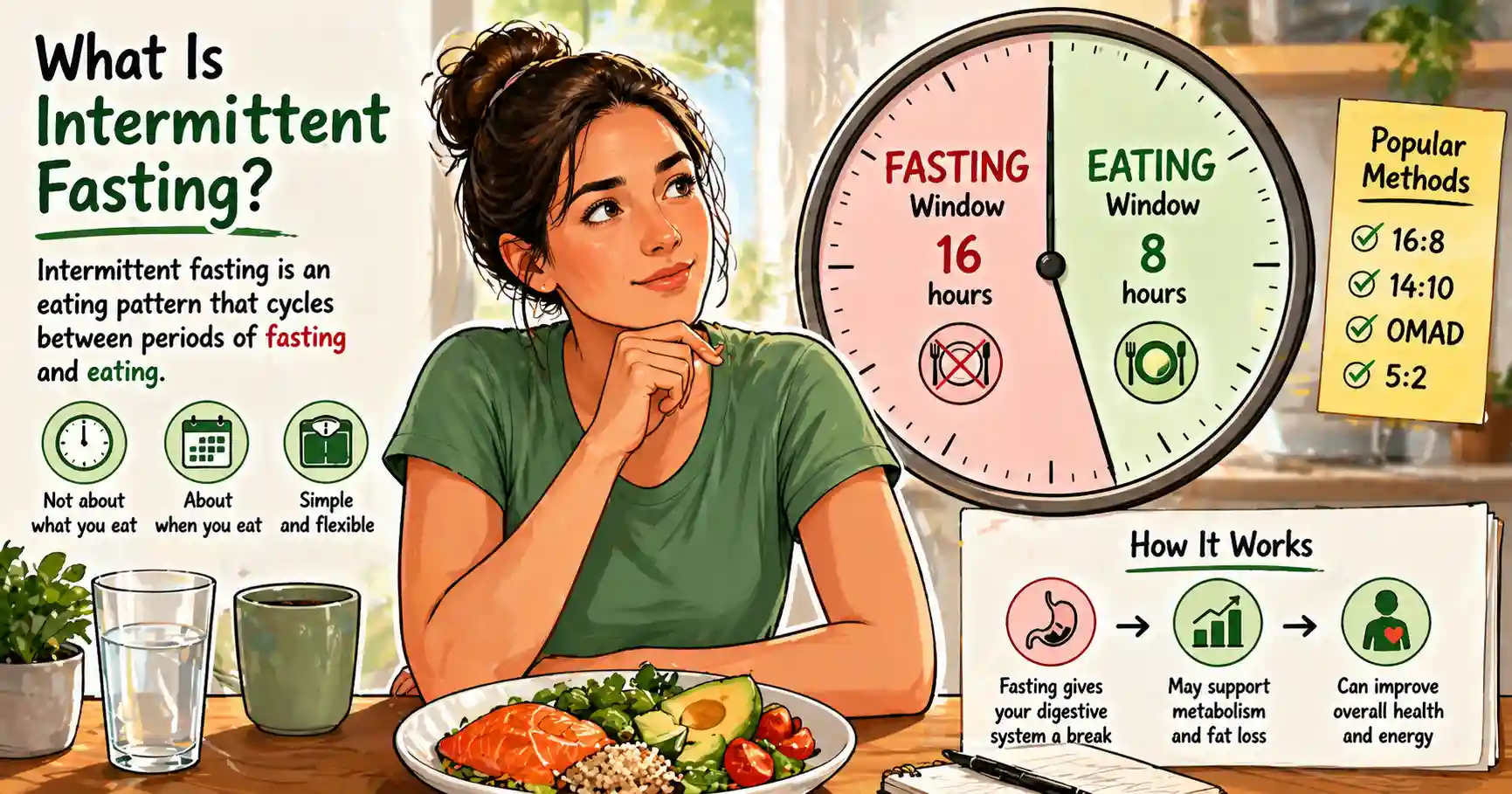
This shift sounds simple. Your digestive system doesn’t always agree right away. Your gut is used to rhythm. Change that rhythm, and things slow down or speed up unpredictably.
Can intermittent fasting cause constipation?
Yes. And it’s not complicated.
Constipation during fasting usually comes from three changes:
- Less food → less waste to move through the gut
- Lower fiber intake → slower stool movement
- Lower fluid intake → harder stools
That’s the surface. The deeper issue is gut motility.
Your intestines move in response to food. When meals become less frequent, those signals weaken. Stool stays in the colon longer, and more water gets absorbed from it. That’s how it becomes dry and difficult to pass.
Some people notice no bowel movement during fasting days. That alone isn’t a problem. It becomes one when stools are hard, infrequent, or uncomfortable.
A 2019 review in Nutrients linked lower fiber intake with reduced stool frequency and slower transit time. That’s exactly what happens when fasting isn’t planned properly.
Quick Takeaway: Fasting can slow digestion, but poor food choices during eating hours are usually the real cause.
Why does intermittent fasting affect digestion in the first place?
Your gut responds to timing just as much as it responds to food. After meals, your body activates the gastrocolic reflex. This is what pushes waste through the colon. Fewer meals mean fewer triggers.
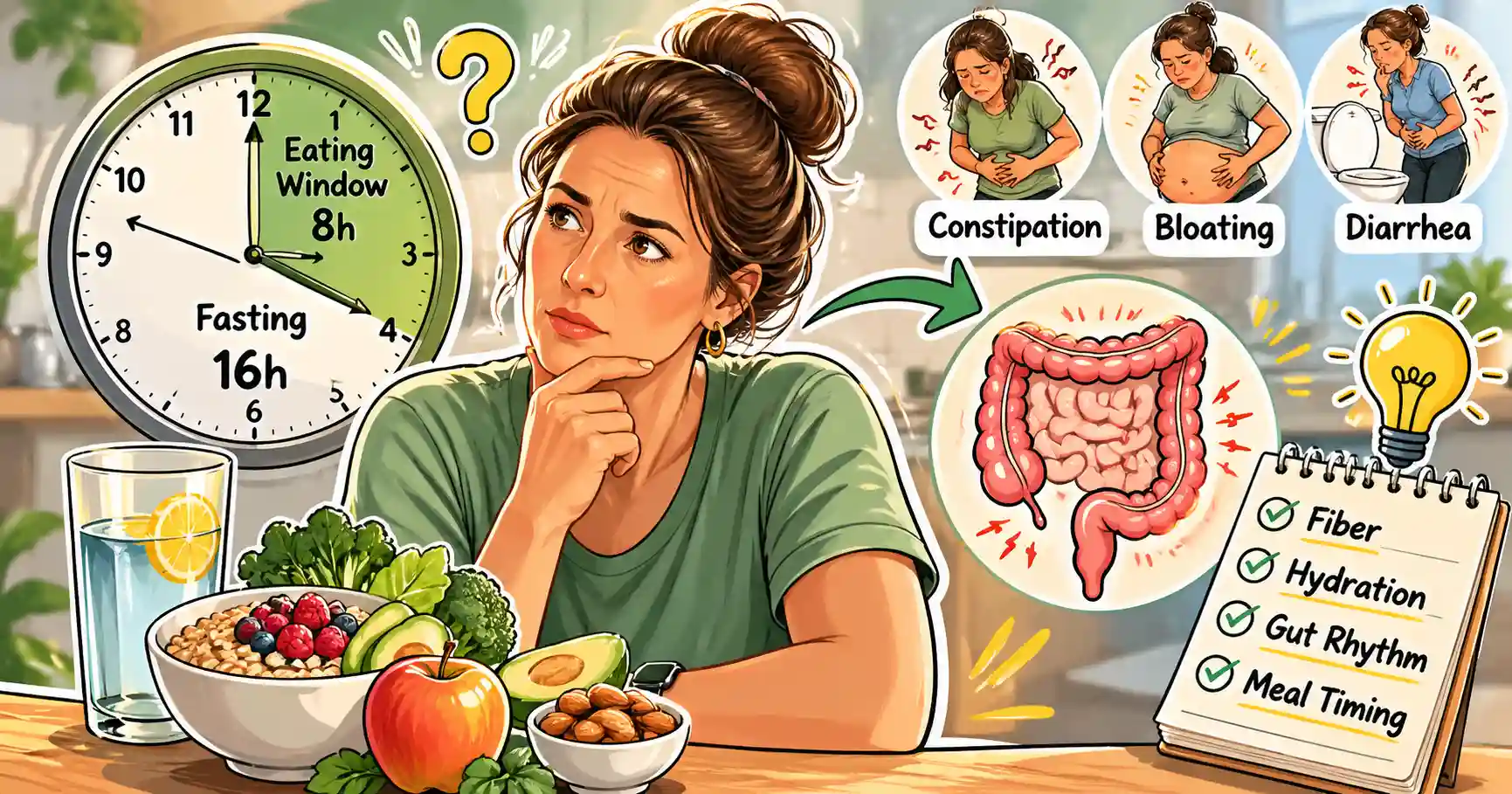
So during fasting:
- That reflex happens less often
- Movement in the intestines slows
- Stool sits longer than usual
There’s another factor most articles skip: gut bacteria.
Your microbiome feeds on what and when you eat. Change that pattern, and bacterial activity shifts. Some people experience constipation. Others get gas or loose stools.
A 2020 study in Cell Metabolism found that fasting alters gut bacteria activity and metabolic cycles. The effect wasn’t the same for everyone. That’s why experiences vary so much.
Can intermittent fasting cause diarrhea or bloating?
Yes. And this is where people get confused. The same routine can cause opposite problems depending on how you eat.
Diarrhea
Usually triggered by:
- Large meals after long fasting
- High-fat or very rich foods
- Rapid eating
Your gut goes from idle to overloaded. That sudden shift speeds everything up.
Bloating after eating
Very common, especially in the first few weeks.
Main reasons:
- Eating too much in one sitting
- Poor food combinations
- Slower digestion after fasting
People often blame fasting itself. In reality, it’s how the fast is broken.
What’s really happening
| Symptom | What changes during fasting | What actually causes it |
|---|---|---|
| Constipation | Slower gut movement | Low fiber, low hydration |
| Diarrhea | Sudden digestive load | Overeating, high-fat meals |
| Bloating | Slower digestion | Large meals, fermentation |
Quick Takeaway: These issues are driven more by eating habits than fasting alone.
What are the intermittent fasting disadvantages?
Intermittent fasting has clear downsides. Most people notice them early.
Common ones:
- Digestive issues (constipation, bloating, diarrhea)
- Hunger spikes, especially in the first week
- Energy dips during adjustment
- Overeating during the eating window
- Nutrient gaps if meals are unbalanced
A 2021 review in the Annual Review of Nutrition noted that while fasting can support weight loss, many people struggle to stick with it because of side effects like fatigue and hunger.
There’s also a simple mistake people make: They assume timing alone will fix everything. Then they ignore food quality.
That’s where most problems start.
What are the dangers of intermittent fasting?
For most healthy adults, intermittent fasting is safe. But it’s not risk-free.
Higher-risk groups:
- People with diabetes
- Those with existing digestive issues
- Older adults with low appetite
- People on certain medications
Possible risks:
- Blood sugar swings
- Dehydration
- Worsening gut symptoms
- Hormonal disruption with extreme fasting
The real issue isn’t fasting itself. It’s pushing it too far or doing it without structure.
Will fasting help with constipation?
Sometimes. But not automatically.
Fasting may improve digestion if:
- You eat better during your eating window
- You reduce processed foods
- You increase fiber naturally
It can make things worse if:
- You eat less overall, but not better
- You rely heavily on protein-heavy meals
- You don’t drink enough fluids
So the result depends on behavior, not the fasting method.
How to prevent constipation during intermittent fasting
This is where most advice gets repetitive. Here’s what actually makes a difference.
- 1. Get enough fiber: Not just “some.” Enough. Aim for 25–35 grams daily. Include vegetables, fruits, legumes, and whole grains. Most people under-eat fiber when they shorten their eating window.
- 2. Stay ahead on hydration: Fasting reduces how often you think about drinking. Drink water consistently. Consider electrolytes if fasting for longer hours. Low hydration makes stool harder. That part is straightforward.
- 3. Avoid huge meals: Large meals don’t fix constipation. They often make digestion worse. Split your eating window into 2 smaller meals if possible
- 4. Move your body: Light movement helps bowel activity. Walking is enough
- 5. Balance your macros: High protein + low fiber is a common trap. You need both.
Quick Takeaway: Most constipation during fasting is caused by how people eat, not when they eat.
Intermittent fasting benefits vs pros and cons
A balanced view looks like this:
| Pros | Cons |
|---|---|
| May support weight loss | Can slow digestion |
| Improves insulin response in some cases | Hunger during adjustment |
| Simple structure | Risk of overeating |
| Reduces mindless snacking | A poor diet can cancel the benefits |
A 2019 paper in the New England Journal of Medicine showed metabolic benefits from time-restricted eating. Long-term consistency, however, varied widely.
That matters more than short-term results.
FAQs
Why do I have no bowel movement during fasting?
This usually happens because the gut slows down when you don’t eat. Food intake triggers bowel movement, so fewer meals reduce that signal. It becomes a concern only if stools are hard, painful, or consistently delayed.
Can intermittent fasting cause diarrhea?
Yes, especially after large or heavy meals. The digestive system reacts quickly when food is reintroduced after fasting. This can speed up movement through the gut and lead to loose stools.
Why do I feel bloated after eating during intermittent fasting?
Bloating often comes from eating too much too quickly. Large meals increase gas production and slow digestion. This is more noticeable after fasting because the gut has been inactive for several hours.
Does intermittent fasting help digestion?
It can, depending on how it’s done. If fasting leads to better food choices and regular eating patterns, digestion may improve. If eating becomes irregular or unbalanced, digestion often worsens.
Is constipation during intermittent fasting permanent?
No. In most cases, it improves once the body adjusts. If it continues, the issue is usually related to diet or hydration rather than fasting itself.
Final Thoughts
So, yes, can intermittent fasting cause constipation? It can.
But in most cases, it’s not the fasting doing the damage. It’s what happens inside the eating window. Fix that, and digestion usually follows. Ignore it, and the problem sticks around.

Recent Posts