
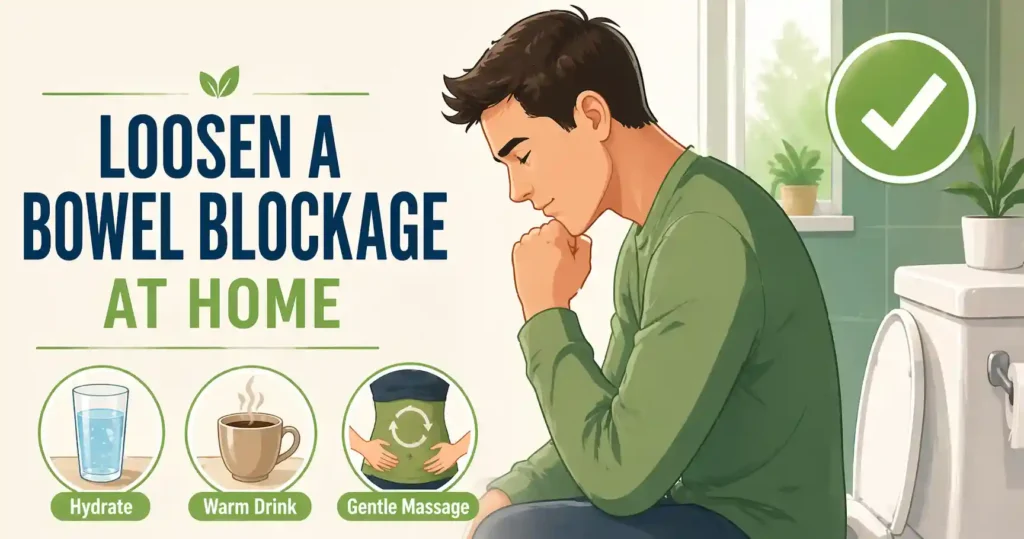
A bowel blockage at home can sometimes be loosened by combining hydration, gentle stool-softening methods, and specific body positioning to help the colon move stool forward. This works by reducing stool hardness and improving natural bowel movement reflexes.
If the blockage is severe or caused by obstruction, home methods will not work, and medical care is required.
Key Takeaways
- Not all blockages are the same—constipation, impaction, and obstruction differ
- Immediate relief depends on reflex + positioning, not force
- Softening stool is critical before trying to push it out
- Fiber is preventive, not a quick fix
- Some “instant tricks” work—but only under the right conditions
- Know the danger signs before trying home treatment
What is a bowel blockage, and what actually causes it?
A bowel blockage means that stool is stuck and not moving normally through the colon or rectum. That sounds simple, but there are three very different situations people confuse:
- Constipation → slow movement, but stool can still pass
- Fecal impaction → hard stool stuck in the rectum
- True obstruction → physical blockage (tumor, twist, etc.)
Most “at-home” fixes only work for the first two. Not the third.
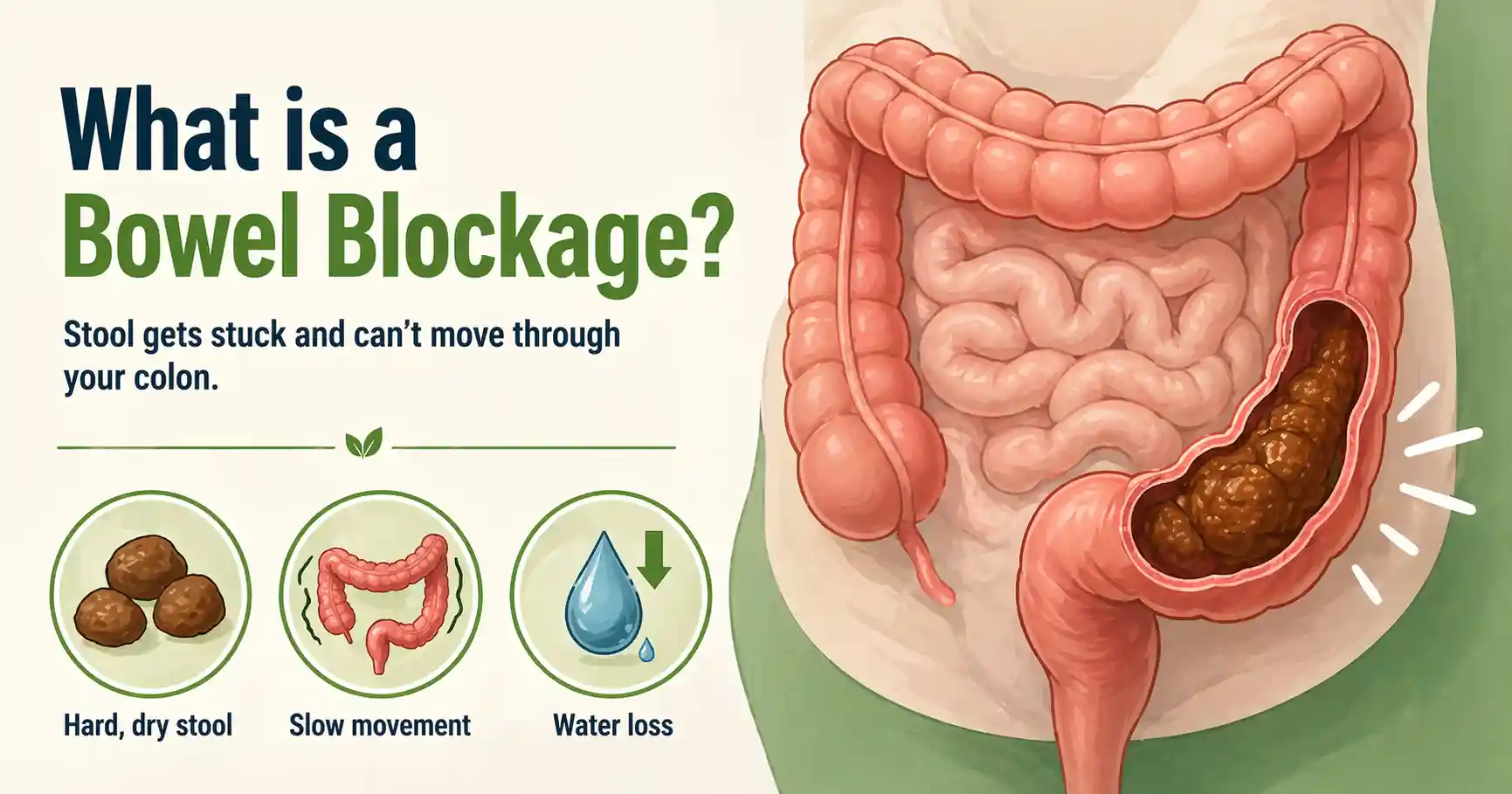
Here’s what actually happens inside your body:
- The colon absorbs water from the stool
- If the stool sits too long, it becomes dry and hard
- The colon muscles (peristalsis) fail to push it forward
- The rectum gets overloaded → you feel pressure but can’t pass it
This is why random advice like “just eat fiber” often fails. If the stool is already hard, fiber can make it worse by adding bulk to something that won’t move.
Quick Takeaway: A blockage is usually hardened stool plus weak movement—not just “lack of fiber.”
How to loosen a bowel blockage at home immediately?
Immediate relief depends on stimulating the body’s natural reflexes, not forcing it.
Here are a few methods that actually work in real situations:
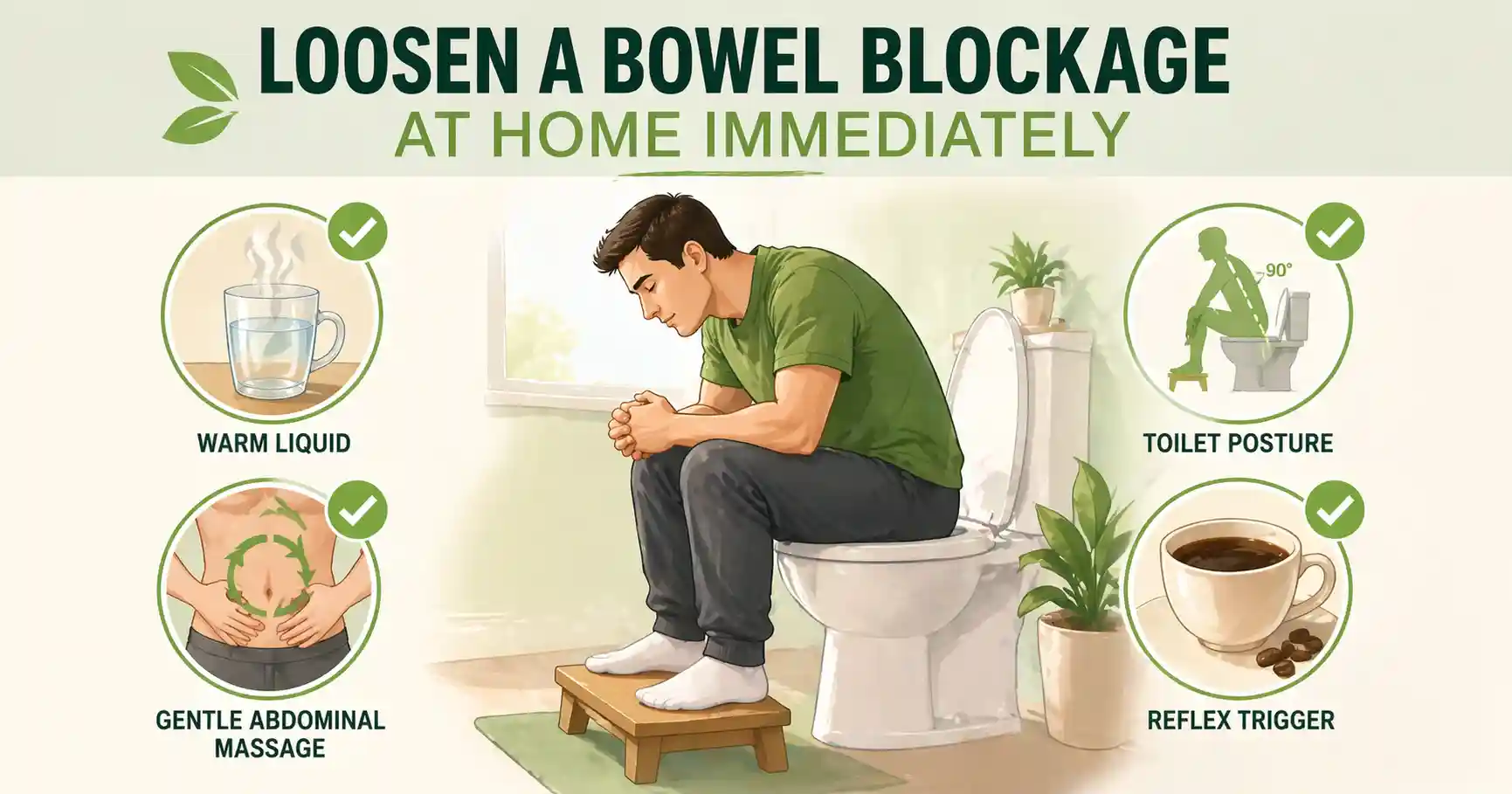
1. Use the “toilet posture” trick (this matters more than people think)
- Sit with feet elevated (use a stool)
- Lean forward slightly
- Relax your abdomen, don’t strain hard
This straightens the rectum and reduces resistance.
2. Warm liquid trigger (fastest internal signal)
Drink:
- Warm water
- Coffee (strong gastrocolic reflex trigger)
Research in Gut Journal (1998) showed coffee can stimulate colon activity within minutes in some people.
3. Abdominal pressure technique
- Place hands below ribs
- Gently press downward toward the pelvis
- Follow the natural colon direction
This mimics the body’s movement pattern.
4. Rectal stimulation (only if stool is stuck low)
- Glycerin suppositories or gentle stimulation
- Helps trigger the evacuation reflex
This is often the difference between “nothing happening” and actual movement.
⚠️ What NOT to do immediately
- Do not strain aggressively → can cause hemorrhoids or tearing
- Do not overload fiber → worsens impaction
- Do not stack laxatives randomly → can backfire
Quick Takeaway: Position + reflex triggers work faster than forcing or adding bulk.
What helps clear an impacted bowel (when stool is stuck)?
Fecal impaction requires softening first, not pushing.
This is where most people mess up.
Step-by-step approach:
- Hydrate aggressively (but realistically)
- Small, frequent intake works better than chugging
- Use osmotic agents
- Polyethylene glycol (PEG) or similar
- Draws water into the stool
- Add lubricating support
- Mineral oil (short-term use only)
- Then stimulate movement
- Suppository or gentle movement techniques
According to the American College of Gastroenterology (2021), osmotic laxatives are often first-line for impaction because they soften stool before evacuation.1Management of Constipation in Hospitalized Patients, PubMed Central.
Important insight most articles miss:
If the stool is already rock-hard, your body cannot push it out effectively, no matter how hard you try. That’s why people feel stuck for days.
Quick Takeaway: Soften first, move second. Not the other way around.
What are the fastest ways to make yourself poop immediately?
Let’s be blunt. There is no guaranteed instant method.
But these combinations work best:
High-success combo:
- Warm drink (coffee or water)
- Toilet posture
- Relaxed breathing
- Light abdominal pressure
Optional add-ons:
- Glycerin suppository (works within 15–60 minutes)
- Short walk (stimulates colon reflex)
What people misunderstand:
- “Instant poop tricks” online are exaggerated
- Your colon still needs a trigger + time window
A small 2006 study in Alimentary Pharmacology & Therapeutics found stimulant methods vary widely between individuals, especially in older adults.
What simple trick empties your bowels immediately?
There isn’t one magic trick. But one method consistently stands out: The gastrocolic reflex trigger + posture combo
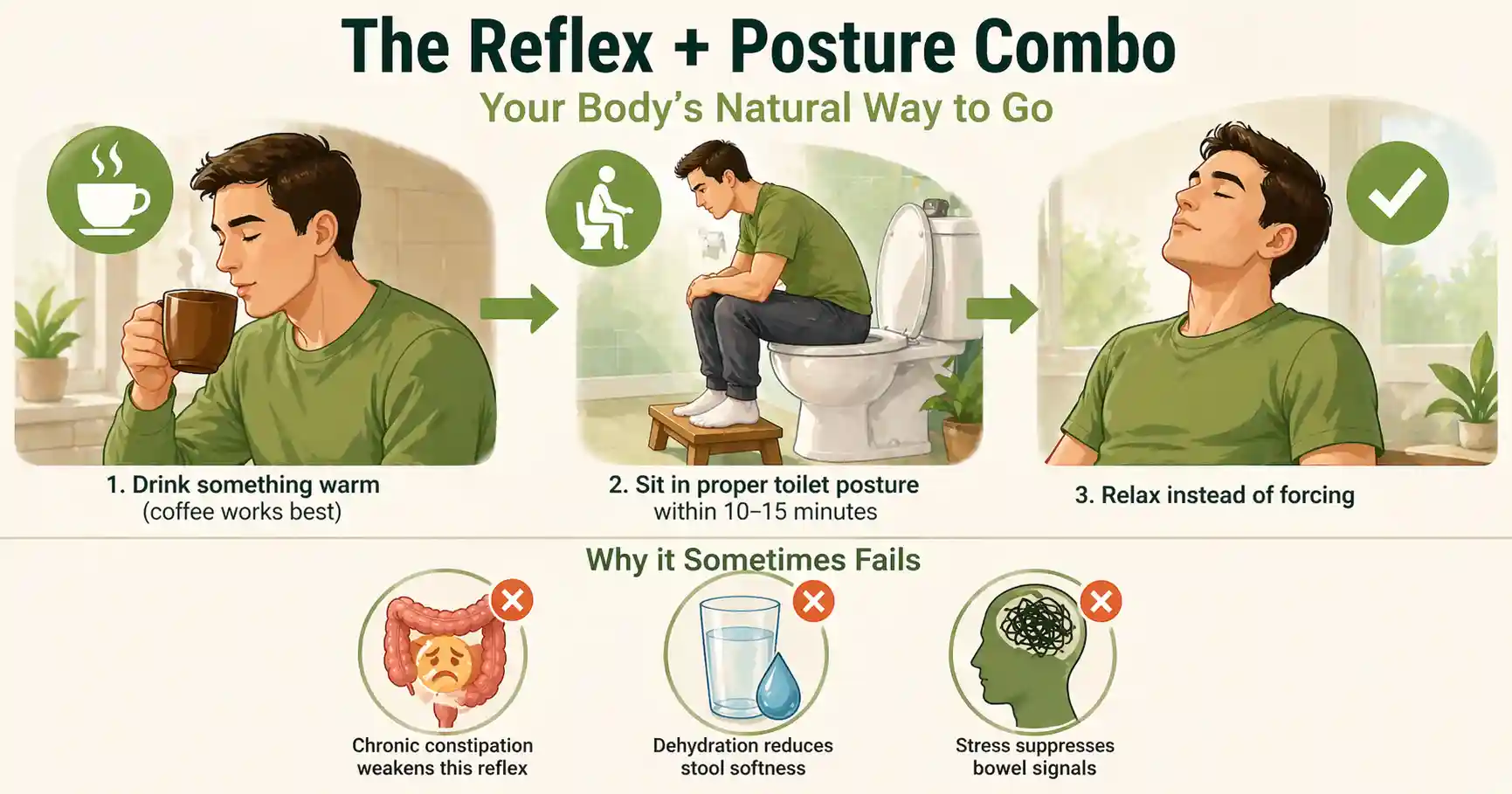
That means:
- Drink something warm (coffee works best)
- Sit in proper toilet posture within 10–15 minutes
- Relax instead of forcing
This works because eating or drinking signals the colon to contract.
Why it sometimes fails:
- Chronic constipation weakens this reflex
- Dehydration reduces stool softness
- Stress suppresses bowel signals
What works fast vs what works slowly?
| Method | Speed | What It Does | When to Use |
|---|---|---|---|
| Warm liquids / coffee | Fast (minutes) | Triggers the colon reflex | Mild constipation |
| Toilet posture | Fast | Reduces resistance | Always |
| Suppositories | Fast (15–60 min) | Stimulates rectum | Stool stuck low |
| Osmotic laxatives | Medium (6–24 hrs) | Softens stool | Impaction |
| Fiber | Slow (days) | Adds bulk | Prevention only |
| Exercise | Slow | Improves motility | Long-term |
This is where competitors fail—they treat all methods equally. They’re not.
Why common constipation advice often fails
Most advice sounds logical. It just comes at the wrong time.
Example failures:
“Eat more fiber.”
- Works for prevention
- Can worsen blockage if the stool is already hard
“Drink more water.”
- Helps, but not enough alone
- Needs osmotic support
“Just push harder.”
- Causes strain, not movement
The real issue:
People treat symptoms, not the mechanism.
When should you NOT try to fix a bowel blockage at home?
This is where you stop guessing.
Red flags:
- Severe abdominal pain
- Vomiting with constipation
- Swollen, hard abdomen
- No bowel movement for several days + worsening symptoms
- Thin, pencil-like stools
These may indicate a real obstruction. According to the National Institute of Diabetes and Digestive and Kidney Diseases (NIDDK, 2023), bowel obstruction requires immediate medical evaluation.
Quick Takeaway: If pain and pressure are increasing, home methods are the wrong move.
FAQs
How to relieve constipation on the toilet immediately?
Use proper posture with feet elevated, lean forward slightly, and relax your abdomen. Combine this with a warm drink beforehand to trigger the gastrocolic reflex. Avoid straining. Gentle abdominal pressure may help guide stool movement if your body is already ready to go.
What are 3 things that will make you poop instantly?
Warm liquids like coffee, proper toilet posture, and rectal stimulation (such as a glycerin suppository) are the most effective combination. They work by triggering colon contractions and reducing resistance, but results still depend on stool softness and your body’s responsiveness.
How to clear impacted bowel at home safely?
Start by softening stool using osmotic laxatives like polyethylene glycol, along with steady hydration. Once stool softens, use gentle stimulation methods such as suppositories. Avoid forceful straining, as it can worsen the condition or cause injury.
How long does it take to loosen a bowel blockage?
Mild constipation can improve within hours using reflex triggers and positioning. Fecal impaction may take 1–3 days depending on stool hardness and treatment approach. If symptoms persist or worsen, medical evaluation is necessary to rule out obstruction.
Final Word
If you’re trying to figure out how to loosen a bowel blockage at home, the answer is simple but not easy:
you need to soften the stool and trigger movement at the same time.
Scientific References
- 1Management of Constipation in Hospitalized Patients, PubMed Central.

Recent Posts