
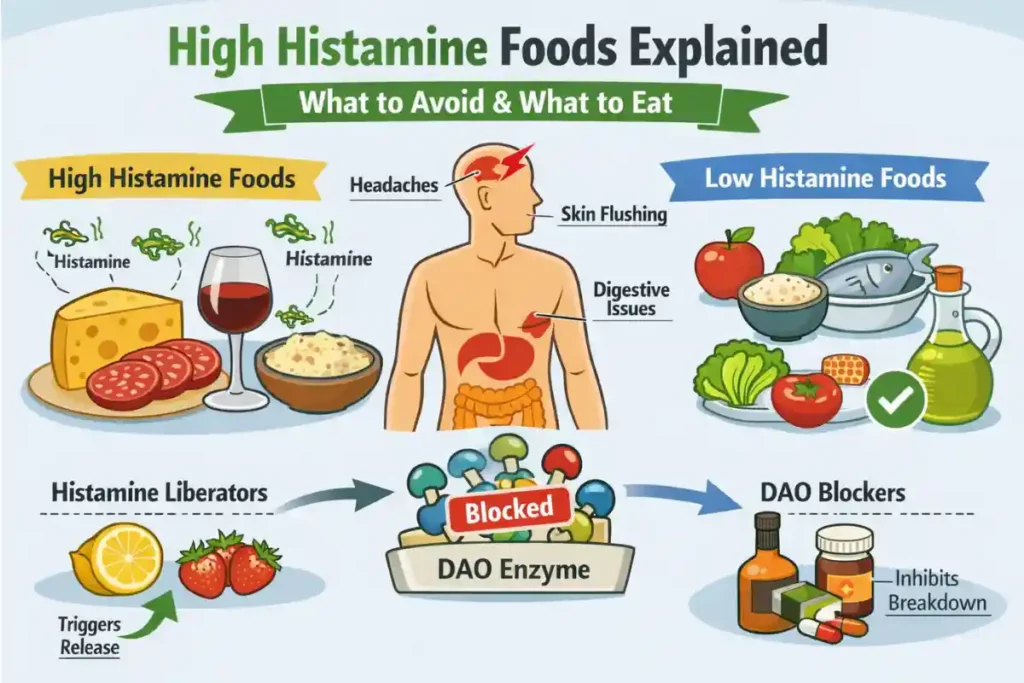
High histamine foods are foods that either contain histamine or trigger its release in the body. These foods matter because excess histamine can overwhelm your body’s ability to break it down, leading to symptoms like headaches, skin flushing, and digestive issues.
Some foods don’t contain histamine but still cause reactions by blocking its breakdown.
Key Takeaways
- Histamine builds up in aged, fermented, and stored foods
- It’s a threshold issue, not a true allergy
- Some foods trigger histamine without containing it
- Freshness matters more than food type
- Your tolerance is personal and dose-dependent
What Are High Histamine Foods?
High histamine foods are foods that already contain histamine due to aging, fermentation, or spoilage.
Histamine forms when bacteria break down amino acids in food. That’s why freshness matters more than the food itself in many cases. A fresh piece of fish is low histamine. The same fish left in the fridge for two days can trigger symptoms.
Most articles stop at listing foods. That’s not enough. What actually matters is how histamine builds up over time.
Common high histamine foods:
- Aged cheese (cheddar, parmesan)
- Fermented foods (sauerkraut, kimchi)
- Processed meats (salami, sausages)
- Alcohol (especially wine and beer)
- Vinegar and pickled foods
Quick Takeaway: High histamine foods are mostly aged, fermented, or stored too long.
What Causes Histamine Intolerance?
Histamine intolerance happens when your body cannot break down histamine efficiently. The main issue is an enzyme called DAO (diamine oxidase). It breaks down histamine in your gut. When DAO activity is low, histamine builds up.
Why DAO may be low:
- Gut issues (IBS, inflammation)
- Certain medications (antidepressants, painkillers)
- Alcohol consumption
- Nutrient deficiencies (vitamin B6, copper)
A Nutrients journal (2021) review found that impaired DAO activity is strongly linked to histamine-related symptoms, but testing methods are still inconsistent.1Histamine Intolerance Originates in the Gut, PubMed Central.
Here’s the part most people miss: This is not a true food allergy. It’s a threshold problem.
You can tolerate small amounts. Cross that limit, and symptoms show up.
Quick Takeaway: It’s not about one food—it’s about total histamine load.
What Foods Are High in Histamine?
High histamine foods are mainly those that are aged, fermented, processed, or stored for long periods.
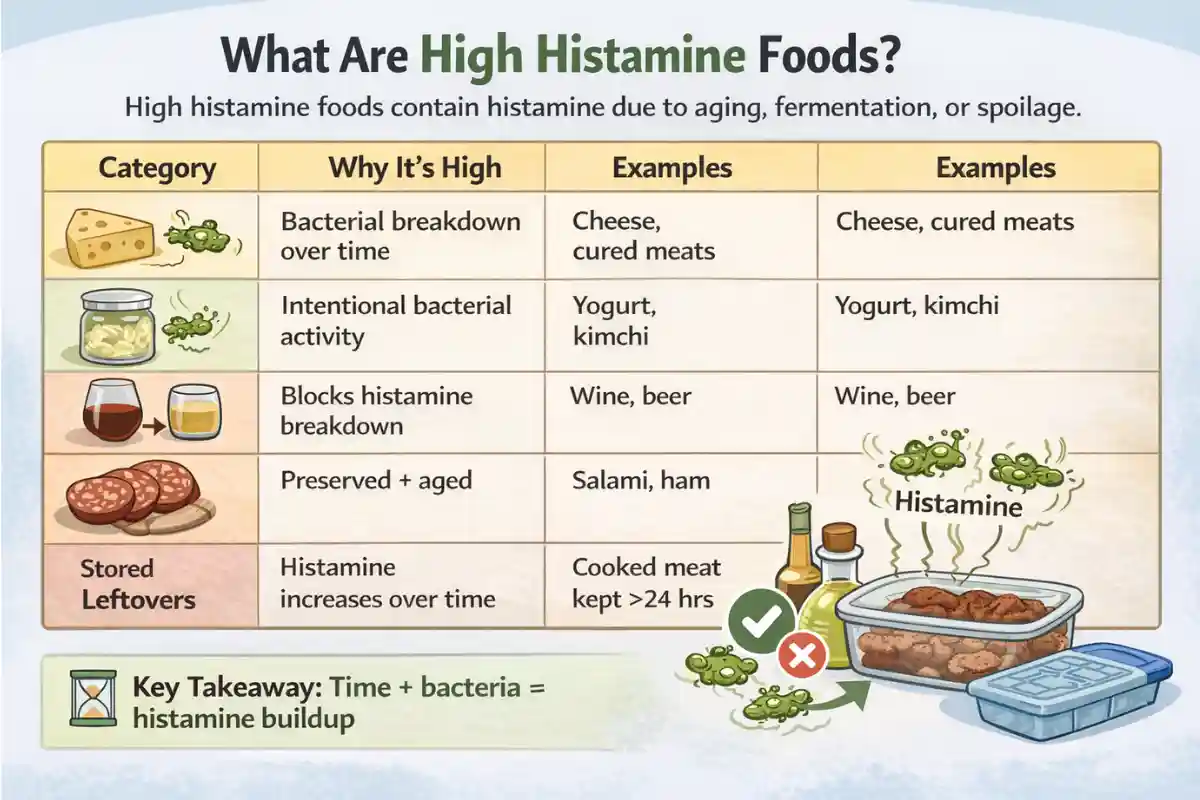
Here’s a clearer system competitors don’t use:
High Histamine Food Categories
| Category | Why It’s High | Examples |
|---|---|---|
| Aged foods | Bacterial breakdown over time | Cheese, cured meats |
| Fermented foods | Intentional bacterial activity | Yogurt, kimchi |
| Alcohol | Blocks histamine breakdown | Wine, beer |
| Processed meats | Preserved + aged | Salami, ham |
| Stored leftovers | Histamine increases over time | Cooked meat kept >24 hrs |
That’s why leftovers are often a hidden trigger. No one talks about that enough.
For more details, we have created a database and a list of high-histamine foods.
The list has:
- 8 Food Categories
- 50+ Foods List
- 10 Expert Advices
What Foods Trigger Histamine Without Containing It?
Some foods don’t contain histamine but trigger your body to release it. These are called histamine liberators, and this is where most articles fail.
Common histamine liberators:
- Citrus fruits
- Strawberries
- Tomatoes
- Chocolate
- Nuts
These foods can cause symptoms even if your diet seems “clean.”
Why? They stimulate mast cells to release histamine internally.
A review in the Journal of Allergy and Clinical Immunology (2018) noted that these triggers vary widely between individuals, which explains inconsistent reactions.2Utility of food allergy thresholds, ScienceDirect.
Quick Takeaway: You can react to foods with zero histamine. What Foods Help Lower Histamine Levels?
Low histamine foods are typically fresh, minimally processed, and quickly consumed. This is where you actually gain control.
Safer low histamine options:
- Fresh meat and fish (not stored long)
- Rice and oats
- Most vegetables (except tomatoes and spinach)
- Apples and pears
- Olive oil
But here’s the nuance most guides ignore: Even low histamine foods can become high histamine if stored poorly.
Freshness beats food type every time.
What Are Symptoms of High Histamine?
High histamine levels affect multiple systems in the body, not just digestion.
Common symptoms:
- Headaches or migraines
- Skin flushing or itching
- Nasal congestion
- Bloating or diarrhea
- Fatigue or dizziness
Here’s the mistake people make: They treat symptoms separately.
In reality, histamine creates a pattern, not isolated issues.
Example pattern:
- Wine → headache
- Cheese → skin flare
- Leftovers → bloating
That pattern matters more than any single symptom.
The Cleveland Clinic (2024) notes that histamine intolerance symptoms often mimic allergies but lack consistent triggers, making diagnosis tricky.
How Do You Follow a Low Histamine Diet?
A low histamine diet works by reducing total histamine load and identifying triggers.
Step-by-step system:
- Eliminate high histamine foods for 2–4 weeks
- Avoid leftovers and fermented foods
- Track symptoms daily
- Slowly reintroduce foods one at a time
- Identify personal tolerance threshold
Most people mess this up by removing everything forever. That’s wrong. The goal is not restriction. It’s finding your limit.
Why Do Some People React and Others Don’t?
Histamine tolerance varies due to gut health, enzyme levels, and overall load.
Two people can eat the same food:
- One feels nothing
- One gets a migraine
That’s because:
- DAO levels differ
- Gut bacteria differ
- Total histamine exposure differs
Also, reactions are dose-dependent.
A small amount of chocolate? Fine.
Add wine + cheese + stress? Problem.
This variability is why strict “avoid lists” often fail.
What Are Common Mistakes People Make?
Most people fail because they oversimplify histamine intolerance.
Biggest mistakes:
- Avoiding foods without understanding triggers
- Ignoring leftovers and food freshness
- Treating it like an allergy
- Not tracking symptoms
- Trying to eliminate everything permanently
Here’s the blunt truth: If you follow generic food lists blindly, you’ll stay confused.
FAQs
What is a high histamine foods list?
A high histamine foods list includes aged, fermented, and processed foods that either contain histamine or trigger its release. Common examples include cheese, alcohol, processed meats, and leftovers stored too long.
What are the symptoms of high histamine?
Symptoms include headaches, skin flushing, nasal congestion, digestive issues, and fatigue. These symptoms often appear in patterns rather than isolated events, which makes them harder to recognize at first.
Can you eat eggs on a low histamine diet?
Eggs are generally considered low-histamine, but some people react to egg whites. Tolerance varies, so it’s best to test eggs individually during a reintroduction phase.
Are bananas high in histamine?
Bananas are not high in histamine but may act as histamine liberators in some people. This means they can trigger symptoms without containing histamine directly.
How long does histamine stay in the body?
Histamine is broken down quickly in healthy individuals, but in people with intolerance, symptoms can last several hours, depending on enzyme activity and total histamine load.
Final Thoughts
High histamine foods are not the real problem. Your body’s ability to handle histamine is.
Once you understand:
- How histamine builds
- How your body processes it
- And where your limit is
You stop guessing. And that’s when most people finally start to see relief.
Scientific References
- 1Histamine Intolerance Originates in the Gut, PubMed Central.
- 2Utility of food allergy thresholds, ScienceDirect.

Recent Posts