
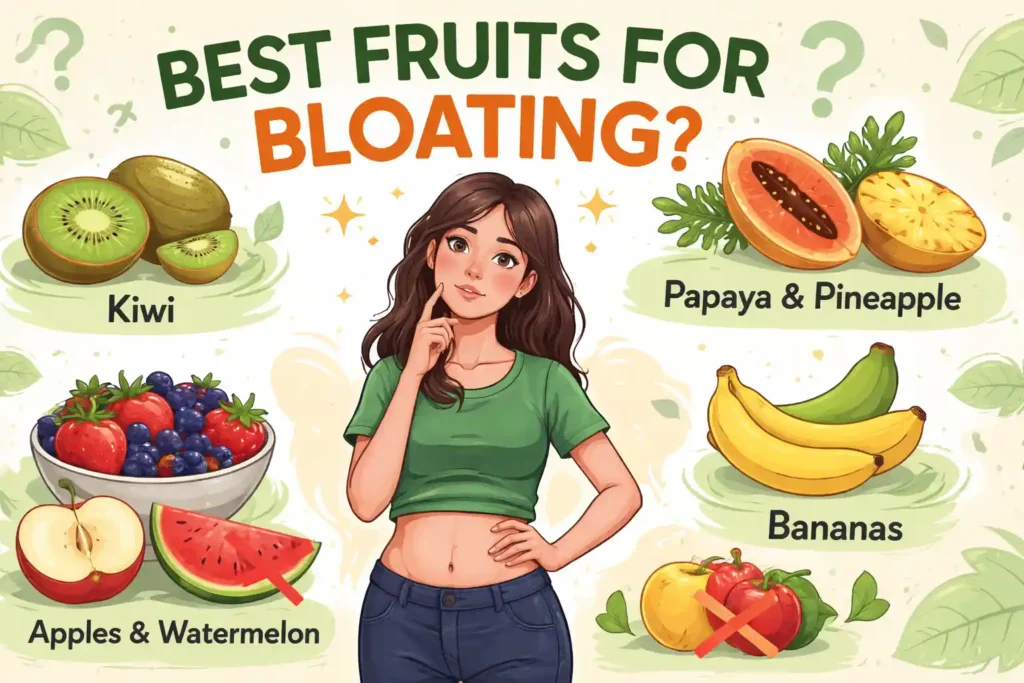
Fruits that help with bloating work by reducing gas, easing constipation, or helping your body flush out excess water. The best ones include kiwi, papaya, pineapple, berries, and unripe bananas. But not every fruit on popular debloat lists deserves to be there — a few common picks can actually make things worse.
Key Takeaways
- Kiwi has the strongest clinical evidence of any fruit here — more than most people realize.
- Papaya and pineapple work best after heavy meals due to natural digestive enzymes that help reduce bloating.
- Berries are a safe, daily option, especially for people dealing with IBS-related bloating.
- Apples and watermelon can backfire — both are high-FODMAP and may worsen symptoms in sensitive guts.
- Banana ripeness matters — firmer bananas help digestion, while very ripe ones may increase bloating.
- Match fruit to the cause — potassium-rich fruits help period bloating, while kiwi works best for constipation-related bloating.
Why Some Fruits Help with Bloating — and Others Don’t
Not all bloating is the same. That sounds obvious, but most fruit lists treat it like it is.
Your stomach can feel swollen because of trapped gas, water retention, or slow digestion that’s backing things up. Each one responds to something different. So eating the wrong fruit for your type of bloating is a real thing.
Fruits help in three basic ways:
- Some contain digestive enzymes that break down food before it ferments in your gut.
- Some have soluble fiber that regulates how fast food moves through you.
- And some are high in potassium, which helps your body get rid of excess sodium — the main driver of water-retention bloating.
Here’s where things get tricky. Some fruits are high in FODMAPs — a group of sugars your gut can’t fully absorb. They ferment fast and produce gas. Apples, pears, and watermelon all fall into this category. These fruits are recommended constantly for bloating.
For a lot of people, they make it worse. Johns Hopkins estimates that 10 to 15 percent of US adults have IBS, and fructose sensitivity is common even outside of IBS. That’s not a small number.
The fruit that helps you depends on why you’re bloated. There’s no single best pick for everyone.
Fruits That Help With Bloating. Best Options.
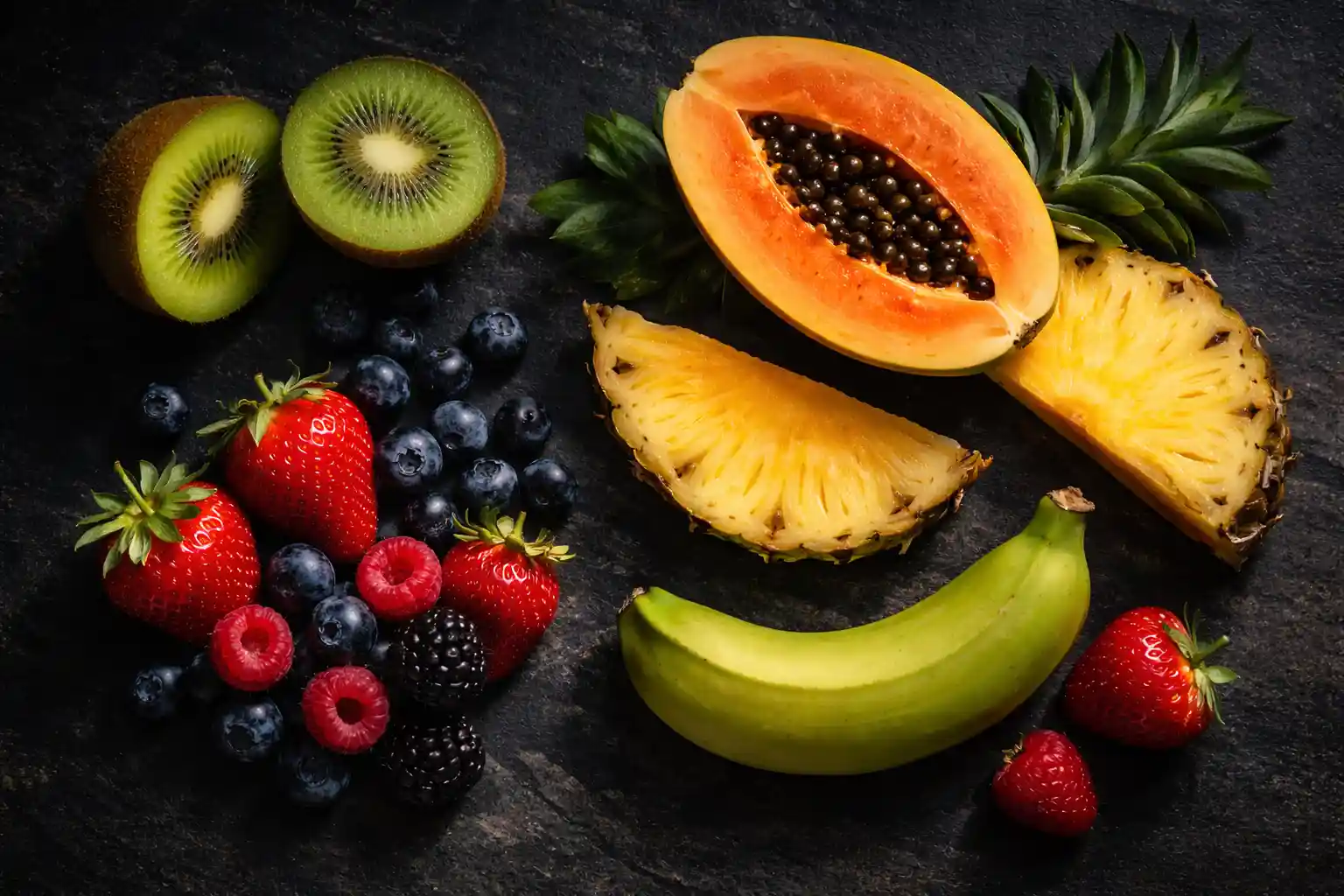
Kiwi
Kiwi is the most evidence-backed fruit on this list — you just wouldn’t know it from how rarely it tops these articles.
It works on two fronts:
- Actinidin (an enzyme) breaks down protein and speeds up stomach emptying
- Its fiber pulls water into the colon, softening stool and keeping things moving
Two solid studies back this up. A 2018 randomized trial in the Asia Pacific Journal of Clinical Nutrition found that kiwifruit extract significantly reduced bloating, gas, and abdominal pain — with zero side effects.
A 2022 PMC scoping review confirmed that regular kiwi consumption reduced upper digestive symptoms across multiple trials, in both healthy adults and people with IBS.
That’s a stronger track record than ginger, celery, or cucumber, which somehow get more airtime. Kiwi is also low-FODMAP at normal serving sizes, so it’s safe for sensitive guts too.
Papaya
Papaya contains papain, a protein-digesting enzyme that breaks food down before it reaches your large intestine and starts fermenting. It also carries anti-inflammatory compounds (vitamins C and E, beta-carotene) that may calm gut irritation.
It works best for bloating that hits after a heavy or protein-rich meal. The clinical trial evidence isn’t as strong as kiwis’, but the mechanism is well-established.
Pregnant? Avoid unripe or green papaya — it has very high papain levels. Fully ripe papaya in normal amounts is generally fine, but check with your doctor first.
Pineapple
Pineapple contains bromelain, a group of enzymes that digest protein and reduce inflammation. Traditional medicine has used it for gut problems for centuries, and modern research supports its role in easing indigestion and bloating.
One thing to watch: pineapple is moderate-FODMAP in large amounts. A cup is usually fine. More than that, in one sitting, it can backfire if your gut is on the sensitive side.
Berries
Strawberries, blueberries, and raspberries don’t have a flashy enzyme story. They work more quietly — and more consistently.
- Polyphenols in berries act on gut bacteria and reduce inflammation (a 2023 review linked this to IBS symptom relief, including bloating)
- Soluble fiber supports regular digestion
- Low-FODMAP at normal portions, so safe for most guts
Berries won’t debloat you by Tuesday. But eaten regularly, they’re one of the better daily habits for long-term gut comfort.
Banana (unripe or just-ripe)
Bananas help mostly through potassium, which counters sodium-driven water retention. They also have prebiotic fiber that feeds good gut bacteria. If your bloating is hormonal or tied to salty meals, bananas are often more useful than any enzyme-heavy fruit.
The part most articles miss: ripeness changes everything.
The firmer one helps. The sweet, soft one might not.
Fruit vs. Bloating Type — Quick Reference
| Fruit | Best For | Why It Helps | FODMAP Level |
|---|---|---|---|
| Kiwi | Constipation, gas | Actinidin enzyme + fiber | Low |
| Papaya | Post-meal bloating | Papain enzyme | Low |
| Pineapple | Indigestion, gas | Bromelain enzyme | Low–moderate |
| Berries | Chronic/IBS bloating | Polyphenols, fiber | Low |
| Unripe banana | Water retention | Potassium, resistant starch | Low |
| Grapefruit | Water retention | Hydrating, mild diuretic effect | Low |
Fruits That Can Make Bloating Worse
This part is rarely covered. It should be.
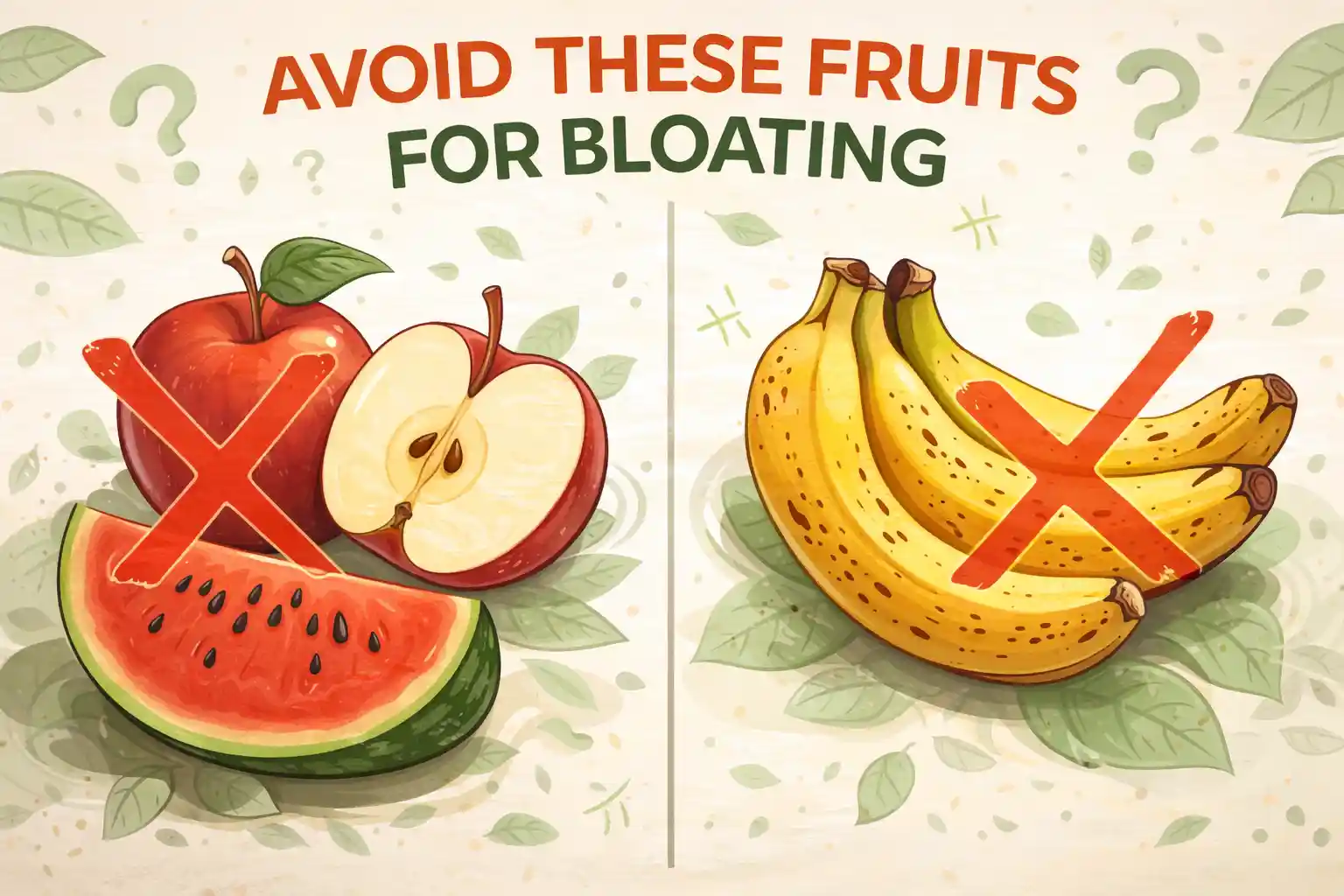
Apples
Good for most people — the fiber and polyphenols genuinely support digestion. But apples are high in both fructose and sorbitol, which ferment fast in the colon and produce gas.
- Classified as high-FODMAP by Monash University (the leading research group on this)
- A common trigger for people with IBS or fructose sensitivity
- If you always feel worse after an apple, you’re not imagining it
Watermelon
Pushed constantly for bloating because of its high water content, and hydration does help. But watermelon is also high-FODMAP due to excess fructose.
- For sensitive guts, the hydration benefit and the gas-producing fermentation often cancel each other out
- Better hydration options exist if your gut tends to react
Dried Fruit
One of the most overlooked bloating triggers. Drying fruit concentrates its sugars dramatically.
Easy to miss because they seem like a “healthy snack” — but portion for portion, they’re much harder on a sensitive gut than fresh fruit
A small handful of raisins carries roughly the same fructose load as several fresh grapes. Raisins, dates, and dried apricots are common culprits
None of these fruits is unhealthy. The issue is that calling them “debloating” foods without any context is misleading.
What Helps with Bloating During Your Period or Pregnancy?
During your period
Before your period, progesterone drops. That slows your gut down and causes your body to hold onto more water. The result is usually a mix of water retention and some constipation-type fullness.
For the water part, potassium-rich fruits are most useful — bananas, cantaloupe, and oranges. They help your kidneys excrete the excess sodium your body has been holding.
For the constipation part, kiwi and berries are the better choice. They support transit without being harsh.
During pregnancy
Progesterone stays elevated throughout pregnancy. It relaxes smooth muscle in your digestive tract, which is necessary for the pregnancy to continue, but it also slows digestion significantly. That’s where a lot of pregnancy bloating comes from.
Kiwi and berries are both safe, low-FODMAP options for everyday support. Ripe papaya in normal amounts is generally fine. Unripe or green papaya is not.
Pineapple is often a source of concern, but normal food amounts of ripe pineapple are not a risk — concerns about it causing labor relate to concentrated bromelain supplements, not fruit. As always, talk to your OB or midwife before making big changes during pregnancy.
How to Eat These Fruits So They Actually Work
A few things that get skipped in most lists:
- Watch how much you eat at once. Even low-FODMAP fruits can cause symptoms in large quantities. Current FODMAP guidance, as of 2026, recommends one fruit serving per sitting, with a few hours between portions. Eating three servings of kiwi at breakfast isn’t better — it can make things worse.
- Timing helps with enzymes. Papaya and pineapple work best on an empty stomach or just before eating. Eating them after a large meal means the enzymes show up after most of the fermentation has already started.
- Don’t ramp up fiber too fast. If you’re adding a lot more fruit than usual, go slowly. A sudden jump in fiber can cause bloating to spike before it improves. Your gut needs time to adjust.
- Eat whole fruit, not juice. Juice strips the fiber, spikes the sugar, and removes the slow digestion process that makes these fruits helpful. A glass of pineapple juice is not the same as eating pineapple.
Frequently Asked Questions
What fruit is best for bloating?
Kiwi has the most clinical research behind it. It contains an enzyme called actinidin that aids digestion, plus fiber that promotes regular bowel movements. Multiple controlled trials have shown it reduces bloating, gas, and constipation symptoms. Papaya and pineapple are also good options, particularly if your bloating tends to come on after eating.
Do bananas cause or reduce bloating?
It depends on how ripe they are. An unripe or just-yellow banana is low in fructose and high in resistant starch and potassium, which can reduce water-retention bloating. A very ripe banana is higher in fructose and may trigger gas in people with fructose sensitivity. One at a time is a reasonable rule regardless.
Are apples good for bloating?
Not for everyone. Apples contain fiber that supports gut health broadly. But they are also high in fructose and sorbitol — both high-FODMAP sugars that ferment in the colon and produce gas. People with IBS or fructose sensitivity often find that apples make bloating worse. If apples consistently leave you feeling uncomfortable, there’s a real reason.
What fruits help with bloating and constipation?
Kiwi is the clearest choice, backed by multiple randomized trials showing increased bowel movement frequency and reduced bloating. Two kiwifruits daily showed similar results to psyllium fiber in a 2022 clinical trial. Papaya and berries also support digestion and regular transit without the FODMAP concerns of higher-fructose fruits.
What fruits help with bloating during pregnancy?
Ripe papaya in moderate amounts, kiwi, berries, and firm bananas are generally safe and useful during pregnancy. They support regularity gently. Unripe green papaya should be avoided. Pineapple in normal food amounts is fine — concerns about labor apply to concentrated bromelain supplements, not the fruit itself. Always check with your provider before making changes.

Recent Posts