
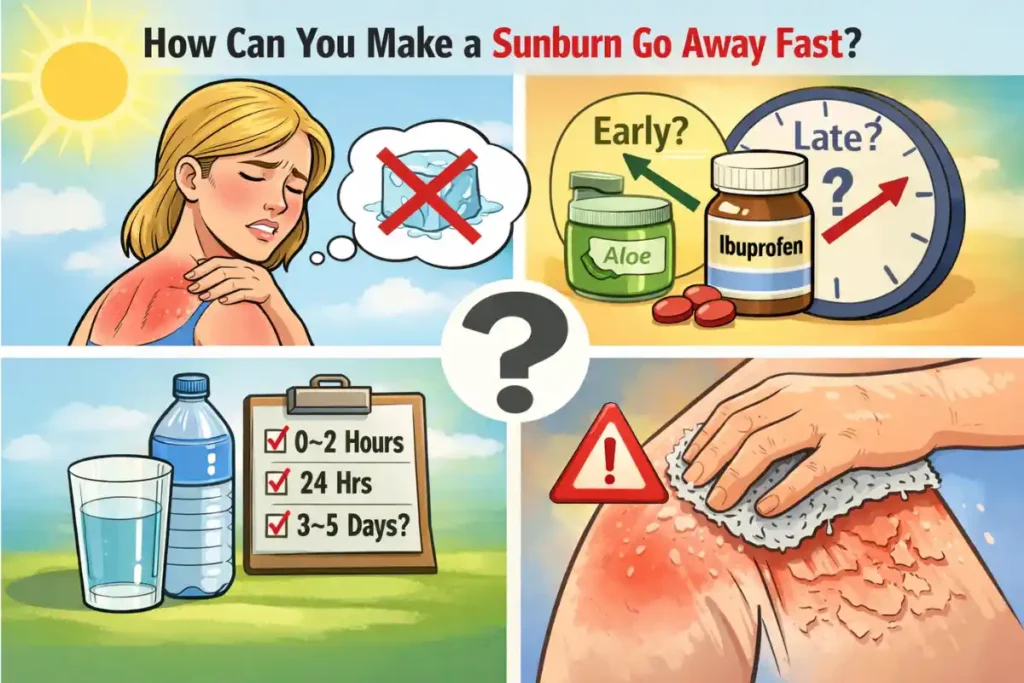
Sunburn is skin damage caused by UV radiation. You cannot remove it instantly, but you can reduce pain, redness, and irritation quickly. The fastest relief comes from cooling the skin, lowering inflammation, and restoring hydration.
Key Takeaways
- Fast healing means symptom control, not instant cure — sunburn damage cannot be reversed immediately, only managed.
- The first 2 hours matter the most because early cooling and care can limit how severe the burn becomes.
- Cooling and anti-inflammatory care drive recovery by reducing heat, swelling, and pain at the source.
- Timing matters more than products — using the right method early is more effective than using better products later.
- Mistakes like ice or scrubbing can delay healing by damaging already sensitive skin and increasing irritation.
Can you make sunburn go away fast?No. The damage is already done under the skin.
Sunburn is not just surface redness. UV rays trigger an inflammatory response, and that reaction keeps building even after you leave the sun. Research published in the Journal of Clinical and Aesthetic Dermatology (2017) explains that inflammation continues for hours, which is why pain and redness often peak later.1Time–course study of different innate immune mediators produced by UV-irradiated skin: comparative effects of short and daily versus a single harmful UV exposure, PubMed Central.
Most people expect instant recovery. That’s the mistake.
Here’s what actually happens:
- 12–24 hours: Pain and redness peak
- 2–3 days: Skin feels tight, may swell
- 3–5 days: Peeling begins
Mild burns heal in a few days. Severe ones can take over a week. The American Academy of Dermatology (2023) confirms this timeline.2How to treat sunburn, American Academy of Dermatology.
Quick Takeaway: You can’t erase sunburn fast, but you can reduce how painful and visible it becomes.
What to do immediately after sunburn (first 2 hours)
This window matters more than any cream you’ll use later. If you act early, you limit inflammation. If you delay, the damage escalates.
Do this in order:
- Get out of the sun immediately: Staying even 10–15 minutes longer makes it worse.
- Cool the skin (not ice): Use cool water, a damp cloth, or a gentle shower.
Ice directly on skin can damage already stressed tissue. - Start hydration early: Sunburn pulls fluid to the skin surface. Drink water before you feel thirsty.
- Take an anti-inflammatory (if safe for you): Ibuprofen can reduce inflammation if taken early. Mayo Clinic (2024) supports this approach for symptom relief.
Here’s what most people get wrong: They wait until it hurts. By then, inflammation is already peaking.
Quick Takeaway: Early cooling and inflammation control matter more than anything you apply later.
Read Related Posts
- How to Make Sunburn Go Away Fast (5 Tips That Actually Work at Home)

- Does Vicks VapoRub Help With Wrinkles? What Science Says
- PrimeBiome Reviews & Complaints (2026): Is PrimeBiome Legit Or Scam?

What are the 5 fastest ways to heal sunburn at home?
These are not random tips. These are the only things that consistently work, based on dermatology guidance.
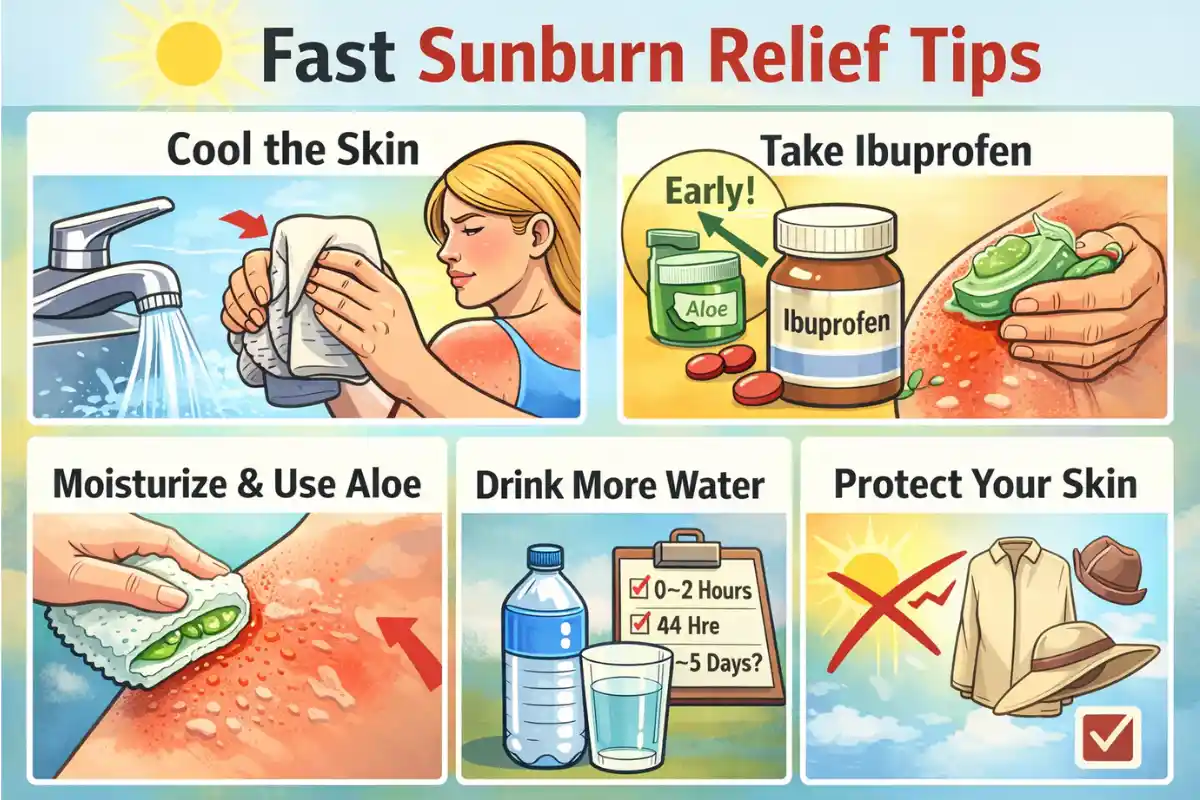
1. Cool the skin correctly
Cooling reduces heat trapped in the skin and slows inflammation.
- Use cool (not cold) water
- Apply a damp cloth for 10–15 minutes
- Repeat multiple times a day
Ice seems logical. It’s not. It can worsen tissue damage.
2. Use anti-inflammatory support
Inflammation drives pain, redness, and swelling.
- Ibuprofen can help if taken early
- It works best within the first few hours
This is one area where timing actually matters. Late use is less effective.
3. Apply aloe or moisturizer on damp skin
Moisture helps repair the skin barrier.
- Apply right after cooling
- Use fragrance-free products
- Aloe can soothe, but it’s not magic
A common mistake is applying creams to dry, overheated skin. That traps heat.
4. Drink more water than usual
Sunburn dehydrates your body, not just your skin.
- Increase water intake for 24–48 hours
- Avoid alcohol (it worsens dehydration)
This is underrated. Hydration affects recovery speed more than people think.
5. Protect the skin from further irritation
Your skin is already damaged. Don’t make it worse.
- Wear loose, soft clothing
- Avoid sun exposure completely
- Skip harsh soaps or scrubs
Healing slows down if you keep irritating the area.
Quick Takeaway: Cooling, inflammation control, and hydration do most of the work. Products are secondary.
What works fastest vs what people get wrong?
This is where most advice online falls apart.
| Action | Works Fast | Why It Helps | Common Mistake |
|---|---|---|---|
| Cool compress | Yes | Lowers heat + inflammation | Using ice directly |
| Ibuprofen | Yes | Reduces inflammation early | Taking too late |
| Aloe vera | Moderate | Soothes skin | Expecting instant healing |
| Moisturizer | Moderate | Repairs skin barrier | Applying on dry skin |
| Coconut oil | Slow | Locks moisture | Using too early |
| Ice | No | Can damage tissue | Very common mistake |
Non-obvious insight: Timing matters more than the product itself. A simple cool compress done early beats most “fancy remedies.”
Why does sunburn get worse after you leave the sun?
Because the damage isn’t finished.
UV exposure triggers an immune response. Blood flow increases to the area, causing:
- Redness
- Heat
- Swelling
Better Health Victoria (2022) notes that symptoms often peak a full day later.
This confuses people. They think: “I left the sun. Why is it worse now?”
Because your body is reacting, not just the skin surface.
Quick Takeaway: Sunburn worsens after exposure because inflammation continues internally.
How long does sunburn take to heal?
Here’s the realistic timeline most articles don’t explain clearly:
- Day 1: Redness and warmth
- Day 2–3: Peak pain and sensitivity
- Day 3–5: Peeling begins
- Day 5+: Skin gradually recovers
Mild burns heal faster. Severe burns can last over a week. Cleveland Clinic (2023) highlights that blistering burns take longer and may need care.
Important detail: Peeling is not damage. It’s your body removing injured skin.
What should you avoid if you want faster healing?
Some popular advice actually slows recovery.
Avoid these:
- Ice directly on skin → damages tissue
- Hot showers → increase inflammation
- Scrubbing or exfoliating → delays healing
- Petroleum jelly early → traps heat
- Popping blisters → infection risk
A lot of “home remedies” online ignore this. Avoiding mistakes matters as much as doing the right things.
Quick Takeaway: The wrong actions can slow healing more than the right ones can speed it up.
When should you see a doctor for sunburn?
Most sunburns can be handled at home. Some cannot.
Watch for:
- Large blisters
- Fever or chills
- Severe pain
- Dizziness or dehydration
These are signs of more serious damage. Cleveland Clinic (2023) recommends medical attention in these cases.
FAQ
How to make sunburn go away overnight?
You cannot fully remove sunburn overnight because the skin damage takes time to repair. What you can do is reduce redness and pain quickly by cooling the skin, staying hydrated, and using anti-inflammatory care. Many people notice visible improvement by the next day, but full healing still takes several days.
How to reduce sunburn redness fast?
The fastest way to reduce redness is to cool the skin and lower inflammation early. Use cool compresses, stay hydrated, and apply a gentle moisturizer after cooling. Anti-inflammatory medication may help reduce redness if taken early. Redness fades as inflammation decreases, usually within a few days.
Can sunburn heal in one day?
No, sunburn cannot fully heal in one day because skin cells need time to recover from UV damage. Mild redness may improve within 24 hours, but most sunburns take several days to resolve. The goal is to reduce symptoms quickly, not expect complete recovery overnight.
What is the fastest home remedy for sunburn?
Cooling the skin with a damp cloth or cool shower is the fastest and most effective home method. It directly reduces heat and inflammation. Hydration and gentle moisturizers support recovery, but cooling provides the quickest relief in the early stage.
Final Word
If you’re searching for how to make sunburn go away fast, the answer is simple but not easy: act early, cool aggressively, and avoid mistakes. Most people focus on products. That’s not where the real impact is.
Scientific References
- 1Time–course study of different innate immune mediators produced by UV-irradiated skin: comparative effects of short and daily versus a single harmful UV exposure, PubMed Central.
- 2How to treat sunburn, American Academy of Dermatology.

Recent Posts