
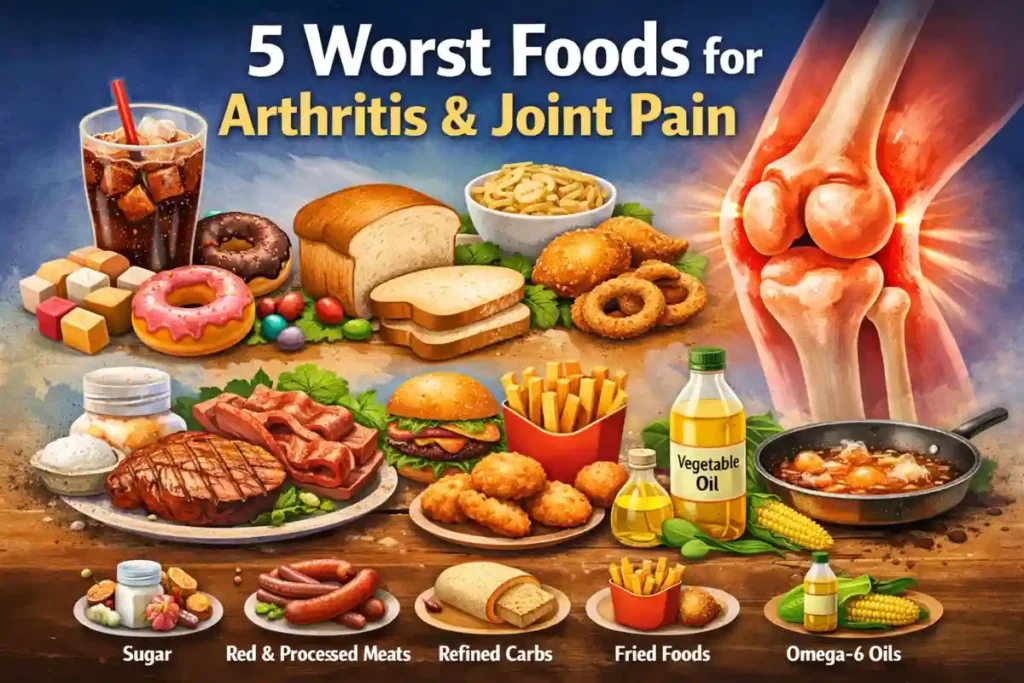
The 5 worst foods for arthritis and joint pain are sugar, processed and red meats, refined carbohydrates, fried foods, and omega-6 vegetable oils. These foods increase inflammation, which can directly worsen joint pain, stiffness, and swelling. Most people consume multiple of these foods daily, often without realizing how frequently they trigger symptoms.
What are the 5 worst foods for arthritis and joint pain?
- Sugar and sugary drinks
- Processed and red meats
- Refined carbohydrates (white flour foods)
- Fried and fast foods
- Omega-6 vegetable oils (excess intake)
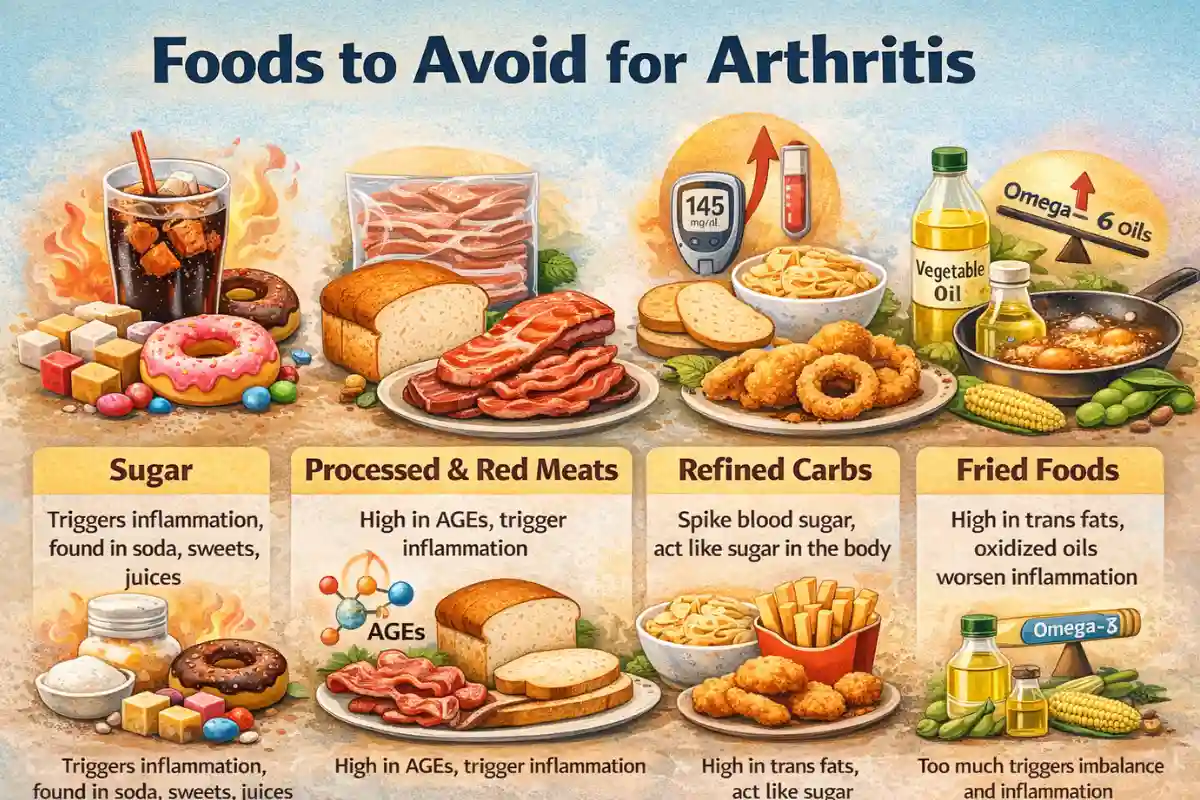
This list shows up everywhere online. But what’s usually missing is how these foods actually affect your joints, and why some people feel worse within days while others don’t notice for years.
What happens in the body when these foods worsen arthritis?
Arthritis symptoms are strongly influenced by chronic, low-grade inflammation.
When certain foods are eaten regularly, the body produces inflammatory chemicals like cytokines and prostaglandins. These don’t just stay in the bloodstream—they interact with joint tissues, increasing sensitivity, swelling, and stiffness.
A 2020 research published in PubMed Central found that dietary patterns can influence inflammatory pathways involved in arthritis. That doesn’t mean food is the root cause of arthritis, but it clearly affects how active the condition becomes.
If your daily diet keeps triggering small inflammatory responses, your joints never fully “calm down.”
What are the 5 worst foods for arthritis (explained simply)?
1. Sugar (rapid inflammation trigger)
Sugar is one of the fastest ways to increase inflammation in the body.
When blood sugar rises quickly, it triggers insulin spikes and promotes the release of inflammatory messengers. Over time, this makes the body more reactive, including joint tissues.
What stands out in research is consistency. A 2022 study in The American Journal of Clinical Nutrition found that higher sugar intake was associated with increased inflammatory markers like CRP. The limitation is that it looked at general inflammation, not arthritis-specific outcomes—but the mechanism overlaps.
Where people underestimate sugar:
- Tea/coffee with sugar (multiple times daily)
- Packaged juices and “health drinks.”
- Hidden sugars in sauces and snacks
Most people don’t overeat desserts. They overconsume small amounts repeatedly, which is worse.
2. Processed and red meat (inflammation + cooking effect)
Processed meats contain preservatives and compounds that can promote inflammation. But the bigger issue is something most people don’t hear about—AGEs (advanced glycation end products).
These compounds form when meat is cooked at high temperatures, especially grilling or frying. They accumulate in the body and are linked to increased inflammation.
Eating grilled meat occasionally is not the problem. Eating processed or heavily cooked meat daily is where the risk builds.
3. Refined carbohydrates (hidden inflammation cycle)
Refined carbohydrates behave almost like sugar in the body.
They digest quickly, spike blood glucose, and trigger the same inflammatory response. This includes:
- White bread
- Biscuits and cookies
- Bakery products
- Many packaged snacks
One pattern that shows up repeatedly: People reduce sugar but continue eating refined flour daily—and see no improvement.
That’s not surprising. The metabolic effect is very similar.
4. Fried and fast foods (combined inflammatory load)
Fried foods are not just high in fat—they contain oxidized fats and sometimes trans fats, both of which increase inflammation.
A 2010 study in The American Journal of Clinical Nutrition showed that trans fat intake was associated with higher inflammatory markers. This is one of the more consistent findings across nutrition research.
- There’s also a practical issue: Repeatedly heated oil (common in both restaurants and homes) becomes more inflammatory over time.
So even “homemade fried food” isn’t automatically safer.
5. Omega-6 vegetable oils (imbalance problem, not absolute harm)
Omega-6 fats are essential, but modern diets contain them in excess.
The issue is the ratio between omega-6 and omega-3 fats. When omega-6 intake is too high, it promotes inflammatory pathways.
Common sources:
- Sunflower oil
- Corn oil
- Soybean oil
- Packaged and fried foods
As of 2026, research suggests that reducing this imbalance—not eliminating omega-6—may help lower inflammation. Results vary, which is why this topic is still debated.
Why do some foods trigger arthritis pain more than others?
Not everyone reacts the same way, and this is where most advice becomes misleading.
| Food Type | Primary Effect | Why It Matters for Joints |
|---|---|---|
| Sugar | Rapid inflammation spike | Can trigger short-term flare-ups |
| Processed meat | Adds inflammatory compounds | Builds long-term stress |
| Refined carbs | Repeated glucose spikes | Sustains daily inflammation |
| Fried foods | Oxidative damage | Affects joint tissue over time |
| Omega-6 oils | Imbalance in fat intake | Maintains chronic inflammation |
What foods help with arthritis and joint pain?
Removing triggers helps, but improvement usually comes from replacement, not just restriction.
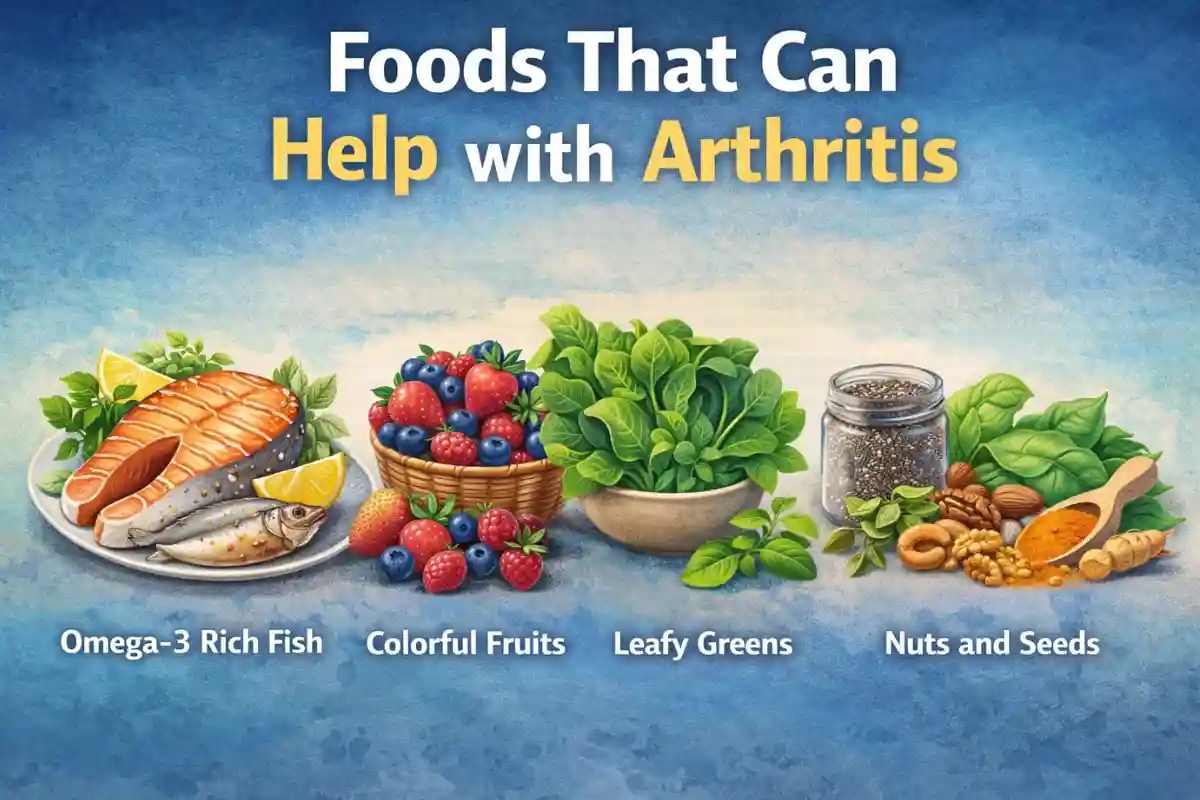
Foods that support lower inflammation:
- Fatty fish (salmon, sardines)
- Leafy greens
- Berries
- Nuts and seeds
- Spices like turmeric and ginger
A 2013 review in Frontiers in Nutrition1Differential effects of high dose omega-3 fatty acids on metabolism and inflammation in patients with obesity: eicosapentaenoic and docosahexaenoic acid supplementation, Frontiers. highlighted omega-3 fatty acids as beneficial for reducing inflammatory markers. The limitation is that results depend on consistent intake and overall diet quality.
What simple changes actually reduce joint pain?
This is where most advice becomes unrealistic. These are the changes people actually stick to:
- Replace cooking oil (don’t just “eat healthy”)
- Cut sugary drinks first—they add up fast
- Reduce the frequency of trigger foods instead of trying to eliminate everything
- Switch refined carbs to whole alternatives
Small changes done daily matter more than extreme changes done briefly.
Key Takeaways
- Inflammation is the main driver of arthritis symptoms, not just joint damage
- Sugar and refined carbs create similar effects in the body
- Cooking method plays a major role in how food affects inflammation
- Omega-6 imbalance is common and often overlooked
- Long-term patterns matter more than occasional indulgence
FAQs
What are the 5 worst foods to eat if you have arthritis?
The five worst foods are sugar, processed meats, refined carbohydrates, fried foods, and omega-6 vegetable oils. These foods increase inflammation, which can worsen joint pain and stiffness over time, especially when consumed regularly.
Are processed foods bad for arthritis?
Processed foods often contain refined carbs, unhealthy fats, and additives that may increase inflammation. Regular intake can worsen symptoms in some people, but occasional consumption is less likely to have a major effect compared to long-term dietary habits.
What foods make arthritis worse the most?
Foods that rapidly increase inflammation tend to have the strongest effect. This includes sugary drinks, refined carbohydrates, and fried foods. The impact depends on how often they are consumed and individual sensitivity.
Can changing diet really reduce joint pain?
Diet changes can influence inflammation levels, which may help reduce joint pain in some individuals. However, results vary based on the type of arthritis, overall health, and consistency of dietary changes.
Final Thoughts (What actually matters long-term)
The 5 worst foods for arthritis and joint pain are not dangerous because of occasional consumption. The issue is repetition and dietary patterns.
Most people are not eating large amounts of harmful foods in one sitting. They are consuming small amounts multiple times a day—sugar in drinks, refined carbs in snacks, vegetable oils in cooking, and fried foods in between. That pattern keeps inflammation slightly elevated all the time.
A study published in Arthritis Care & Research (2015) found that individuals following a more anti-inflammatory diet pattern reported lower disease activity scores. The limitation is that diet was only one factor among many, including medication and lifestyle.
That’s the realistic takeaway: Diet will not “fix” arthritis on its own. But it can absolutely make symptoms better—or worse.
If there’s one practical shift that stands out, it’s this: Reduce daily inflammatory triggers first, before chasing “superfoods.”
That’s where most people get it wrong.
Scientific References
- 1Differential effects of high dose omega-3 fatty acids on metabolism and inflammation in patients with obesity: eicosapentaenoic and docosahexaenoic acid supplementation, Frontiers.

Recent Posts