
Use this water fasting weight loss estimator to explore potential weight changes during water fastingeducational estimates based on metabolism; not medical advice.
Educational estimator for potential weight changes during water fasting
What May Happen During Your Fast
⚠️ Important Safety Information
Understanding Weight Changes During Water Fasting
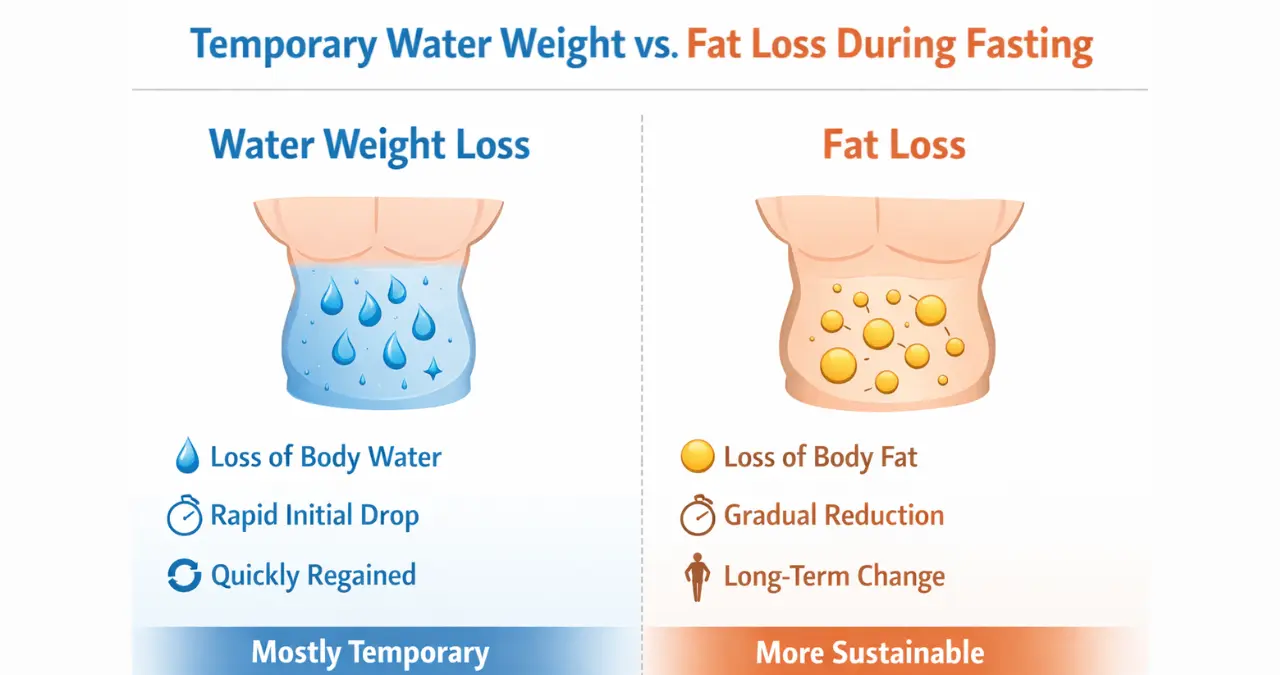
Weight changes during water fasting occur through two primary mechanisms. Understanding the difference helps set realistic expectations.
Water and Glycogen Depletion (Temporary)
The body stores carbohydrates as glycogen in muscles and liver. Research suggests each gram of glycogen binds with approximately 3–4 grams of water. When glycogen stores are depleted during fasting:
- Associated water may be released and excreted
- This can result in noticeable scale weight changes in the first 1–3 days
- This weight typically returns when normal eating resumes
Fat Oxidation (May Be Retained)
When glycogen is depleted, the body may increase fat oxidation for energy. The rate depends on individual factors including:
- Basal metabolic rate (varies between individuals)
- Activity level during the fast
- Body composition and starting weight
- Metabolic adaptation (which varies significantly)
Important Context: Calorie-based fat loss calculations (e.g., “3,500 calories = 1 pound of fat”) are simplified estimates. Research suggests actual fat loss may differ due to metabolic adaptation, individual variation, and other factors.
Safety Considerations for Water Fasting
Water fasting is not appropriate for everyone and carries potential health risks. This section provides general information, not medical advice.
Potential Risks of Extended Fasting
Research and clinical experience have identified several potential concerns with extended fasting:
- Electrolyte imbalances: Sodium, potassium, and magnesium levels may be affected
- Dehydration: Despite drinking water, electrolyte changes can affect hydration
- Refeeding syndrome: A potentially serious condition when eating resumes after extended fasting
- Lean mass loss: Some research suggests protein breakdown may occur, especially during longer fasts
- Blood sugar fluctuations: Particularly concerning for those with diabetes or hypoglycemia
Who Should NOT Attempt Water Fasting
Water fasting is contraindicated for many groups including: pregnant or breastfeeding individuals, children and adolescents, adults over 65, those with eating disorders or history of disordered eating, people with diabetes (especially insulin-dependent), those with kidney or liver conditions, individuals with heart conditions, people taking medications that require food, and those who are underweight. This is not a complete list. Consult a healthcare provider before attempting any fast.
Alternatives to Extended Water Fasting
For those interested in fasting-related approaches, several alternatives may carry fewer risks:
- Intermittent fasting (16:8): Time-restricted eating with daily eating windows
- Modified fasting: Very low calorie intake rather than complete fasting
- Caloric restriction: Consistent moderate calorie deficit with adequate nutrition
Consult a healthcare provider or registered dietitian to discuss which approach, if any, may be appropriate for your situation.
If You Choose to Fast: General Considerations
This information is educational only. Anyone considering water fasting should consult a healthcare provider first.
Before Starting
- Consult with a healthcare provider, especially if you have any health conditions
- Consider whether fasting is appropriate for your situation and goals
- Understand the potential risks and how to recognize warning signs
During a Fast
- Stay hydrated with water (research suggests 2–3 liters daily for most adults)
- For fasts over 24 hours, electrolyte supplementation may be considered (consult a provider)
- Avoid strenuous activity
- Stop immediately if you experience concerning symptoms (dizziness, heart palpitations, confusion)
Breaking a Fast
How you resume eating after fasting matters, especially after longer fasts:
- Start with small amounts of easily digestible foods
- Reintroduce foods gradually over 1–2 days for fasts over 48 hours
- For fasts over 5 days, structured refeeding protocols are recommended under medical supervision
Frequently Asked Questions
Related Tools
These calculators may provide helpful context:
Medical Disclaimer
This Water Fasting Weight Loss Estimator is for educational and informational purposes only. It does not provide medical advice and should not be used to make health decisions. The estimates provided are general calculations that may not reflect your individual results. Water fasting carries health risks and is not appropriate for many people. Always consult a qualified healthcare provider before attempting any fasting regimen, especially if you have any health conditions, take medications, are pregnant or breastfeeding, or are under 18 or over 65 years of age.
Published by Healthy Beginning Magazine · For educational purposes only