

A total daily energy expenditure TDEE calculator does more than a good guess at how many calories your body needs each day to maintain your current weight – it actually gives you a pretty accurate estimate. TDEE stands for Total Daily Energy Expenditure, which is based on the total number of calories your body burns in 24 hours, taking into account all aspects of daily activity, including rest, movement, and exercise.
TDEE is super useful because, let’s be honest, many people have no idea how much to eat. Guessing often leads to slow progress or frustration – and who wants that? A TDEE calculator gives you a clear starting point – not based on guesses or assumptions, but on science.
What Is TDEE and What’s The Big Deal
Your body is burning calories all the time, even when you’re catching some Z’s. Your heart’s beating, your lungs are working, and your brain is firing on all cylinders – all of which use energy.
TDEE is made up of four main parts:
Studies in reputable places like The American Journal of Clinical Nutrition show that the majority of your daily calorie burn comes from BMR, not from all that exercise you’re doing. So, don’t just focus on getting more active; make sure you’re eating right, too.
A TDEE calculator combines all these factors into one number. That number tells you exactly how many calories you need per day to stay at the same weight.
How a TDEE Calculator Works Its Magic
A TDEE calculator uses pretty basic info like your age, height, weight, sex, and activity level. It then uses these details in some pretty simple formulas that estimate how much energy you use.
The most common formulas are:
Research suggests that the Mifflin-St Jeor formula is the most accurate for most adults. But let’s be real – no formula is perfect. These tools give you an estimate, not a medical diagnosis.
That’s worth keeping in mind. A TDEE calculator is a guide, not a doctor’s verdict.
How to Get the Most Out of a TDEE Calculator
Using a TDEE calculator is pretty simple, but getting accurate results depends on being honest and consistent.
First, enter your real height and weight – don’t try to fudge the numbers and make yourself look better. Even small changes can make a big difference.
Next, choose your activity level carefully. Many of us tend to overestimate this bit. If you exercise a couple of days a week, you’re probably “lightly active” and not “very active” at all.
Once you get your TDEE result, treat it as a starting point. If you want to lose weight, most experts suggest eating a bit less than your TDEE – if you want to gain weight, eat a bit more.
Health organizations, such as the CDC and NHS, recommend making small, steady changes rather than trying to drastically cut calories.
What a TDEE Calculator Suggests for Weight Loss
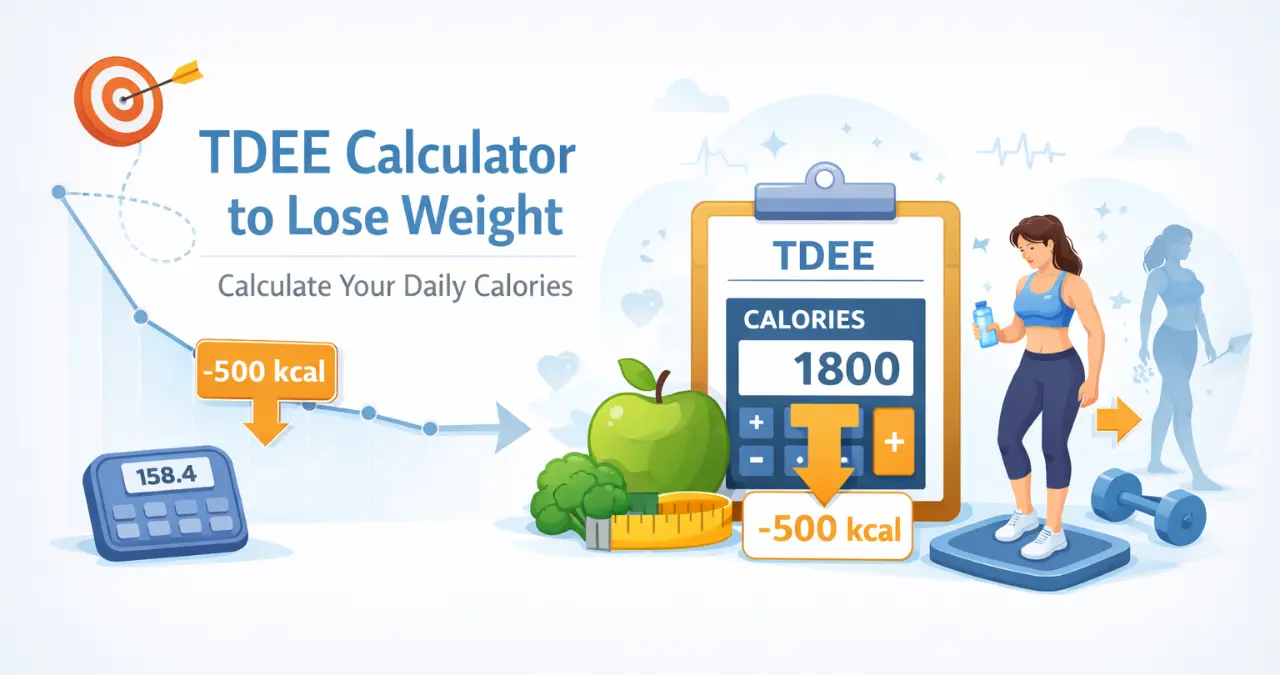
For weight loss, a TDEE calculator will give you a target of how many calories you need to maintain your weight. Then you create a bit of a calorie deficit.
A common strategy is to reduce your intake by 300-500 calories a day. Research has shown that this sort of range supports gradual fat loss while keeping the risk of muscle loss or nutrient deficiencies relatively low.
Going on a very low-calorie diet can be a recipe for fatigue, muscle loss, and ultimately poor long-term results. The studies all show that consistency is key – not trying to slash calories aggressively.
A TDEE calculator is a great tool for avoiding the trap of eating either too little or too much by giving you a much more realistic target.
TDEE Calculator for Weight Gain and Muscle Support
For people looking to put on weight or build muscle, TDEE can be just as useful. It shows you the minimum calories you need to get by before you start adding any extra energy for growth.
Studies of strength training have shown that a small calorie surplus combined with decent protein intake is the best way to support muscle gain, not just going overboard with your eating. A TDEE calculator helps you control that surplus.
Eating loads more than you need – just to see how fast you can build muscle – is not a good idea. It all too often results in more fat gain instead.
Benefits of Using a TDEE Calculator
A TDEE calculator has a few key benefits:
The thing is, a lot of people fail with diets because they are following generic advice that doesn’t take into account their individual circumstances. A TDEE calculator personalises calorie needs based on lots of different factors, including body and lifestyle data.
Limitations to be Aware of
A TDEE calculator is not a magic solution. It can’t take into account things like hormones, medical conditions, or how well your body is using those calories.
Factors like your thyroid health, any medication you are on, how well you sleep, and how stressed you are can all affect how many calories you need. Most calculators just don’t take those into account.
The science is quite clear that all calorie formulas are just estimates, which means you may need to adjust your TDEE over time as your progress on track or not.
Tracking your progress for a couple of weeks will give you a good idea if your TDEE estimate is anywhere near accurate.
Best Free TDEE Calculator Tools
There are loads of free TDEE calculators available online. What you need is one that is simple, easy to use, and uses a formula that has been validated.
A good calculator should:
You can use our Free TDEE Calculator. No password, no login, just check it for free within a second.
TDEE vs BMR: Why This Matters
BMR and TDEE are not the same thing. BMR is just the calories your body needs to keep going at rest, while TDEE includes all the calories you use up doing things during the day.
Eating only the calories you need at rest is generally not a good idea unless you are being supervised by a professional. Most health authorities recommend eating much closer to your TDEE for the long haul.
Getting this right will save you from under-eating and burnout.
Why TDEE Calculators Are Useful but Not Magic
A TDEE calculator is a guide, not a guarantee. It helps you make informed decisions, but habits still matter.
Food quality, protein intake, sleep, and movement all affect results. Studies repeatedly show that long-term success comes from consistency, not perfect numbers.
Used correctly, a TDEE calculator supports awareness and control. Used blindly, it can still fail.

Recent Posts