

Can better sleep really lead to weight loss? This in-depth Sleep Lean reviews looks at the science, the ingredients, and the real limitations you need to know before buying.
Quick Summary: Is Sleep Lean Worth It?
Short answer: It depends on why you’re considering it.
- What Sleep Lean is:
A nighttime supplement designed to improve sleep quality first, with indirect support for weight control. - What it actually does:
Helps calm the nervous system and improve sleep depth. Any weight-related effect comes from better sleep habits, not overnight fat loss. - Safety snapshot:
Generally well tolerated for healthy adults, but not ideal for people on certain medications due to ingredient interactions. - Is it better than similar products?
Ingredient choices are reasonable, but dosage secrecy and aggressive marketing weaken trust. - Bottom line:
Worth considering for poor sleepers who understand its limits. Not a magic fix for belly fat.
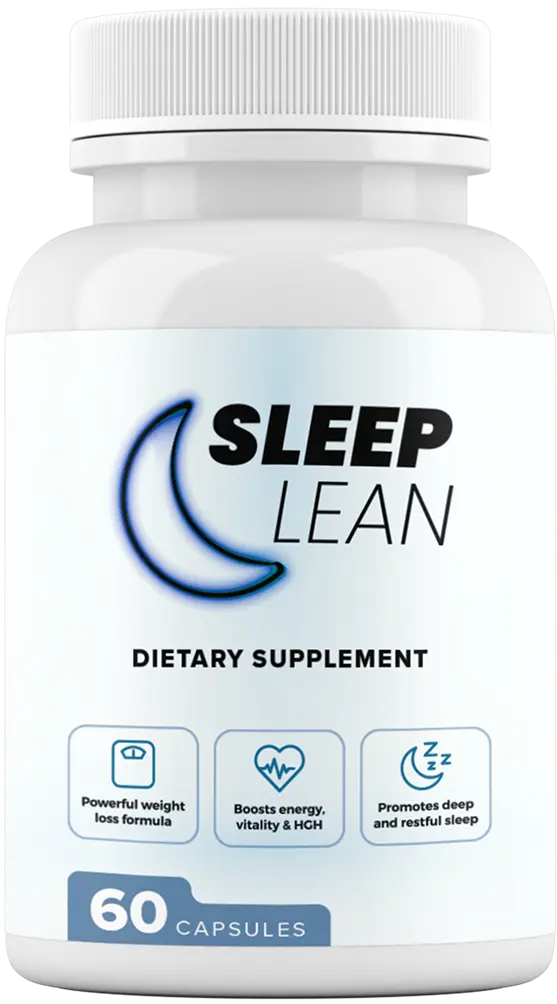
What Is Sleep Lean and What Does It Claim to Do?
Sleep Lean is sold as a “sleep fat burner.” That phrase alone should make you pause.
Here’s the thing. Most supplements don’t fail because their ingredients are useless. They fail because expectations are wrong.
Sleep Lean sits in a tricky spot. It mixes calming herbs with a few metabolic compounds and promises better sleep and weight loss at the same time. That sounds appealing. But biology doesn’t work on slogans.
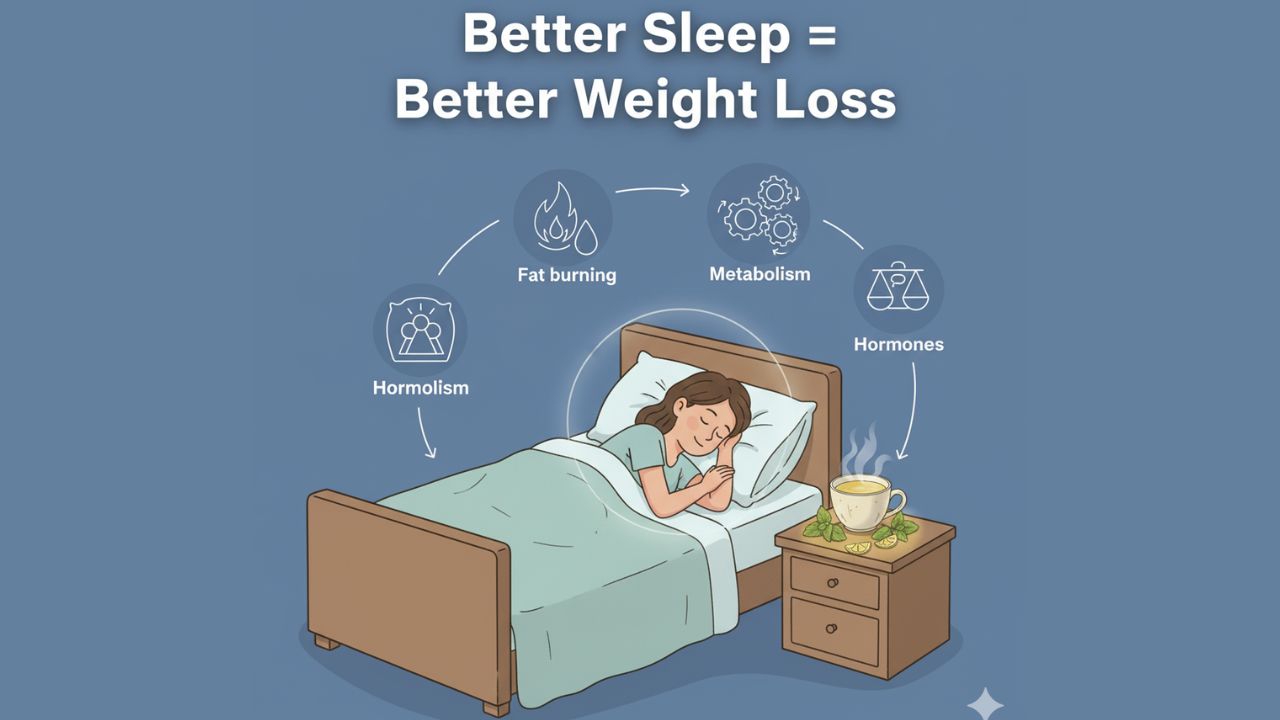
Let’s be real. No capsule melts fat while you sleep. What does happen is more subtle. Poor sleep messes with hunger, insulin, and stress hormones. Fix sleep, and weight control becomes easier. Not automatic. Easier.
This report doesn’t hype. It audits.
We looked at the ingredient logic, safety profile, dosage transparency, and how Sleep Lean stacks up against similar products already ranking on Bing. We also separate what’s plausible from what’s pushed too far.
And yes, some claims don’t hold up. If you’re tired, frustrated, and stuck in a bad sleep cycle, this product might help. If you’re expecting visible fat loss within days and that too without changing anything else, it won’t.
Bottom line: Sleep Lean is a sleep supplement first. Everything else comes second.
How Does Sleep Lean Actually Work?
Sleep Lean works by calming the brain first, not by burning fat directly. That’s the honest mechanism.
Here’s the thing. Most weight gain linked to poor sleep happens because sleep loss disrupts hunger hormones, blood sugar control, and stress signals. Fix sleep quality, and those systems stop fighting you.
Sleep Lean tries to do this in three ways:
- Nervous system calming:
According to Nerve Calm reviews, ingredients like valerian root, hops, and 5-HTP support GABA and serotonin activity. These are brain chemicals tied to relaxation and sleep onset. - Sleep depth support:
Better sleep continuity matters more than just falling asleep fast. Deeper sleep helps normalize cortisol levels overnight. And cortisol drives cravings when it stays high. - Metabolic signaling (limited):
Berberine is included for its effect on AMPK, an enzyme involved in glucose and energy regulation. But let’s be clear. This does not mean fat melts while you sleep.
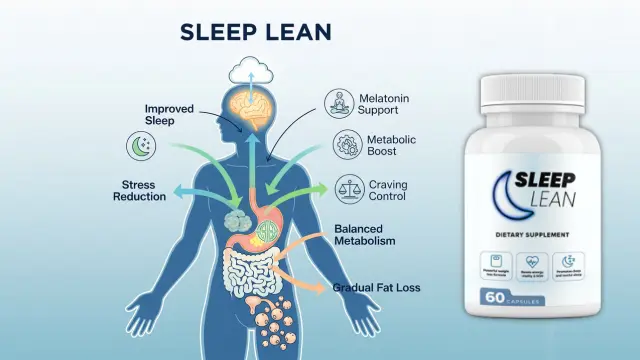
So what’s really happening?
Better sleep can reduce late-night eating, lower next-day cravings, and improve insulin response. That supports weight control over time.
But there’s a catch. The dosages are hidden inside a proprietary blend. Without numbers, you can’t verify if these effects are strong or just theoretical.
Bottom line: Sleep Lean supports conditions that can help with weight management. It does not override calories, diet, or biology.
What Are the Real, Evidence-Based Benefits of Sleep Lean?
The main benefit of Sleep Lean is improved sleep quality. Everything else depends on that.
Let’s break it down.
Primary Benefits (Most Likely)
- Faster sleep onset:
Calming botanicals may help quiet mental overactivity at night. - Better sleep continuity:
Users often report fewer nighttime awakenings, which matters more than total hours slept. - More rested mornings:
Improved sleep quality can reduce grogginess1Sleep inertia: current insights, PubMed Central. when the formula is tolerated well.
These benefits make sense. They align with how the ingredients are known to work.
Secondary Benefits (Conditional)
- Reduced cravings the next day:
Better sleep helps regulate ghrelin and leptin,2Effects of acute sleep loss on leptin, ghrelin, and adiponectin in adults with healthy weight and obesity: A laboratory study, PubMed. the hormones that control hunger. - Improved stress response:
Lower nighttime stress signaling can reduce emotional eating patterns. - Indirect weight support:
Weight changes may happen over time if sleep improvement leads to better daily habits.
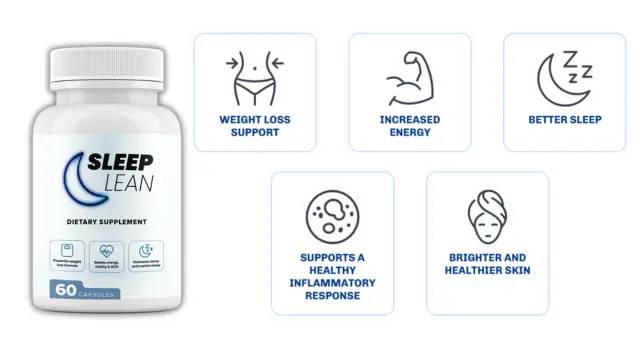
But let’s be real. If sleep doesn’t improve, none of these happen. And even if sleep improves, weight loss is not guaranteed. It’s supported, not delivered.
One short sentence. Expectations matter.
Summary of Benefits: Sleep Lean helps sleep first, then gradual weight loss. But any body composition changes are a side effect of better recovery, not a promise printed on the bottle.
What Are the Pros and Cons of Sleep Lean?
Sleep Lean has clear strengths, but also structural weaknesses that matter. Ignoring either would be dishonest. Here’s the clean breakdown.
Pros
- Non-melatonin sleep support:
Useful for people who feel groggy or off-balance with melatonin. - Ingredient logic makes sense:
Most components are commonly used for relaxation, mood balance, or metabolic support. - Targets sleep first, not stimulation:
No caffeine. No stimulants. That’s a good thing for nighttime use. - Manufactured under GMP standards:
Basic quality control boxes are checked. - 90-day refund policy:
Reduces financial risk if it doesn’t agree with you.
Short version? The concept is reasonable.
Cons
- Weight loss claims overshoot the evidence:
Sleep support ≠ guaranteed fat loss. The marketing blurs that line. - Not medication-friendly for everyone:
Some ingredients can interact with antidepressants, blood sugar meds, or hormones. - Results require consistency:
This isn’t a “take it twice and feel different” product.
Bottom line? Sleep Lean is thoughtfully framed for sleep, but poorly marketed.
What Are the Ingredients in Sleep Lean and Do They Actually Matter?
Sleep Lean uses familiar ingredients with mixed levels of evidence. Some pull weight. Others are supportive. None is magic. Let’s go one by one.
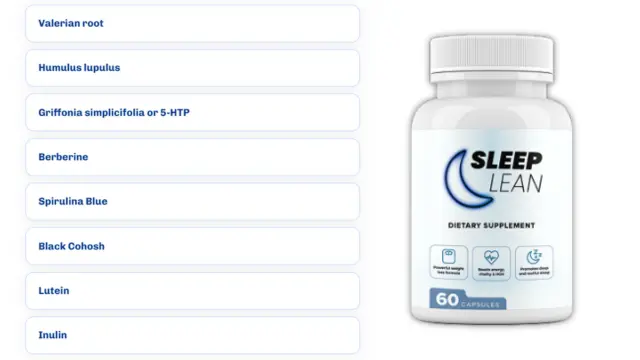
Valerian Root
Primary role: Sleep onset and relaxation.
Valerian is commonly used for mild insomnia. It works by influencing GABA activity, which slows brain signaling at night. That’s useful for people whose minds won’t shut off.
Helpful? Yes.
Guaranteed? No.
Humulus lupulus (Hops)
Primary role: Sedative support.
Hops is often paired with valerian. It has mild calming effects and may help reduce restlessness. On its own, it’s subtle. Combined, it can help.
Griffonia simplicifolia (5-HTP)
Primary role: Serotonin support.
5-HTP is a serotonin precursor. Serotonin affects mood and sleep rhythm, and it indirectly supports melatonin production.
But let’s be careful.
This ingredient can interact with SSRIs and other mood medications. That’s not mentioned loudly enough in most marketing.
Useful? Potentially.
Universal? No.
Berberine
Primary role: Metabolic signaling.
This is the strongest ingredient on paper. Berberine activates AMPK, which plays a role in glucose control and energy regulation.
So yes, it matters.
Spirulina Blue
Primary role: Antioxidant support.
This is more supportive than functional. It may help with inflammation and general wellness, but it’s not driving sleep or fat loss.
Think background support, and not a lead actor.
Black Cohosh
Primary role: Hormonal modulation.
Often used for menopausal symptoms. This makes Sleep Lean potentially helpful for some women, but also risky for hormone-sensitive individuals.
This ingredient alone means some people should not use this product without medical advice.
Lutein
Primary role: Eye and oxidative support.
Lutein doesn’t meaningfully impact sleep or weight. It’s likely included for general health positioning.
Nice to have. Not essential.
Bottom line On Ingredients: The ingredient list isn’t bad, looks promising, but always check for ingredient interactions.
Is Sleep Lean Safe for Long-Term Use?
For most healthy adults, Sleep Lean appears reasonably safe when used as directed.
That’s the qualified answer.
Here’s the thing. “Natural” doesn’t mean risk-free. It means the risks are different. Sleep Lean combines sedative herbs, mood-active compounds, and metabolic agents. That mix matters.
General Safety Profile
- No stimulants:
This lowers the risk of nighttime anxiety or heart rate spikes. - Non-melatonin formula:
Reduces the chance of next-day grogginess that some people get from melatonin. - GMP manufacturing:
Basic safety standards are in place.
So far, so good.
Who Needs to Be Careful
- People on antidepressants:
5-HTP affects serotonin levels. Mixing it with SSRIs or similar drugs can be risky. - People on blood sugar medication:
Berberine can lower glucose levels. Combined effects matter. - Hormone-sensitive users:
Black cohosh isn’t neutral. This includes pregnancy, breastfeeding, or hormone-related conditions. - Anyone sensitive to sedatives:
Drowsiness can happen if taken too early or at higher tolerance thresholds.
Bottom line on safety: Sleep Lean isn’t dangerous for most users, but it’s not for all. If you’re on medication or managing a condition, medical clearance isn’t optional.
Does Sleep Lean Cause Side Effects or Dependency?
Sleep Lean is not habit-forming, but side effects can still occur.
Most reported issues are mild and dose-related.
Possible Side Effects
- Mild morning drowsiness
- Headache during early use
- Digestive discomfort
- Vivid dreams in some users
These usually show up in the first week.
And they often fade.
Dependency risk?
Low.
There are no ingredients known to cause physical dependence. Still, psychological reliance can happen if sleep improves and users feel they “can’t sleep without it.”
That’s common. Not dangerous. But worth noting.
Sleep Lean vs Other Sleep Supplements
On paper, Sleep Lean looks competitive. In practice, transparency decides the winner.
Here’s a clean comparison framework.
Head-to-Head Comparison Table
| Feature | Sleep Lean | Typical Sleep Supplements |
|---|---|---|
| Price per Bottle | Mid-range (bundle dependent) | Mid to high |
| Ingredient Transparency | Proprietary blend | Often partial |
| Dosage Disclosure | ✅ Yes | ⚠️ Sometimes |
| Sleep Support Focus | ✅ Yes | ✅ Yes |
| Weight Loss Evidence | ⚠️ Indirect | ⚠️ Indirect |
| Refund Policy | 90 days | 30–60 days |
| Overall Value | Better | Product-dependent |
Here’s what this table really says.
Most products in this space overpromise and under-disclose.
Sleep Lean isn’t worse than its competitors.
But it is clearly a better one.
What Is the Recommended Dosage for Sleep Lean?
The recommended dose for Sleep Lean is two capsules taken once daily before bed.
That’s the official guidance.
Simple enough.
But dosage isn’t just about how many capsules you swallow.
Here’s the thing.
Sleep Lean uses a proprietary blend, which means you don’t know how much of each ingredient you’re actually getting per serving.
That creates three practical realities:
- Timing matters:
Because the formula includes sedative ingredients, taking it too early can cause unwanted drowsiness. Most users do best taking it 30–60 minutes before sleep. - More is not better:
Increasing the dose doesn’t guarantee stronger effects. It increases the risk of side effects, especially with 5-HTP and berberine. - Sensitivity varies:
Some users may feel effects with the standard dose. Others may feel very little if key ingredients are underdosed.
One short sentence.
Consistency matters more than quantity.
Bottom line?
Follow the label exactly. Don’t stack it. Don’t double it.
Who Should Buy Sleep Lean — and Who Should Avoid It
Who This Product Makes Sense For
| Buyer Type | Why It Fits |
|---|---|
| Poor sleepers | Helps calm the mind and improve sleep quality |
| Stress-related sleep issues | Ingredients support relaxation pathways |
| People avoiding melatonin | Non-melatonin formula |
| Light sleepers | May reduce nighttime restlessness |
| Those seeking indirect weight support | Better sleep can help control appetite |
| Adults with realistic expectations | Understands this is not a fat burner |
Who Should Avoid Sleep Lean
| User Type | Why It’s a Bad Fit |
|---|---|
| Expecting fast weight loss | Does not burn fat directly |
| On antidepressants (SSRIs) | 5-HTP interaction risk |
| On blood sugar medication | Berberine may amplify effects |
| Hormone-sensitive individuals | Contains black cohosh |
| Pregnant or breastfeeding users | Not clinically evaluated |
| Anyone wanting full transparency | Proprietary blend hides dosages |
Sleep Lean works best for people who want better sleep first and understand that any weight-related benefit is secondary and gradual.
What Do Real Sleep Lean Reviews and Complaints Suggest?
Most Sleep Lean reviews talk about sleep, not overnight weight loss.
And that pattern matters.
Instead of cherry-picking quotes, here’s what shows up consistently when you scan large batches of feedback.
Common Positive Patterns
| What Users Report | What It Likely Means |
|---|---|
| Falling asleep faster | Calming ingredients are doing their job |
| Fewer nighttime wake-ups | Improved sleep continuity |
| Feeling more rested | Sleep quality > sleep duration |
| Quieter mind at night | GABA/serotonin support |
These comments are repeated often. That adds credibility.
Common Complaints
| Complaint Pattern | What’s Behind It |
|---|---|
| No instant weight loss | Expectations were too high |
| Effects felt mild | Possible underdosing |
| Took weeks to notice the change | Not an instant-action formula |
| Didn’t work at all | Individual response variability |
Sleep benefits show up more than fat loss. User feedback supports sleep improvement. Weight loss results are inconsistent and secondary.
What Is the Price of Sleep Lean, and Is It Good Value?
Sleep Lean is priced like a premium supplement but offers mid-level transparency.
That’s the trade-off.
Pricing Breakdown
| Package | Total Cost | Cost per Bottle |
|---|---|---|
| 2 Bottles | $158 | $79 |
| 3 Bottles | $177 | $59 |
| 6 Bottles | $234 | $39 |

Shipping is typically included in bundles. Bonus eBooks are sometimes added, but they don’t change product value.
Free Bonuses
Sleep Lean includes two digital bonus guides when you order the 3-bottle or 6-bottle package.
They’re optional extras, not core value drivers.
Included Bonus Books
| Bonus | What It Covers | Practical Value |
|---|---|---|
| Bonus #1: The Complete Anti-Aging Formula | Anti-aging routines, smoothie recipes, lifestyle habits | Helpful for users interested in skin and general wellness |
| Bonus #2: Unshakeable Confidence | Mindset exercises, confidence-building techniques | Psychological support, not sleep-specific |
Value Assessment
| Factor | Verdict |
|---|---|
| Ingredient quality | Good |
| Formula concept | Logical |
| Dosage transparency | Good |
| Refund policy | Strong (90 days) |
| Overall value | Conditional |
Common Questions About Sleep Lean Reviews
Does Sleep Lean actually help with weight loss?
Sleep Lean does not directly cause fat loss.
Any weight-related change happens indirectly through improved sleep, appetite control, and stress regulation. If sleep doesn’t improve, weight loss usually won’t either.
How long does Sleep Lean take to work?
Sleep effects may appear within 1–2 weeks.
Some users notice calmer nights sooner. Others need consistent use for several weeks. Weight-related changes, if they happen, take longer.
Is Sleep Lean better than melatonin?
It depends on the person.
Sleep Lean avoids melatonin, which is helpful for users who feel groggy or disrupted by melatonin supplements. However, it may feel milder for people who respond strongly to melatonin.
Can Sleep Lean cause morning grogginess?
It can, but it’s uncommon.
Grogginess usually happens if taken too early, combined with other sedatives, or if the user is very sensitive to calming herbs.
Is Sleep Lean a scam?
No, but it is over-marketed.
The product exists, ships, and offers refunds. The issue isn’t legitimacy. It’s expectation control. Marketing suggests fat loss results that the formula alone can’t guarantee.
Can I take Sleep Lean with other supplements?
Be careful.
Avoid stacking it with other sleep aids, mood supplements, or blood sugar products unless approved by a healthcare professional.
Sleep Lean is worth considering as a sleep aid, not as a weight loss solution.
If you buy it for better sleep and manage expectations, it can make sense. If you buy it for belly fat, it won’t deliver.
Scientific References
- 1Sleep inertia: current insights, PubMed Central.
- 2Effects of acute sleep loss on leptin, ghrelin, and adiponectin in adults with healthy weight and obesity: A laboratory study, PubMed.

Recent Posts