
Peptides for weight loss are getting a lot of attention right now, and some of it is deserved. Here’s what the science actually says, without the hype.
Quick Overview
| Field | Details |
|---|---|
| What it is | Short chains of amino acids that signal your body to do specific things, like burn fat or release hormones |
| What people claim | Faster fat loss, less hunger, more muscle, better metabolism |
| What research says | Some peptides — especially GLP-1 types — have solid evidence behind them. Others are far less proven. |
| Biggest benefit | Appetite control and fat reduction, especially with GLP-1 receptor agonists like semaglutide |
| Biggest limitation | Many peptides sold online have little to no human trial data |
| Best for | Adults with stubborn weight, hormonal issues, or metabolic resistance — under medical supervision |
| Be careful if | You have cancer history, are pregnant, or have kidney or thyroid issues |
| Bottom line | Some peptides are backed by real clinical evidence and approved by the FDA. Others are sold online with almost no proof that they work in humans. Knowing which is which matters a lot before you spend money or take risks. |
What Are Peptides, Exactly?
They’re just short little collections of amino acids – the building blocks of proteins. Think of them as tiny little messengers, sending your body instructions on what to do – like ‘release a hormone, burn some fat, get to work on building that muscle’.
Your body’s already producing thousands of the things for you. Scientists have since figured out how to create their own versions or make tiny tweaks to the existing ones.
This is what’s behind all the recent hype you’ve been hearing about.
Do Peptides for Weight Loss Really Work?
Some of them do, some don’t. It really all comes down to what specific peptide you’re talking about – there’s a world of difference between them.
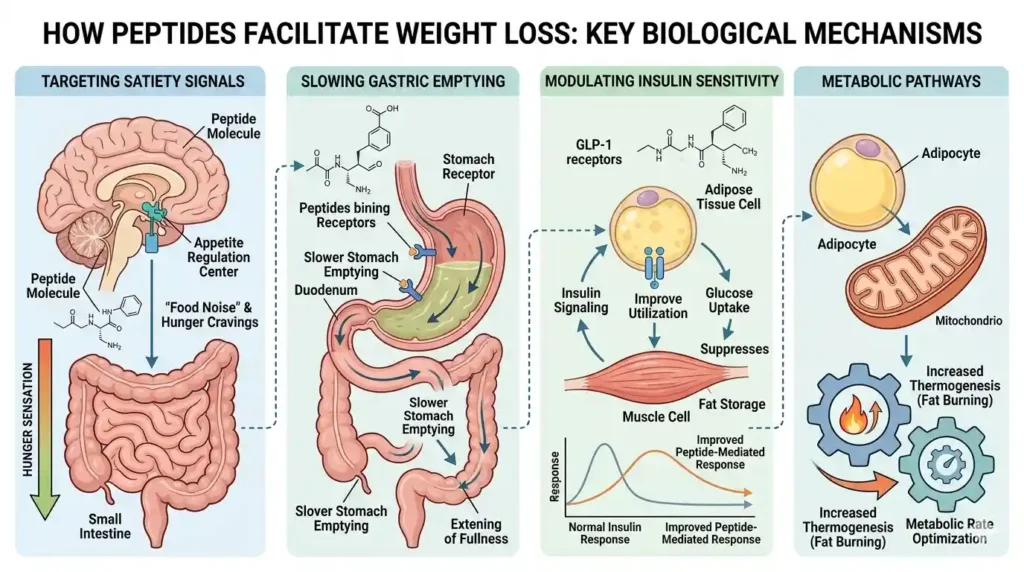
GLP-1 receptor agonists, like semaglutide (the stuff that is made into Ozempic, Wegovy ), are a type of peptide that the FDA has approved after all. Back in 2021, a huge trial was published in the New England Journal of Medicine with 1,961 participants, and it showed that semaglutide helped people lose an average 14.9% of their body weight over 68 weeks. That’s some pretty solid results.
Other peptides like CJC-1295 and BPC-157, though? Not so much. There’s hardly anyone doing serious human trials on them for weight loss. Mainly, what we have is evidence from animal studies and some super small-scale trials.
So yes, peptides can work – but the truth is they’re not one homogeneous entity. They’re a gigantic category with a ton of different types, and each one has its own story to tell.
Peptides for Fat Loss: Which Ones Have Evidence?
Here are the main ones people talk about — and what actually exists behind them.
- Semaglutide / GLP-1 agonists — Strongest evidence. FDA-approved. Works by slowing digestion and reducing appetite.
- Tesamorelin — FDA-approved for a specific condition (HIV-related belly fat). Some off-label use for general fat loss. Real evidence exists, but narrow.
- AOD-9604 — A fragment of growth hormone. Some early human studies showed fat reduction. But it failed to get FDA approval. Not widely prescribed.
- Ipamorelin / CJC-1295 — Growth hormone-releasing peptides. Popular in wellness clinics. Very limited human data on weight loss specifically. Most evidence is from bodybuilding forums, not journals.
If you’re over 35 and reading this, the only peptides with strong human evidence for fat loss right now are the GLP-1 class.
Peptides for Weight Loss and Muscle Gain: Can You Do Both?
This is one of the main reasons folks get into peptides. The idea is to lose fat and keep your muscle – or even grow some – all at the same time.
The thing is, with GLP-1 meds, you’ve got to watch out for muscle loss. Some studies show that up to 40% of the weight lost on semaglutide can actually be lean mass. That’s why docs often recommend strength training while on it.
Growth hormone-releasing peptides like ipamorelin are supposed to help keep the muscle. There’s some logic to it – growth hormone does support muscle after all.
But to be honest, the human research on these specific peptides is pretty thin. Don’t count on ’em without talking to a doctor first.
Peptides for Weight Loss for Women, and Especially Women Over 50
Weight loss gets a lot harder after 40. Estrogen drops, insulin sensitivity goes haywire, and that belly fat becomes super stubborn.
GLP-1 peptides seem to work pretty much the same for men and women. But women over 50 need to be extra careful when it comes to muscle loss – it speeds up something crazy after menopause. If you’re on a weight loss peptide, protein intake and strength training are gonna matter even more than ever.
Some women who are going through perimenopause or menopause are experimenting with combos of peptides through these functional medicine clinics. But at this point, the evidence is mostly just anecdotal. That’s the straight-up truth.
Peptides for Weight Loss for Men Over 35
Guys tend to lose testosterone gradually after 35. Low testosterone usually means more belly fat and less muscle to show for it.
Some people market growth hormone peptides to men specifically for this. But here’s the thing – if low testosterone is your actual problem, tackling that directly is where the good evidence is, rather than trying some indirect peptide route.
GLP-1 peptides work pretty well in men with obesity or metabolic syndrome – that’s the solid data.
Peptides for Weight Loss Side Effects: What You Actually Need to Know
GLP-1 peptides have the most documented side effect profiles — because they’ve been studied the most.
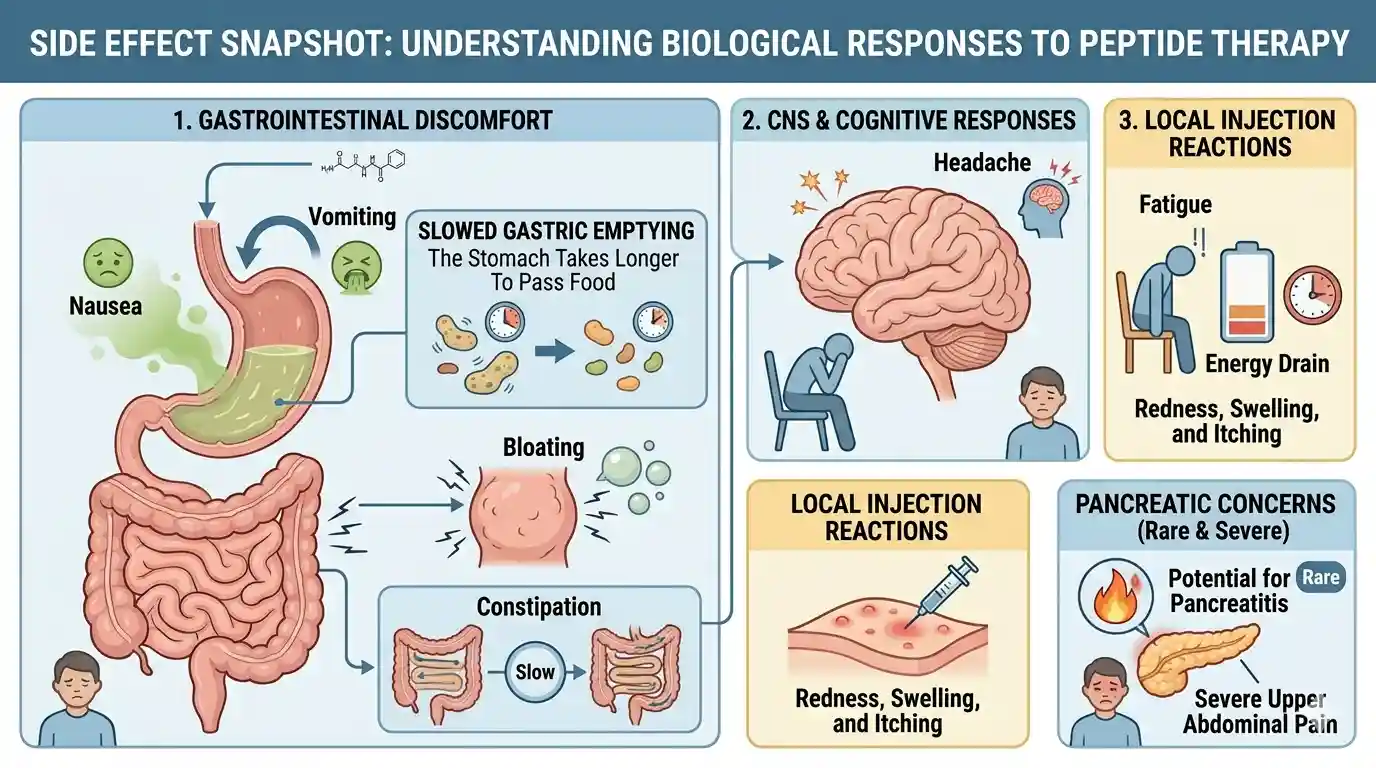
- Common ones: nausea, vomiting, diarrhea, constipation. These usually ease after a few weeks. About 5–10% of people in trials stopped due to side effects.
- Rare but serious: pancreatitis, gallbladder issues, possible thyroid concerns (seen in animal studies — human risk is still unclear as of 2026).
For less-studied peptides bought online, side effects aren’t well-documented. That’s not reassuring. It means no one has systematically tracked what goes wrong.
Here’s something research still hasn’t figured out: the long-term effects of most non-FDA peptides used for weight loss in healthy adults. Studies just haven’t run long enough yet.
Are Peptides Natural?
Technically, yes. Your body makes peptides constantly. Insulin is a peptide. So is the hormone that tells you you’re full after eating.
But “natural” doesn’t mean safe or effective in supplement form. A lot of peptides sold online are synthetic copies. They’re injected, not digested, because stomach acid destroys most of them if you swallow them.
If someone is selling you “oral peptides” for weight loss in a capsule, be skeptical. The science on oral bioavailability for most weight-loss peptides is very weak.
Negatives of Peptides: What No One Tells You Up Front
Cost is real. GLP-1 medications can run $900–$1,300 a month without insurance. Even compounded versions are $150–$400 a month.
You often gain weight back when you stop. That’s documented with semaglutide. It’s not a one-time fix.
Many peptides are sold in the gray market. They’re labeled “research use only” and injected by people without medical guidance. That’s a real risk.
And frankly, the wellness clinic world has outrun the research. A lot of what’s being prescribed or sold hasn’t been studied in healthy people trying to lose 20 pounds. It’s been studied in people with serious metabolic disease.
FAQ. Peptides for Weight Loss
Do peptides for weight loss really work?
Some do, specifically GLP-1 peptides like semaglutide, which have strong clinical trial data. Many other peptides sold for weight loss have little to no human evidence behind them.
What are the best peptides for women over 50?
GLP-1 receptor agonists have the most evidence for women in this age group. They reduce appetite and support fat loss, though you’ll want to prioritize protein and resistance training to protect muscle mass.
What are the side effects of peptides for weight loss?
The most documented side effects come from GLP-1 medications: nausea, digestive issues, and occasional gallbladder problems. Less-studied peptides have fewer documented side effects — mainly because fewer people have tracked them.
Are peptides for weight loss safe?
FDA-approved peptides used under medical supervision have a known safety profile. Peptides bought online without a prescription carry unknown risks. Always talk to a doctor first.
Can peptides help with weight loss and muscle gain at the same time?
Possibly, but it’s not simple. GLP-1 peptides can cause muscle loss alongside fat loss. Growth hormone peptides may help preserve muscle, but the human evidence is limited. Diet and exercise still matter more than the peptide itself.

Recent Posts