

Many women notice weight gain during menopause, even when their eating habits have not changed. This is one of the most common health complaints after the age of 45.
The problem is not a lack of effort or discipline. The body itself changes during menopause, and those changes directly affect how fat is stored, how hunger is controlled, and how energy is used.
A menopause diet for weight loss must be built around these biological changes. Traditional diet advice often fails because it is based on younger metabolic patterns. After menopause, the rules are different.
What menopause is and how it affects the body
Menopause is the point at which a woman has not had a menstrual period for 12 months in a row. It happens because the ovaries reduce production of estrogen and progesterone. This shift usually starts years earlier during perimenopause.
Estrogen plays a role far beyond reproduction. It helps control:
- Where fat is stored
- How the body uses sugar (glucose)
- Muscle maintenance
- Appetite signals
- Bone strength
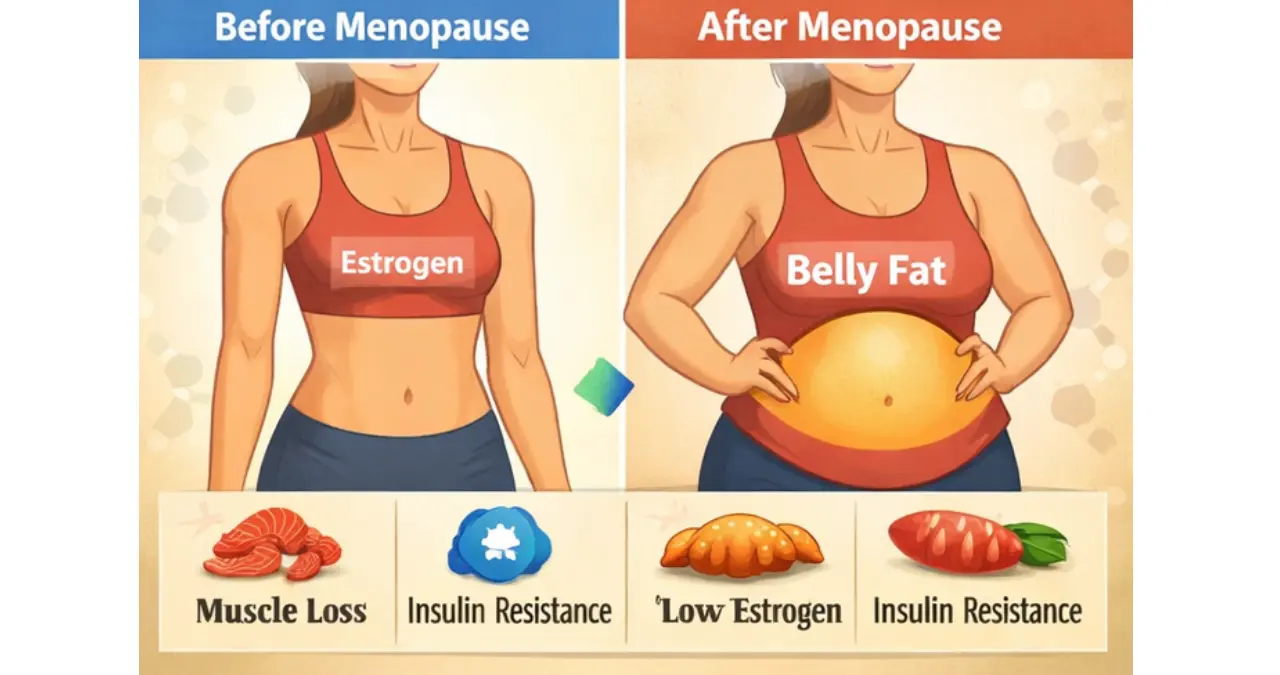
When estrogen drops, fat storage moves from the hips and thighs to the belly area. At the same time, muscle mass slowly declines. This combination makes weight gain easier and weight loss harder.
Why does weight gain happen during menopause
There are four main medical reasons.
- First, metabolism slows. Loss of estrogen leads to loss of muscle. Muscle burns more calories than fat. Less muscle means fewer calories burned at rest.
- Second, insulin resistance increases. The body becomes less efficient at handling carbohydrates. More insulin is released, which pushes more energy into fat storage.
- Third, appetite control weakens. Estrogen normally helps regulate hunger hormones. After menopause, hunger signals become less stable.
- Fourth, stress hormones have stronger effects. Cortisol promotes belly fat, and postmenopausal women become more sensitive to it.
These changes explain why belly fat becomes the main problem area.
Who is most affected?
Weight gain is more common in women who:
- Sit most of the day
- Sleep less than 6–7 hours
- Eat low-protein diets
- Follow high-carb or low-fat eating patterns
- Have long-term stress
- Have insulin resistance or thyroid issues
Genetics matter, but daily habits matter more.
Health risks if menopause-related weight gain is ignored
Excess weight after menopause is linked to a higher risk of:
- Type 2 diabetes
- High blood pressure
- Heart disease
- Fatty liver disease
- Joint problems
- Breast and uterine cancer
Abdominal fat is especially dangerous because it releases inflammatory chemicals that affect blood vessels and organs.
Long-term studies show that women who gain large amounts of weight after menopause have higher overall mortality.
What a menopause diet for weight loss should focus on
The goal is not extreme dieting. The goal is to protect muscle, stabilize blood sugar, and reduce inflammation.
A menopause-friendly meal plan should include:
- Higher protein intake
- Moderate, controlled carbohydrates
- Healthy fats
- High fiber
- Enough calories to avoid muscle loss
Basic macronutrient range
| Nutrient | Recommended Range |
|---|---|
| Protein | 1.2–1.6 g per kg body weight |
| Carbohydrates | 30–40% of daily calories |
| Fat | 30–35% of daily calories |
| Fiber | 25–35 g per day |
Protein is the most important factor. Without enough protein, weight loss becomes muscle loss.
Best food choices during menopause
High-protein foods
- Eggs
- Greek yogurt
- Paneer or tofu
- Fish
- Lentils and beans
Low-glycemic carbohydrates
- Oats
- Sweet potato
- Brown rice (small portions)
- Quinoa
- Berries
Healthy fats
- Olive oil
- Nuts and seeds
- Avocado
Key micronutrients
- Calcium
- Vitamin D
- Magnesium
- Omega-3 fats
These nutrients support bone health, muscle function, and hormone balance.
5 Day Meal Plan for Menopause (example structure)
This is a sample structure, not a fixed prescription.
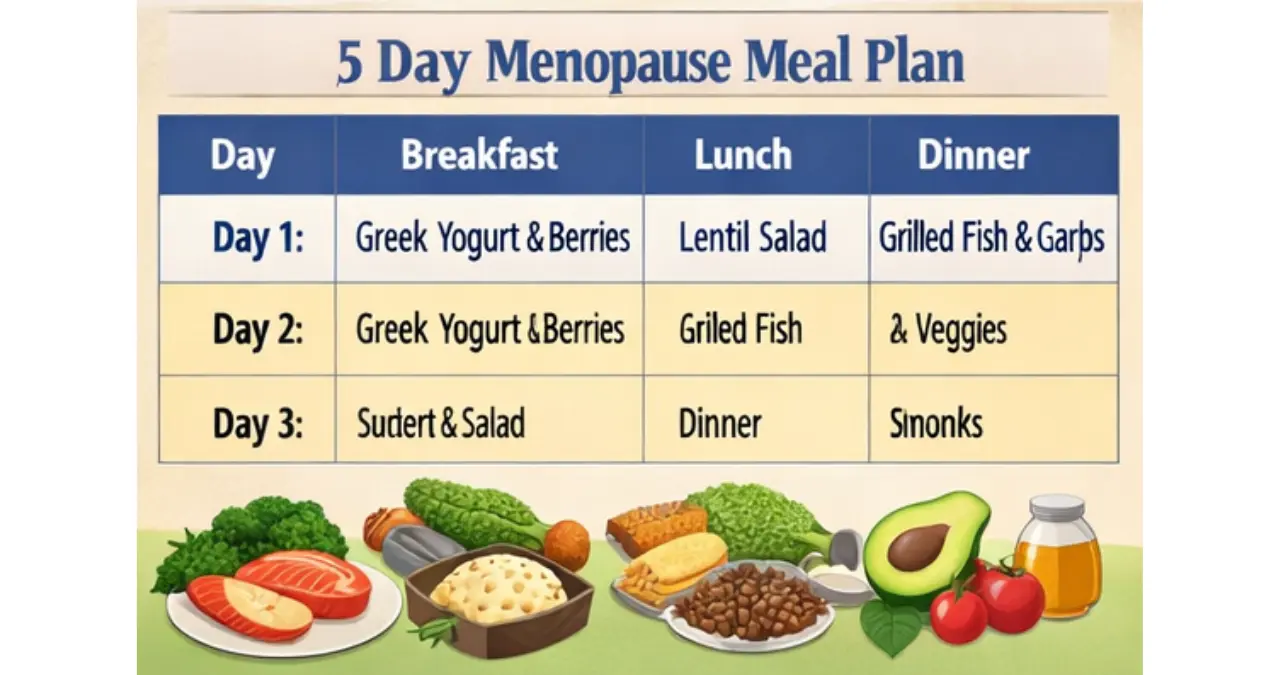
| Day | Breakfast | Lunch | Dinner | Snack |
|---|---|---|---|---|
| 1 | Greek yogurt + berries | Lentil salad | Grilled fish + vegetables | Nuts |
| 2 | Eggs + spinach | Tofu stir-fry | Chicken + quinoa | Fruit |
| 3 | Oats + seeds | Chickpea bowl | Paneer + greens | Yogurt |
| 4 | Protein smoothie | Fish curry | Vegetable soup + protein | Seeds |
| 5 | Omelette | Salad + beans | Stir-fried tofu | Dark chocolate |
Each meal includes protein and fiber to control blood sugar and hunger.
7 Week Menopause Meal Plan (long-term approach)
Short diets rarely work. A better structure is phased eating.
Weeks 1–2: Stabilization phase
Lower refined carbs. Increase protein. Focus on regular meals.
Weeks 3–5: Fat loss phase
Small calorie deficit. Add resistance training.
Weeks 6–7: Maintenance phase
Slight calorie increase. Keep protein high.
This approach prevents metabolic slowdown and reduces rebound weight gain.
Lifestyle factors that matter as much as diet
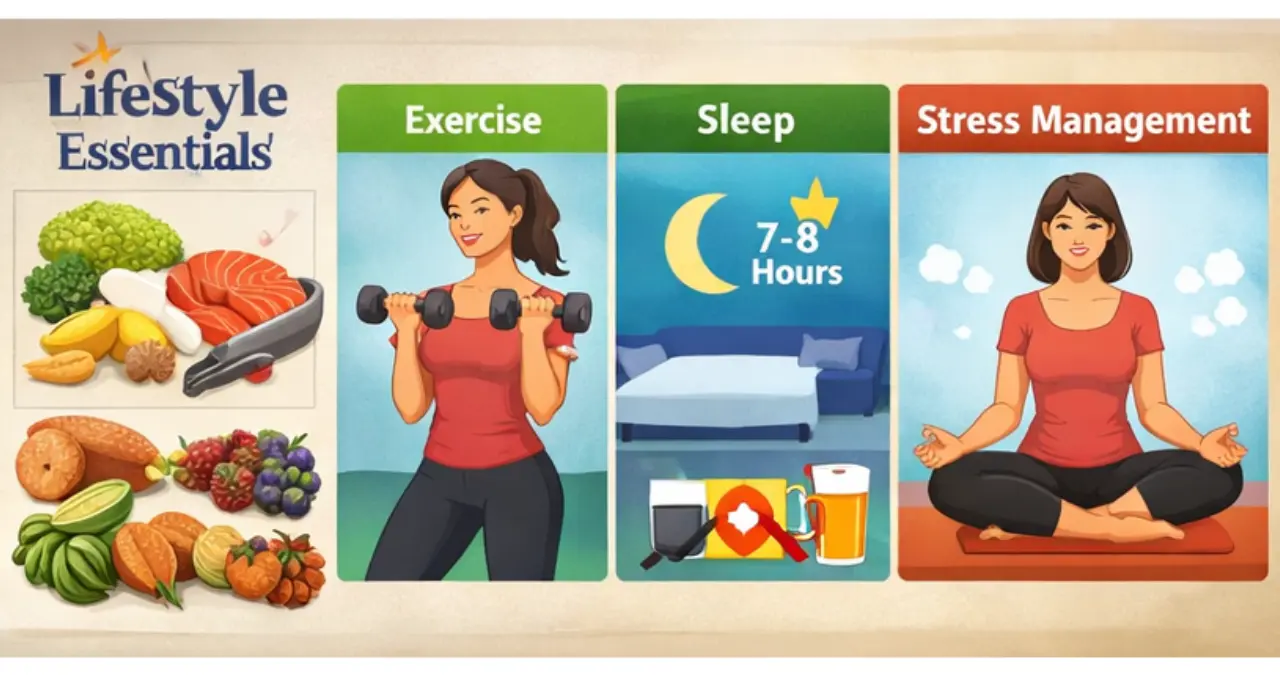
Sleep
Poor sleep increases hunger hormones and insulin resistance.
Strength training
Two or three sessions per week protect muscle and raise metabolism.
Stress control
Chronic stress keeps cortisol high and blocks fat loss.
Alcohol
Alcohol suppresses fat burning for many hours and worsens sleep.
Diet alone is not enough without these factors.
Common mistakes and misconceptions
What actually works long-term
Sustainable results come from:
- Protein at every meal
- Resistance training
- Moderate calorie deficit
- Fiber-rich foods
- Good sleep
- Low stress
- Consistency over months, not weeks
There is no single perfect menopause diet for weight loss. The body responds best to stable routines that protect muscle and control blood sugar.
FAQ – Menopause Diet For Weight Loss
Can intermittent fasting help?
Yes, if protein intake stays high. Fasting without protein increases muscle loss.
Should carbohydrates be avoided?
No. They should be controlled, not removed.
Is hormone therapy needed to lose weight?
Not always. Some women benefit, but lifestyle remains the main factor.
Why is belly fat harder to lose?
It has more insulin and cortisol receptors.
How soon can results appear?
Most metabolic improvements begin within 4–6 weeks.
Editorial Conclusion
Menopause does not make weight loss impossible. It makes the body more sensitive to poor habits and less forgiving of extreme dieting. A menopause diet for weight loss works best when it supports muscle, stabilizes blood sugar, and respects hormonal changes.

Recent Posts