
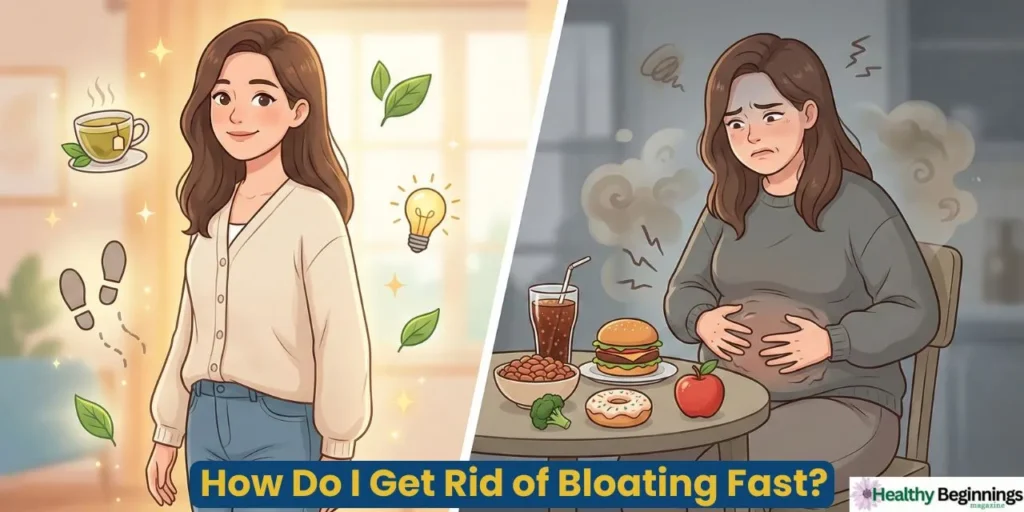
“How do I get rid of Bloating & gas?” This is one of the most searched queries on the internet. Modern lifestyle and food choices have made our lives easier, but have impacted our health in a bad way. Nearly 1 in 7 individuals suffers from bloating in a week in the USA.1Abdominal Bloating in the United States: Results of a Survey of 88,795 Americans Examining Prevalence and Healthcare Seeking, Clinical Gastroenterology and Hepatology.
Bloating occurs when your belly becomes distended with unwanted air, gases, or fluids, and it can feel tight, swollen, and just plain heavy. The thing is, gas builds up in your gut when your little gut bacteria decide to go to town on the food you’ve eaten, breaking it down into its parts.
And it’s not just about gas – you can also swallow air when you eat too fast, or react to certain foods. The good news is that most people experience bloating from time to time, but the bad news is that lots of people have no idea what’s going on or how to make it stop right now.
When bloating strikes, you need to get some fast relief – not just because it’s uncomfortable, but also because it can start to mess with your whole day – you can’t move properly, or even think straight. And let’s not forget the eating and breathing, too. The pain, pressure, and discomfort can be right overbearing, and all you want is for it to go away – especially when it happens right after a meal.
This guide gives you clear answers you can use right away. You will learn:
Everything is explained in straightforward language, so you can follow the advice and see results the same day.
What Exactly Is Bloating?
Bloating is when your stomach or intestines start to feel like they’re going to burst – and that’s usually because there’s a whole lot of gas, air, or fluid building up inside your digestive system. Your tummy can start to feel tighter, rounder, or just plain heavier than normal. And it’s not just your imagination – it’s actually your body’s gut going through some serious changes.

What’s happening inside the digestive system:
Gas, water retention, and abdominal distension are not the same:
Some people bloat more easily because:
Getting the hang of these differences is what it takes to figure out what’s really going on – and start fixing the root cause of the problem rather than just guessing.
What Really Causes Bloating and Gas: Understanding the Science
Bloating happens when our digestive system goes haywire. You naturally produce gas daily, but when certain things get thrown into the mix, that gas builds up faster than your body can get rid of it.
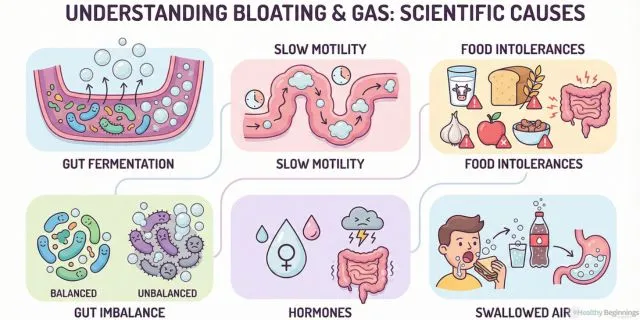
- Fermentation is at the root of a lot of these problems. When the good bacteria in your gut start breaking down the carbs and fiber in your food, they produce gas as a byproduct. But if your food starts fermenting too quickly or just sort of hangs out inside you for too long, the gas just builds, and pressure starts to build up.
- Digestion that’s moving at a snail’s pace is another huge contributor. When your gut is moving slowly, gas just gets trapped. Your food just sits there in your intestines for ages, fermenting more and producing even more gas. People who naturally have slower digestive tracts probably notice bloating more often than others.
- Intolerances to certain foods really add fuel to the fire. Lactose, gluten, and all those high FODMAP foods cause bloating because your body just isn’t very good at breaking them down. They ferment quickly, suck water into your intestines, and suddenly you’re feeling a lot more pressure than you bargained for.
- An imbalance of the good bacteria in your gut pretty much guarantees bloating will be a problem, too. When your gut is out of whack, fermentation gets out of control, and you end up with more gas than you know what to do with. And to make matters worse, this imbalance can also slow down your digestion and irritate the lining of your gut, which makes bloating feel way worse.
- Hormones are also more of a factor than most people even realize. When you’re getting ready for your period, it’s not just your mood that goes up and down – your hormones also start to play havoc with your digestion and make you retain way more water than usual. And then there’s stress, which releases cortisol and basically just makes your gut go on strike. Either way, you end up with more gas and more pressure.
- It also matters how you eat. If you’re wolfing down your food, drinking fizzy drinks, and chewing gum all day long, you’re basically just swallowing more air and making it harder on your digestive system. And that just means more pressure, more burping, and more bloating.
These factors all sort of add up to explain why bloating seems so random, but really, it just follows a pretty clear set of rules – you just have to understand what’s going on inside that gut of yours.
Foods Most Commonly Responsible for Bloating
Certain foods trigger bloating fast because they ferment quickly, move slowly through the gut, or pull extra water into the intestines. Knowing these trigger foods helps you control symptoms and avoid gas buildup.
These foods do not cause problems for everyone, but they remain the most common triggers for bloating and gas. Understanding your personal reactions helps you control symptoms and improve your gut comfort.
Hidden Lifestyle Triggers
Lifestyle habits cause more bloating than food. These triggers affect digestion, gut movement, and the amount of air you swallow. When these factors combine, the bloating becomes a daily issue.

Stress slows digestion. Your body releases cortisol when you’re stressed. Cortisol tells your gut to slow down, and gas gets trapped, and pressure increases. Many people notice more bloating on busy or anxious days.
A sedentary lifestyle keeps gas stuck in the gut. When you sit for hours, your intestines move food more slowly. Slow movement means gas gets trapped, and that feels heavy and swollen.
Poor sleep disrupts digestion. Your gut repairs and resets itself while you sleep. If you sleep too little or wake up often, your gut motility drops the next day. Weak motility increases the likelihood of bloating after meals.
Smoking and chewing gum increase swallowed air. Every inhale while smoking, and every chew while using gum, pulls extra air into your stomach. That air collects in the digestive tract, increasing pressure and causing burping.
These lifestyle triggers are easy to overlook, but they play a big role in how often and how bad you feel bloated.
How to Get Rid of Bloating Fast
Getting fast relief from bloating is all about targeting the things that put pressure on your gut in the first place. These tips help your body shift all that extra gas out of there, calm down your digestive system, and just generally make you feel a lot less puffed up.
A. Immediate Relief within 30 Minutes
| Method | How It Helps |
|---|---|
| Warm water | Relaxes digestive muscles and helps gas move through the intestines. Many people feel lighter within minutes. |
| Short walk | Speeds up gut movement. A 10 to 15 minute walk helps push trapped gas forward and reduces pressure. |
| Abdominal massage | The ILU technique follows the path of the intestines. Light pressure helps move gas through the colon. |
| Peppermint tea or capsules | Menthol relaxes gut muscles and reduces spasms. This helps trapped gas escape more easily. |
| Ginger tea or extract | Reduces inflammation and speeds up stomach emptying. This lowers gas buildup after meals. |
| Heat pad | Softens tight abdominal muscles. Heat boosts circulation and lowers cramping, which helps the gut release pressure. |
B. Short-Term Relief within 1 to 4 Hours
| Method | How It Helps |
|---|---|
| Low FODMAP meal | Reduces fermentation inside the gut. Lowers gas production and gives your digestive system a break. |
| Targeted probiotics | Specific strains like B. coagulans, B. lactis, and L. reuteri improve motility and balance the bacteria that create gas. |
| Activated charcoal | Helps absorb gas in certain situations. Works best for occasional bloating and should not be used daily. |
These science-backed steps give you practical ways to reduce bloating quickly and help your gut feel lighter in a short amount of time.
Long-Term Prevention: Daily Habits That Work
Long-term control of bloating comes from habits that keep your gut moving well and producing less gas. These habits reduce pressure, support digestion, and make bloating less likely to return.

These habits help your gut stay steady and lower the chances of uncomfortable bloating throughout the day.
5 Teas to Get Rid of Bloating and Gas
Teas have a knack for giving you quick relief because they help to chill out your gut, reduce inflammation, and get rid of gas that’s been stuck in the intestines. Each one works in its own little way, which is great because that means you’ve got options to choose from, depending on how your bloating is behaving.
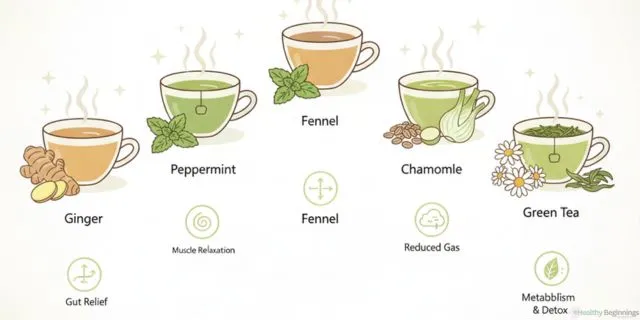
1. Ginger Tea
Ginger has a way of calming down your digestive system by relaxing those tight muscles in your stomach and intestines. It reduces inflammation and helps your stomach empty out faster, which stops gas from building up in the first place.
- How it works: Ginger gets the gut moving and reduces irritation in the lining of your gut.2Ginger in gastrointestinal disorders: A systematic review of clinical trials, PubMed Central.
- Active compounds: Gingerols and shogaols (yeah, we know – those names sound like something from a sci-fi movie).
- How fast it gives relief: For most people, relief starts to kick in anywhere from 10 to 20 minutes after you drink it.
- Best way to prepare: Add some fresh ginger slices to a cup of hot water. Let it steep for 5 to 10 minutes, or however long you can wait for it to cool down a bit. And drink it slowly and warm.
2. Peppermint Tea
If you’re looking for a strong natural remedy for gas and bloating, peppermint is one of the top contenders. It relaxes the muscles in your intestines, and that lets the gas that’s been stuck there for a while get on its way out.
- How it works: Menthol is the star of the show when it comes to peppermint – it stops those spasms in the digestive tract and lets everything move along smoothly.
- Active compounds: Menthol and menthone.
- How fast it gives relief: You can start to feel the effects of peppermint within 15 to 30 minutes, give or take.
- Best way to prepare: Use a tea bag or some fresh peppermint leaves to make your tea. Let it steep for 5 to 7 minutes, or however long you can bear to wait. Drink it warm for faster muscle relaxation.
3. Fennel Tea
Fennel is the go-to for bloating that comes with some cramping or pressure. It reduces spasms in the intestines and helps break up that trapped gas that’s been making you feel icky.
- How it works: Fennel relaxes those smooth muscles in your gut and gets gas moving where it needs to go.
- Active compounds: Anethole, fenchone, and estragole (go ahead, try to pronounce those).
- How fast it gives relief: You can usually start to feel some relief within 15 to 25 minutes.
- Best way to prepare: Crush up some fennel seeds (but not too hard, you don’t want to end up with a cup of fennel dust). Add the crushed seeds to a cup of hot water and let them steep for 7 to 10 minutes. Drink it warm after a meal or snack to help things move along.
4. Chamomile Tea
Chamomile is a gentle soul when it comes to bloating linked to stress or anxiety. It calms down your nervous system and reduces inflammation in the digestive tract – a one-two punch that’ll have you feeling better in no time.
- How it works: Chamomile is all about relaxing your gut and reducing irritation.
- Active compounds: Apigenin – the anti-inflammatory superstar, and some other natural antioxidants to boot.
- How fast it gives relief: Relief usually kicks in within 20 to 30 minutes.
- Best way to prepare: Use dried chamomile flowers or a tea bag – whatever you prefer. Steep it for 5 to 8 minutes or however long you can wait to drink it. Sip it slowly before or after a meal to keep things running smoothly.
5. Green Tea
Green tea is like a digestive superhero – it helps your body get rid of excess water, balances out your gut microbiome, and keeps your digestive system in top shape.
- How it works: Green tea has a slightly diuretic effect that helps reduce water retention and pressure in the gut.
- Active compounds: Polyphenols and catechins (say that three times fast).
- How fast it gives relief: Relief usually kicks in gradually over 30 to 60 minutes.
- Best way to prepare: Steep your green tea at a warm, not boiling, temperature (you don’t want it to be too bitter). Let it brew for 2 to 3 minutes – long enough to get the good stuff out, but not so long that it gets bitter. Drink it between meals to keep your gut happy and healthy.
These teas can do wonders for both quick relief and long-term gut balance – a one-two punch that’ll keep you feeling your best, even when bloating tries to come knocking.
Who Should Be Careful With These Teas
These teas are generally safe for most people, but there are a few groups who will need to use them with a bit more care. Every tea affects people differently, so it’s worth keeping an eye on when to dial back or avoid them altogether.
These precautions help you enjoy the benefits of these teas while staying safe and avoiding unwanted reactions.
When Bloating Could Mean a Bigger Problem
Most bloating is harmless, but some symptoms point to something more serious. These signs should not be ignored because they may indicate an underlying medical issue that needs proper evaluation.
Persistent bloating with weight loss is a red flag. If your stomach feels swollen every day and you are losing weight without trying, it may signal a problem in the digestive system. Long-lasting bloating with weight changes needs a medical checkup.
Vomiting or blood in the stool requires immediate attention. These symptoms can point to inflammation, infection, or bleeding inside the gut. They are not normal and should be evaluated quickly.
Severe abdominal pain is another warning sign. Bloating should not cause intense or sharp pain. Severe pain can come from blocked intestines, inflammation, or other serious issues.
A family history of colon problems increases your risk. If your family has a history of colon cancer, polyps, or inflammatory bowel disease, take persistent bloating more seriously and get regular screenings.
These signs do not always mean something dangerous, but they deserve proper medical attention so you can rule out bigger problems and protect your long-term gut health.
The Final Word on Bloating
Bloating shows up when gas, air, or fluid gets stuck in your gut. It happens when digestion moves too fast, too slow, or reacts to certain foods and habits. Once you spot the trigger, you can start fixing the problem.
Fast relief comes from simple actions like warm water, a short walk, peppermint tea, ginger, or light abdominal massage. Short-term support from low FODMAP meals, targeted probiotics, or activated charcoal can also help your digestion settle down.
Long-term habits make the biggest difference. Eating slowly, reducing high FODMAP foods, moving more, lowering stress, sleeping well, and avoiding nonstop snacking keep your gut steady and less likely to bloat. Teas like ginger, peppermint, fennel, chamomile, and green tea support gut comfort and help ease gas, but they cannot fix poor habits. When you take care of your diet and lifestyle, your gut stays lighter, calmer, and more comfortable.
Note: This article is only informational purposes only and not medical advice; please consult a healthcare provider before making any changes to your diet or lifestyle.
Scientific References
- 1Abdominal Bloating in the United States: Results of a Survey of 88,795 Americans Examining Prevalence and Healthcare Seeking, Clinical Gastroenterology and Hepatology.
- 2Ginger in gastrointestinal disorders: A systematic review of clinical trials, PubMed Central.

Recent Posts