
Steps to lose weight involve taking a daily number of steps to walk, which helps burn more calories than your body takes in from food. For most people, this happens between 7,000 and 10,000 steps per day, depending on body weight, walking speed, and diet.
Introduction
Here’s the simple truth most fitness advice skips. Weight loss is not about chasing a magic number like 10,000 steps. It’s about balancing the calories coming in and the calories going out.
Think back to the battery analogy. Your body is always charging from food. Walking is what drains it. If the drain is bigger than the charge, stored fat gets used. That’s it. No mystery.
Steps work because they are repeatable. You don’t need gym clothes. You don’t need motivation spikes. You just need movement spread across the day. Let’s break down how many steps actually move the needle—and why fewer can still work if you do them right.
Why Steps Matter for Weight Loss (Explained Simply)
Walking works because it burns calories without triggering hunger spikes or burnout.
Your body burns calories in two ways:
- Just staying alive.
- Moving.
Walking increases the second part without stressing the first.
Think of the battery again. Sitting all day is like airplane mode. Walking turns on background apps. Each step drains a little power. Thousands of steps drain a lot.
That steady drain is why steps beat random workouts for most people. You can walk daily. You can’t sprint daily without quitting.
The Real Math Behind Steps and Fat Loss
Here’s the clean math, no hype.
- 1,000 steps burns about 30–50 calories for most adults.
- 10,000 steps burns roughly 300–500 calories.
Fat loss happens when you burn more calories than you eat. That gap is called a calorie deficit. No deficit, no weight loss. Period.
Walking creates that deficit quietly. No pain. No recovery days. Just accumulation.
Step Targets Based on Your Current Activity Level
| Your Current Activity | Daily Step Goal | What Happens |
|---|---|---|
| Mostly sedentary (under 3,000) | 5,000–6,000 | Stops weight gain |
| Lightly active | 7,000–8,000 | Slow fat loss |
| Moderately active | 9,000–10,000 | Consistent weight loss |
| Very active | 11,000+ | Faster loss (if diet holds) |
More steps only help if the food stays stable. Walking more and eating more cancel out the effort.
How Fast Should You Walk to Lose Weight?
Speed matters, but less than you think.
- Slow walking burns calories.
- Brisk walking burns more calories in less time.
Brisk means you can talk, but not sing.
Think of it like draining the battery faster by running heavier apps. Same phone. Higher drain rate.
If time is tight, walk faster.
If time is plentiful, just walk more.
How Long Does It Take to See Weight Loss From Walking
Week 1:
- Better energy.
- Less bloating.
- Scale may not move.
30 days:
- Pants fit looser.
- Weight starts dropping.
- Walking feels automatic.
90 days:
- Fat loss is visible.
- Appetite control improves.
- Steps feel normal, not forced.
Walking works slowly. That’s why it works permanently.
Common Step Myths That Stop Weight Loss
“You must hit 10,000 steps.”
False. Fat loss can start at 7,000.
“Steps don’t count unless you sweat.”
False. Calories burned don’t care about sweat.
“Walking is too easy to work.”
False. Fat loss rewards consistency, not suffering.
Simple Ways to Hit Your Step Goal Without Thinking
- Walk while on phone calls.
- Park farther away.
- Walk 10 minutes after meals.
- Break steps into chunks.
You don’t need one long walk. You need many small drains on the battery.
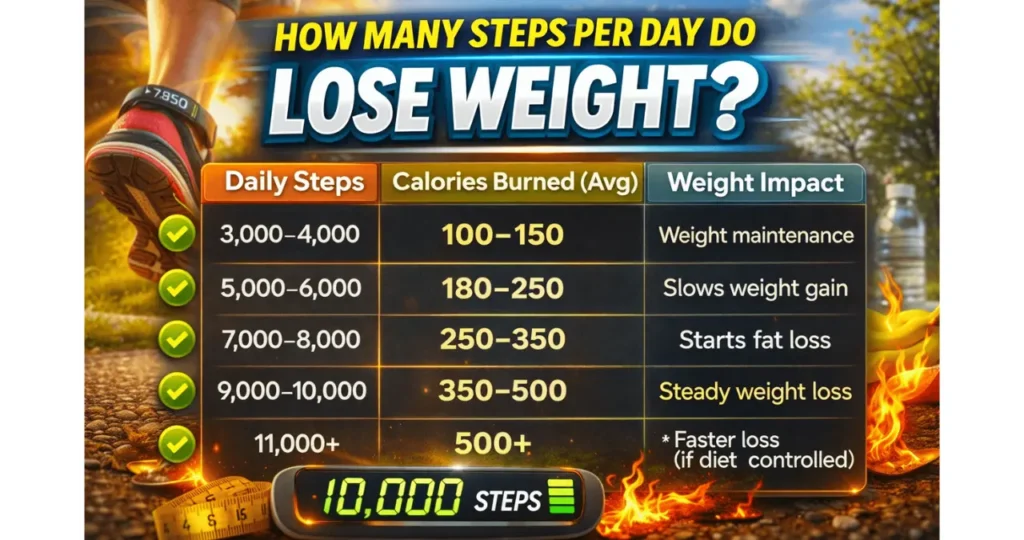
Steps to Lose Weight: What Actually Works (Comparison Table)
| Daily Steps | Calories Burned (Avg) | Weight Impact |
|---|---|---|
| 3,000–4,000 | 100–150 | Weight maintenance |
| 5,000–6,000 | 180–250 | Slows weight gain |
| 7,000–8,000 | 250–350 | Starts fat loss |
| 9,000–10,000 | 350–500 | Steady weight loss |
| 11,000+ | 500+ | Faster loss if the diet stays controlled |
This table is the reality check.
More steps help only if eating stays the same. Walking doesn’t cancel out overeating. It never has.
Steps vs Gym Workouts (Why Steps Win for Most People)
| Walking (Steps) | Gym Workouts |
|---|---|
| Low stress | High fatigue |
| Easy to repeat daily | Easy to quit |
| Burns calories all day | Burns calories briefly |
| Controls appetite | Can increase hunger |
Think of walking as background calorie burn.
Gym workouts are bursts. Bursts don’t beat consistency.
Final Takeaway
To lose weight, most people need 7,000–10,000 steps per day. The exact number depends on diet and consistency. Steps work because they quietly burn calories all day. Walk more than you eat back, and fat loss follows—no extremes required.

Recent Posts