
Hearing Health Research 2026. Hearing loss is not rare. It’s not dramatic at first. And it’s not reversible in most cases. That’s the uncomfortable truth.
Globally, hundreds of millions of adults experience some degree of hearing decline.1Deafness and hearing loss, WHO. Age-related hearing loss (presbycusis) increases steadily after age 50. Noise exposure accelerates it. Metabolic disease worsens it. And tinnitus often tags along.
But here’s the deal.
While we cannot regrow damaged cochlear hair cells with current science, we can influence the biological systems that protect hearing.
This article compiles research-backed mechanisms, risk factors, and nutritional pathways that influence hearing health. No miracle claims. Just physiology.
Executive Summary: Hearing Health Research 2026
| Focus Area | What the Research Shows | Practical Action |
|---|---|---|
| Oxidative Stress | Strongly linked to inner ear cell damage | Increase antioxidant intake |
| Microcirculation | Reduced blood flow impairs cochlear function | Support vascular health |
| Noise Exposure | Primary modifiable risk factor | Use hearing protection |
| Metabolic Health | Diabetes & hypertension increase risk | Control blood sugar & BP |
| Neural Hyperactivity (Tinnitus) | Brain signaling contributes to ringing | Support nervous system balance |
Key Takeaway: Hearing decline is multifactorial. Protection requires a multi-system approach.
1️⃣ The Biology of Hearing Loss
The cochlea contains tiny hair cells that convert vibration into electrical signals. These cells:
- Do not regenerate naturally
- Are highly sensitive to oxidative stress
- Depend on a constant oxygen supply
When damaged, hearing clarity declines. And once lost, those cells don’t return. That’s why prevention matters more than repair.
2️⃣ Oxidative Stress: The Hidden Driver
Oxidative stress refers to cellular damage caused by unstable molecules known as free radicals.
In the inner ear, oxidative stress:
- Damages hair cells
- Impairs mitochondrial energy production
- Accelerates age-related decline
Multiple studies have linked increased oxidative markers with sensorineural hearing loss.
Antioxidant Support Pathways
Research suggests compounds like:
- Polyphenols (Grape Seed, Green Tea)
- Vitamin C
- Vitamin E
- Alpha-lipoic acid
may reduce oxidative burden in auditory tissues. Not a cure. But protective support.
Oxidative Protection Table
| Mechanism | Impact on Hearing | Evidence Strength |
|---|---|---|
| Antioxidant defense | Protects cochlear cells | Moderate to strong |
| Mitochondrial support | Preserves energy in ear cells | Emerging evidence |
| Anti-inflammatory action | Reduces tissue stress | Moderate |
Key Takeaway: Reducing oxidative stress is one of the most biologically plausible strategies for long-term hearing preservation.
3️⃣ Microcirculation & Inner Ear Blood Flow
The cochlea depends on microvascular blood flow.
Reduced circulation means:
- Less oxygen
- Less nutrient delivery
- Higher susceptibility to damage
Studies show vascular disorders correlate strongly with hearing impairment.
This explains why:
- Hypertension increases risk
- Diabetes worsens hearing outcomes
- Cardiovascular disease correlates with auditory decline
Vascular Support Factors
Compounds studied for circulation include:
- L-Arginine (nitric oxide precursor)
- Capsaicin (vascular stimulation)
- Panax Ginseng
And lifestyle matters more:
- Regular exercise
- Blood pressure control
- Cholesterol management
Circulation Impact Table
| Factor | Effect on Cochlea | Risk Level |
|---|---|---|
| Hypertension | Reduced microvascular flow | High |
| Diabetes | Nerve & vessel damage | High |
| Nitric Oxide Support | Improves vasodilation | Supportive |
| Aerobic Exercise | Enhances blood flow | Strong evidence |
Key Takeaway: Healthy blood vessels support healthy hearing.
4️⃣ Neural Hyperactivity & Tinnitus
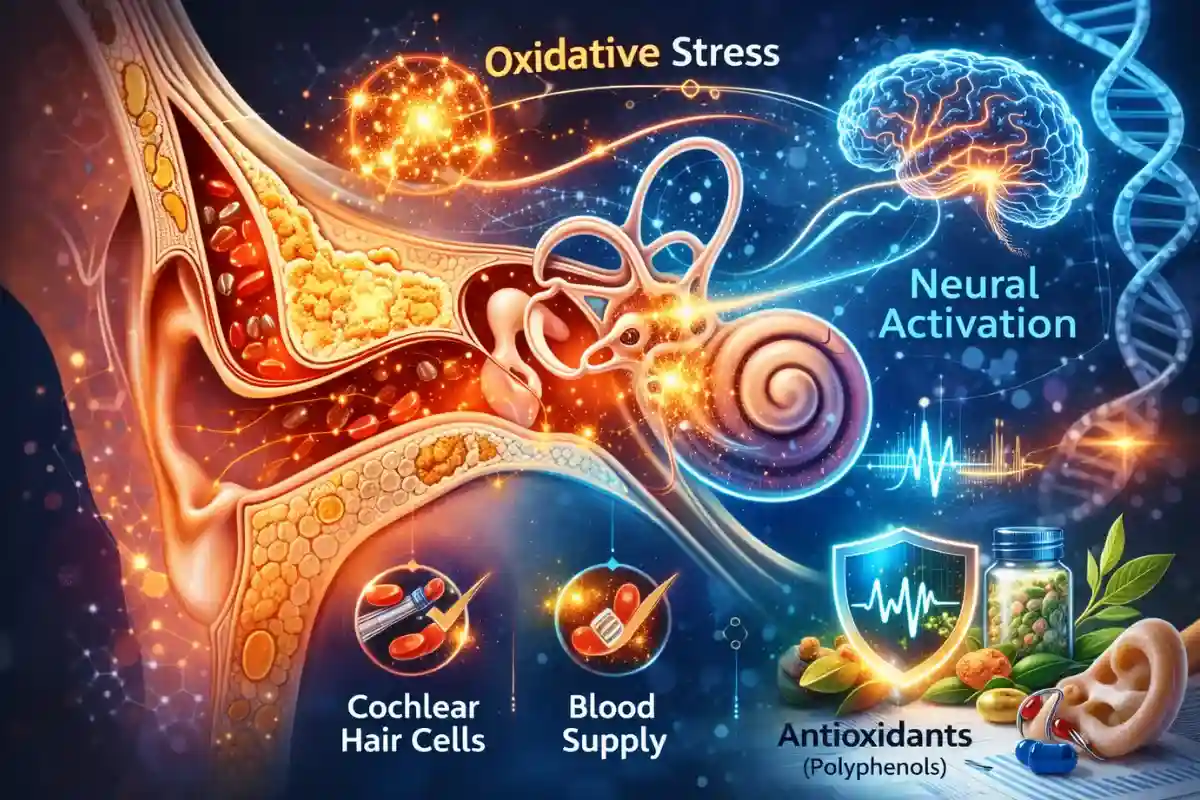
Tinnitus is not only an ear issue. Brain imaging shows hyperactivity in the auditory cortex when ringing occurs.
In simple terms, the brain “fills in” missing sound signals. That’s why tinnitus can persist even when ear damage is stable.
Neurological Support Strategies
Research suggests support through:
- GABA pathways (inhibitory neurotransmission)
- Stress reduction
- Sleep optimization
- Mindfulness-based cognitive therapy
GABA is a calming neurotransmitter. Supporting inhibitory signaling may reduce perceived tinnitus intensity in some individuals.
But results vary.
Tinnitus Mechanism Table
| Factor | Role in Tinnitus | Intervention Type |
|---|---|---|
| Auditory cortex hyperactivity | Drives phantom noise | Neural calming |
| Stress | Amplifies perception | Stress management |
| Sleep deprivation | Increases signal sensitivity | Sleep support |
| Anxiety | Heightens awareness | Behavioral therapy |
Key Takeaway: Tinnitus often reflects neural overactivity, not just ear damage.
5️⃣ Metabolic Health & Hearing
The link between metabolic syndrome and hearing loss is stronger than many realize.
Conditions associated with a higher risk of hearing decline:
- Diabetes
- Obesity
- High triglycerides
- Insulin resistance
Chronic inflammation and microvascular damage affect the cochlea2Understanding the role of inflammation in sensorineural hearing loss: Current goals and future prospects, https://doi.org/10.1002/brx2.34. just like they affect the heart and kidneys.
This reframes hearing as a systemic health issue, not just an ear problem.
6️⃣ Evidence-Based Hearing Protection Strategies
If you want the highest-impact actions backed by research, focus here:
🔊 Noise Control
- Avoid prolonged exposure above 85 dB
- Use ear protection at concerts or construction sites
🧠 Vascular Health
- Maintain healthy blood pressure
- Exercise 3–5 times per week
- Avoid smoking
🥗 Nutritional Support
- Increase polyphenol intake
- Ensure adequate magnesium
- Support mitochondrial health
😴 Nervous System Stability
- Prioritize sleep
- Reduce chronic stress
- Limit excessive caffeine if tinnitus-sensitive
What Does the Research NOT Support?
Let’s be honest.
No supplement currently:
- Regrows cochlear hair cells
- Fully reverses age-related hearing loss
- Permanently cures tinnitus
We’ve reviewed dozens of products that imply these outcomes. The science does not support them.
- Prevention and support? Yes.
- Reversal? Not yet.
Strategic Framework for Hearing Health
| Pillar | Action | Evidence Level |
|---|---|---|
| Protection | Noise avoidance | Strong |
| Circulation | Cardiovascular health | Strong |
| Oxidative Defense | Antioxidant intake | Moderate |
| Neural Balance | Stress & sleep management | Moderate |
| Metabolic Control | Blood sugar regulation | Strong |
Final Research Conclusion
Hearing decline is rarely caused by a single factor. It’s cumulative.
Oxidative damage. Reduced circulation. Metabolic stress. Neural adaptation. And that means intervention must also be multi-layered.
The strongest evidence supports:
- Noise prevention
- Cardiovascular health
- Metabolic control
- Stress management
Nutritional compounds may offer supportive benefits. But they are adjuncts — not replacements for medical care.
Bottom Line: Hearing health is systemic. Protect the whole body, and you protect the ears.
Scientific References
- 1Deafness and hearing loss, WHO.
- 2Understanding the role of inflammation in sensorineural hearing loss: Current goals and future prospects, https://doi.org/10.1002/brx2.34.

Recent Posts