

You’ve probably noticed coconut water gets recommended for everything: bloating, constipation, diarrhea, digestion, energy, and recovery. That’s because it genuinely does help with some of those things. But not all of them. And not for everyone.
The reason is simple: coconut water isn’t a targeted remedy. It’s a hydrating beverage with electrolytes. Hydration helps with some digestive problems. But coconut water also contains fermentable carbohydrates (FODMAPs) that can make other digestive problems worse.
So if your bloating comes from dehydration, coconut water probably helps. If your bloating comes from a FODMAP sensitivity or IBS, coconut water probably worsens it. Same drink. Completely different outcome.
This is why one person’s miracle cure is another person’s worst decision. And it’s why most articles about coconut water are useless — they hedge everything instead of telling you whether it’s actually for you.
Quick Takeaway:
- Coconut water helps hydration-related bloating, but triggers symptoms in people with FODMAP sensitivity or IBS-D
- Your specific digestive condition determines whether coconut water helps or hurts
What Is Coconut Water? (Fresh vs. Packaged)
Coconut water is the clear liquid inside young, immature coconuts. It’s not coconut milk (which is made from shredded mature coconut meat and is much higher in fat). It’s the juice that’s naturally there.
It contains water, electrolytes (potassium, magnesium, sodium, calcium), natural sugars, and trace bioactive compounds. That’s it.
But here’s where it gets critical: fresh coconut water and packaged are almost different products.
| Nutrient | Per 240ml cup |
|---|---|
| Calories | 45-50 |
| Potassium | 600mg |
| Magnesium | 25mg |
| Natural sugars | 9g (fresh) / 6-9g (packaged, often with added sugars) |
| FODMAPs | High |
| Enzymes (fresh) | Intact |
| Enzymes (packaged) | Destroyed by heat treatment |
Fresh tender coconut water has zero added sugar and intact digestive enzymes. Packaged varieties are pasteurized (which kills enzymes) and frequently contain 6-9g of added sugar per serving.
That difference matters. A lot.
Quick Takeaway:
- Fresh coconut water has no added sugars and contains intact enzymes; packaged varieties are heat-treated and often sweetened
- The packaging method changes whether it helps or worsens bloating
The Hydration Mechanism — How It Actually Helps Digestion
Coconut water’s primary benefit is simple: it rehydrates you and provides electrolytes.
Here’s why that matters for bloating and constipation. Dehydration slows digestion. When you’re dehydrated, your body prioritizes keeping fluid in your bloodstream over digestion. Food moves more slowly through your gut. Stools become harder. Constipation follows.
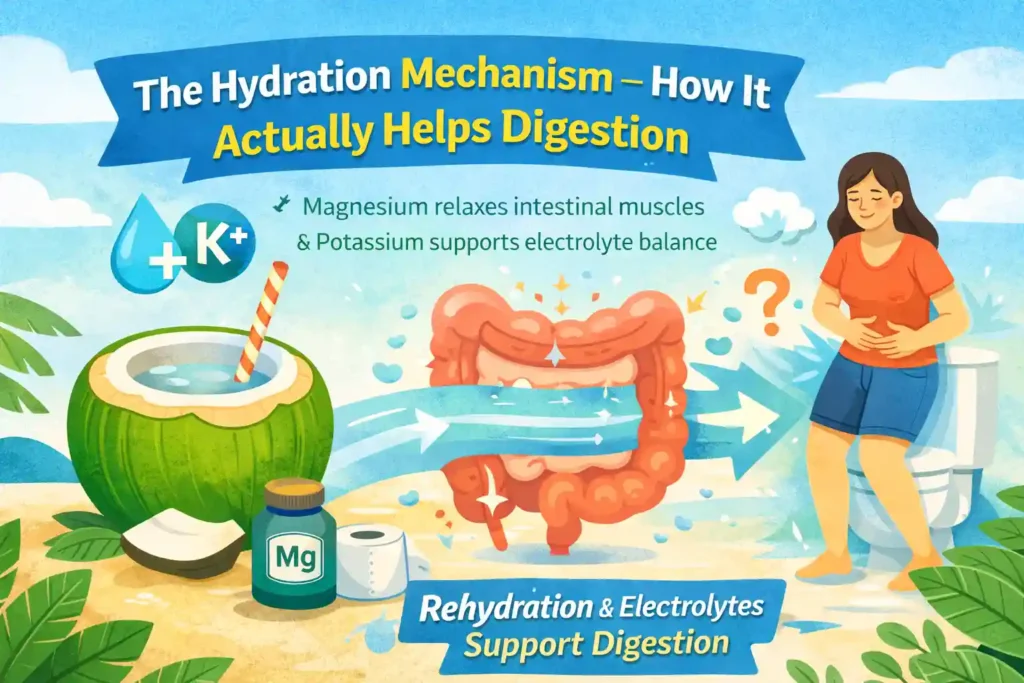
Magnesium in coconut water supports muscle relaxation, including the smooth muscles in your intestines. According to research from the NIH (2023), magnesium helps stimulate muscle contractions that move food and waste through the digestive tract. Potassium maintains electrolyte balance, which also supports normal digestive muscle function.
So if you’re dehydrated and constipated, rehydrating with coconut water can genuinely help. The electrolytes support the mechanism. Results typically appear within 3-5 days.
But this only works if your bloating or constipation is actually caused by dehydration. If it’s caused by something else, coconut water won’t fix it. And it might make it worse.
The FODMAP Problem — Why It Worsens Symptoms for Some
Here’s where coconut water becomes problematic for millions of people.
FODMAPs are fermentable carbohydrates — sugars that your small intestine doesn’t absorb easily. Instead, they travel to your colon unabsorbed. There, bacteria ferment them, producing gas. That gas causes bloating, cramping, and sometimes diarrhea.
Coconut water is high in FODMAPs. Specifically, it contains fructose and oligosaccharides.
According to a 2022 review in Nutrients (published research by the National Institute of Diabetes and Digestive and Kidney Diseases), approximately 30-40% of people with IBS-D (irritable bowel syndrome with diarrhea) report worsening bloating and gas after consuming high-FODMAP foods and beverages.
For someone with IBS-D, SIBO, or general FODMAP sensitivity, coconut water isn’t a solution. It’s a trigger.
That’s not a flaw in the product. It’s a mismatch between the product and the person. But it’s critical to know before you buy.
Dose Matters — The Bloating Threshold
One of the biggest mistakes people make is drinking too much coconut water at once.
Eight ounces provides hydration and modest electrolyte support. Sixteen ounces or more creates osmotic overload. That means the extra sugars and minerals draw excess water into your gut, which can trigger bloating and loose stools.
Here’s a practical test you can run on yourself: Drink 8 oz of unsweetened coconut water with a meal. Wait 3-5 days. If you feel less bloated or more regular, it’s working. If symptoms worsen, stop.
Don’t drink 16 oz, hoping for faster results. You’ll trigger the opposite effect.
Quick Takeaway:
- 8 oz with food can help; 16+ oz causes osmotic overload and worsens bloating
- Test yourself with small amounts for 3-5 days before assuming it doesn’t work
Who Should Try Coconut Water, Who Should Avoid It
Let’s be direct about who this is actually for.
Try coconut water if you have:
- Dehydration-caused constipation (from travel, illness, or low water intake)
- Occasional post-meal bloating after large meals
- Post-exercise electrolyte depletion
- Mild digestive sluggishness from medications like diuretics
Drink it: 8 oz with meals, unsweetened varieties preferred, for 3-5 days minimum to assess.
Avoid coconut water if you have:
- IBS-D, SIBO, or diagnosed FODMAP sensitivity (it will worsen symptoms)
- Kidney disease (high potassium creates safety risks)
- Low blood pressure or take antihypertensive medication (coconut water lowers BP further)
- Diabetes or blood sugar sensitivity (especially packaged varieties with added sugar)
- Fructose intolerance or general digestive sensitivity
For this group, save the money. Coconut water won’t help and probably hurts.
Quick Takeaway:
- Coconut water helps with dehydration-related bloating and constipation; avoid it entirely if you have IBS, kidney disease, or FODMAP sensitivity
- Know which group you’re in before you try it
Side Effects and Safety Concerns
Coconut water is generally safe for healthy adults in moderate amounts. But it’s not risk-free.
Most common side effects come from overconsumption: bloating, gas, diarrhea, and nausea. These are FODMAP and osmotic effects, not allergic reactions.
More serious but rare: high potassium content. One cup of coconut water contains 600mg of potassium. For healthy adults, that’s fine. For people with kidney disease, it’s dangerous. Excess potassium can accumulate to hyperkalemia — dangerously high blood potassium that affects heart rhythm.
Empty stomach consumption can also trigger nausea or blood sugar spikes, especially in people with diabetes or glucose sensitivity.
Safe guidelines for most people: 8-12 oz per day. Those with kidney disease, low blood pressure, or IBS should avoid it entirely or consult their doctor first.
Quick Takeaway:
- Most side effects come from overconsumption (bloating, gas, diarrhea); serious risks exist for those with kidney disease or on blood pressure medications
- Safe limit: 8-12 oz daily for healthy adults
Fresh vs. Packaged — Which One Actually Works
If you’re going to try coconut water, this choice matters more than you’d think.
Fresh tender coconut water (the liquid inside young green coconuts) has no added sugar, intact enzymes, and higher electrolyte density. Packaged bottled coconut water is pasteurized (heating kills enzymes) and frequently sweetened.
That difference changes the outcome. Fresh coconut water is less likely to trigger bloating because it has no added sugar to ferment. Packaged coconut water, especially brands with 6-9g added sugar, amplifies FODMAP fermentation and osmotic effects.
If you’ve tried packaged coconut water and it made your bloating worse, fresh might work completely differently. It’s worth trying once before giving up.
Where to find fresh: local markets, ethnic grocers, farmer markets (young green coconuts). Where to find packaged: mainstream groceries (look for unsweetened varieties like Vita Coco or Zico unsweetened).
Quick Takeaway:
- Fresh coconut water has no added sugars and intact enzymes; packaged is heat-treated and often sweetened
- If packaged worsens symptoms, fresh may work differently
Our Final Verdict
Coconut water isn’t a scam. It’s a hydrating beverage with real electrolytes. But it’s not universally helpful.
Who should try coconut water:
- People with dehydration-caused constipation or occasional post-meal bloating (start with 8 oz with food, monitor for 3-5 days)
- Athletes or those recovering from illness need electrolyte rebalance (comparable to sports drinks)
- Those seeking a non-medication option for mild digestive sluggishness (magnesium supports bowel motility)
Who should look elsewhere:
- Anyone with IBS-D, FODMAP sensitivity, or SIBO (coconut water will almost certainly worsen symptoms)
- People with kidney disease or on blood pressure medications (high potassium creates safety risks)
- Those expecting dramatic or fast results (benefits are modest and take 3-5 days minimum)
If you fit the first group, try unsweetened coconut water (fresh if available) in 8-oz amounts with meals. Monitor for 3-5 days. If symptoms improve, it’s working. If they worsen, stop.
If you fit the second group, consult your doctor about proven treatments instead.
Quick Takeaway:
- Coconut water helps with dehydration-related bloating; avoid it if you have IBS, kidney disease, or FODMAP sensitivity
- Test it yourself for 3-5 days with 8 oz unsweetened varieties before deciding

Recent Posts