
Introduction
A high-protein diet for weight loss isn’t just a trend; it’s one of the most studied and consistently supported approaches in nutrition science. Here’s what the evidence actually says, without the hype.
Key Takeaways
High Protein Diet for Weight Loss — what the research actually shows
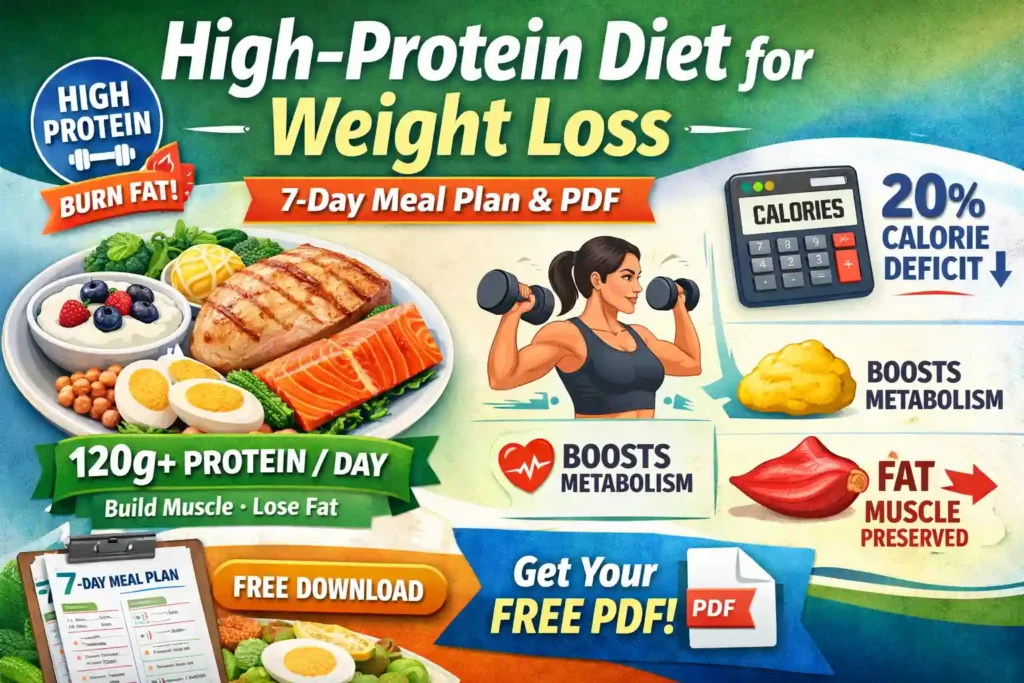
A high-protein diet is one where protein makes up 25–35% of your daily calories.
Eating more protein means burning fat faster and losing weight without feeling starved.
Higher protein intake does support fat loss and helps preserve muscle — backed by multiple studies.
It supports fat loss while protecting muscle mass — especially important after age 35.
High protein alone won’t override a large calorie surplus. Total intake still matters.
People who want to shed fat while keeping muscle — especially adults over 35.
You have kidney disease or a history of kidney stones. Talk to your doctor before starting.
Pair higher protein with calorie awareness — adding protein on top of your current diet won’t cut it.
Eating more protein is one of the most evidence-backed strategies for losing weight and keeping it off. It works best when paired with some calorie awareness — not just eating protein on top of everything else.
Does a High-Protein Diet Actually Help You Lose Weight?
Yes, and the evidence is pretty clear on this. Protein keeps you fuller longer than carbs or fat. That means you eat less without really trying.
A study published in the American Journal of Clinical Nutrition found that increasing protein to 30% of calories helped participants eat about 441 fewer calories per day,1A high-protein diet induces sustained reductions in appetite, ad libitum caloric intake, and body weight despite compensatory changes in diurnal plasma leptin and ghrelin concentrations, PubMed Central. without counting anything. That’s not a small number.
Why Protein Works Better Than Other Macros for Fat Loss
Your body burns more calories just digesting protein. It’s called the thermic effect of food, and protein’s is roughly 25–30%, compared to 6–8% for carbs.
So even before you move, your body is working harder to process protein. That adds up over weeks and months.
How Much Protein Do You Actually Need Per Day?
Most research points to 1.2 to 1.6 grams of protein per kilogram of body weight for active adults trying to lose fat. For a 150-pound woman, that’s roughly 80–110 grams per day.
The RDA says 0.8g per kilogram, but that’s a minimum, not a target for weight loss. If you’re over 35, that number is too low for what you’re trying to do.
7-Day High Protein Diet Plan for Weight Loss (Practical, Not Perfect)
Here’s a simple structure that works without a meal prep obsession.
Day 1–7 Framework:
- Breakfast: 3–4 eggs or 1 cup Greek yogurt (20–25g protein). Takes five minutes.
- Lunch: 4–5oz chicken, tuna, or turkey with a salad or roasted vegetables. The kind of meal that keeps you full until 4 pm.
- Dinner: Salmon, ground turkey, or lentils, with a vegetable side, not a starch-heavy base.
- Snacks: Cottage cheese, hard-boiled eggs, or a handful of edamame. Skip the protein bars unless the label shows under 5g of sugar.
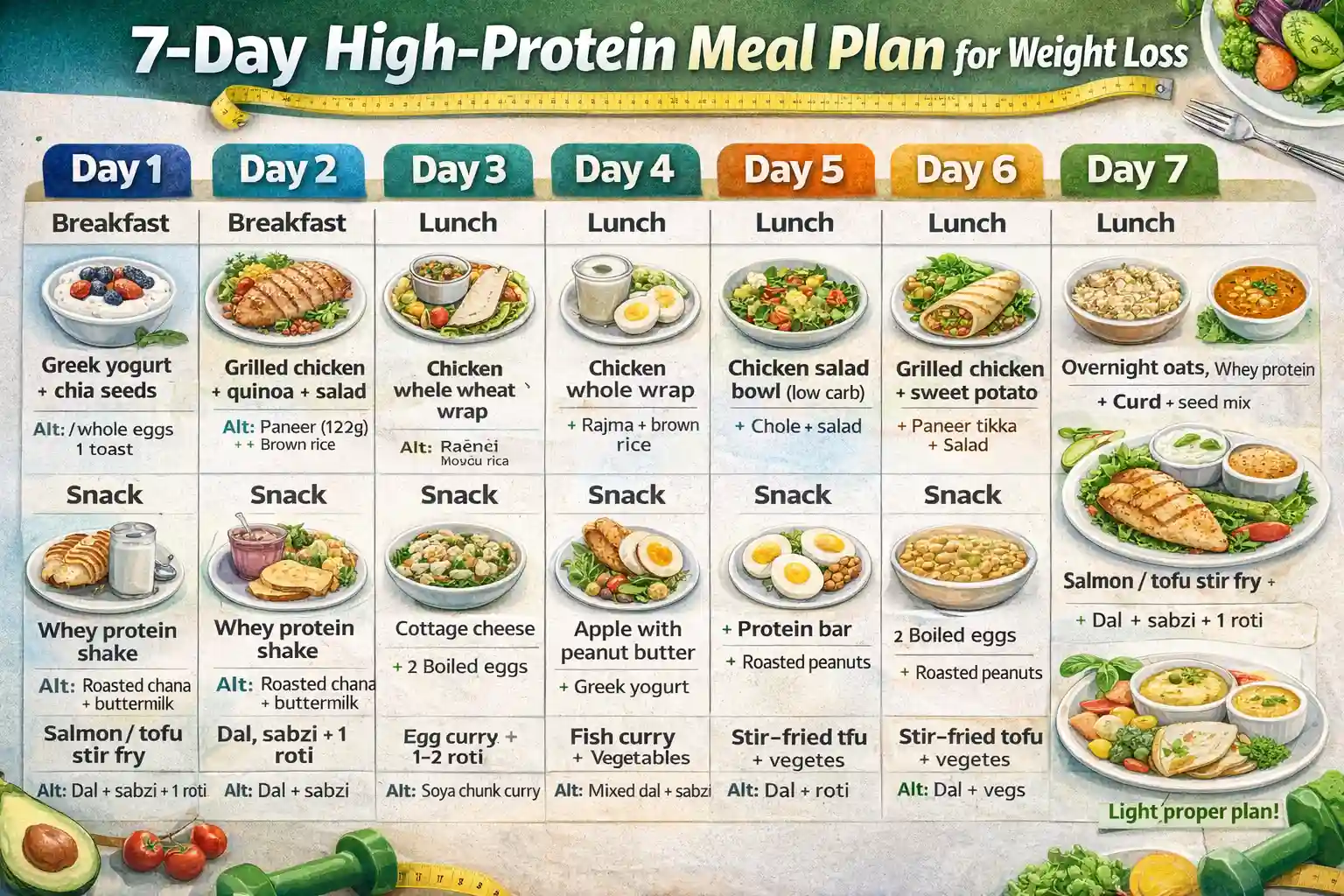
7-Day High-Protein Meal Plan for Weight Loss
This scientifically structured meal plan is designed to help reduce body fat while preserving lean muscle mass. Each day includes high-protein meals with balanced nutrition and practical alternatives.
Day 1
- Breakfast: Greek yogurt (200g) + chia seeds + berries
Alt: 3 whole eggs + 1 toast - Lunch: Grilled chicken (150g) + quinoa + salad
Alt: Paneer (120g) + brown rice - Snack: Whey protein shake (25g protein)
Alt: Roasted chana + buttermilk - Dinner: Salmon / tofu stir fry + vegetables
Alt: Dal + sabzi + 1 roti
Day 2
- Breakfast: Protein oats (oats + whey + peanut butter)
Alt: Besan chilla (2–3) + curd - Lunch: Chicken whole wheat wrap
Alt: Rajma + brown rice - Snack: Cottage cheese (100g)
Alt: 2 boiled eggs - Dinner: Grilled fish + sautéed vegetables
Alt: Soya chunk curry
Day 3
- Breakfast: Protein smoothie (milk + whey + banana + flaxseed)
Alt: Paneer bhurji - Lunch: Chicken salad bowl (low carb)
Alt: Chole + salad - Snack: Apple + peanut butter
Alt: Greek yogurt - Dinner: Egg curry + 1–2 roti
Alt: Lentil soup + tofu
Day 4
- Breakfast: 3 egg omelette + vegetables
Alt: Moong dal chilla - Lunch: Grilled chicken + sweet potato
Alt: Paneer tikka + salad - Snack: Protein bar
Alt: Nuts + buttermilk - Dinner: Fish curry + vegetables
Alt: Mixed dal + sabzi
Day 5
- Breakfast: Overnight oats + whey protein
Alt: Curd + seed mix - Lunch: Chicken rice bowl (controlled carbs)
Alt: Soya chunk pulao - Snack: 2 boiled eggs
Alt: Roasted peanuts - Dinner: Stir-fried tofu + vegetables
Alt: Dal + roti
Day 6
- Breakfast: Protein pancakes
Alt: Besan chilla - Lunch: Lean chicken + salad
Alt: Paneer + vegetables - Snack: Whey protein shake
Alt: Greek yogurt - Dinner: Egg scramble + vegetables
Alt: Lentils + soup
Day 7
- Breakfast: Protein smoothie bowl
Alt: Eggs + toast - Lunch: Chicken / tofu wrap
Alt: Chickpea salad - Snack: Cottage cheese
Alt: Mixed nuts - Dinner: Light protein meal (fish/tofu soup)
Alt: Dal + vegetables
Protein & Portion Guidelines
- Women: 100–130g protein/day
- Men: 130–180g protein/day
- Increase portion sizes based on weight and activity
- Stick to a 20–25% calorie deficit
Scientific Fat Loss Principles
- High protein increases satiety and reduces hunger hormones
- Thermic effect of protein boosts calorie burn
- Helps preserve lean muscle during fat loss
- Improves blood sugar control and reduces cravings
Important Notes
- Drink 2.5–3.5L water daily
- Avoid sugary drinks and liquid calories
- Track calories if fat loss stalls
- Strength training 3–4x/week is strongly recommended
High-Protein Diet for Weight Loss for Women. Is It Different?
Not dramatically different, but women do have some specific considerations. Muscle mass tends to decline faster after 35, especially post-menopause.
Eating enough protein, 25–30g per meal, helps preserve that muscle while you’re losing fat. That matters more than most women realize. Losing muscle slows your metabolism over time, which makes future weight loss harder.
Best Vegetarian Protein Sources for Weight Loss
You don’t need meat to make this work. But you do need to be more deliberate.
The strongest plant-based options:
- Lentils (18g per cooked cup),
- Edamame (17g),
- Tofu (10g per half cup),
- Tempeh (15g per half cup), and
- Greek yogurt, if you eat dairy (17–20g per cup).
Eggs are the easiest protein anchor if you eat them. Two eggs give you about 12 g; add cottage cheese, and you’re at 25g before 9 am.
Low Carb High Protein Diet for Weight Loss. Does Cutting Carbs Add Anything?
It does, for some people. Lowering carbs alongside higher protein often reduces water retention and appetite more than protein alone.
But here’s my honest read of the research: the protein matters more than the carb restriction. A 2020 review in Obesity Reviews found that high-protein diets reduced body weight significantly, regardless of whether carbs were also cut. If cutting carbs helps you stick to the plan, do it. If it makes you miserable, skip it.
What Research Still Hasn’t Figured Out
One thing worth knowing: we don’t have strong long-term data, beyond two years, on what very high protein diets (above 35% of calories) do to kidney health in otherwise healthy adults. Most experts say it’s fine. But the studies just aren’t there yet for decades-long intake.
Current guidance suggests 25–35% of calories from protein is both effective and safe for most adults. Going much higher isn’t necessary for weight loss anyway.
Protein Diet for Weight Loss Meal Plan. Mistakes That Slow Results
Adding protein shakes to a diet you haven’t changed won’t work. You’re adding calories, not replacing them.
The other common one: eating high protein but almost no vegetables. Fiber matters. It works with protein to keep hunger down. Without it, even 120g of protein a day can leave you snacking by 9 pm.
FAQs
How much protein should I eat a day to lose weight?
Aim for 1.2–1.6g per kilogram of body weight. For most adults, that’s 80–130g per day, depending on your size and activity level.
What is the best protein diet for weight loss?
There’s no single best plan. The evidence supports any approach where protein makes up 25–35% of daily calories, meals are built around whole protein sources, and total calorie intake is moderately reduced. Consistency matters more than the exact plan.
Can a high-protein diet for weight loss work for females over 40?
Yes — and it’s especially useful. Women over 40 face faster muscle loss. Eating 25–30g of protein per meal helps preserve muscle while losing fat, which keeps metabolism from dropping.
Is a 7-day protein diet plan for weight loss enough to see results?
Seven days is enough to notice reduced hunger and possibly one to two pounds of fat loss. Real results take four to eight weeks. A week is a starting point, not a finish line.
Can I follow a 7-day protein diet plan for weight loss as a vegetarian?
Yes. Lentils, tofu, tempeh, edamame, eggs, and Greek yogurt can all hit your protein targets. It takes a bit more planning than a meat-based diet, but it works just as well when done consistently.
A high-protein diet for weight loss remains one of the most well-supported tools in nutrition as of 2026 — not because it’s magic, but because it makes eating less feel less awful. That’s actually the whole trick.
Scientific References
- 1A high-protein diet induces sustained reductions in appetite, ad libitum caloric intake, and body weight despite compensatory changes in diurnal plasma leptin and ghrelin concentrations, PubMed Central.

Recent Posts