
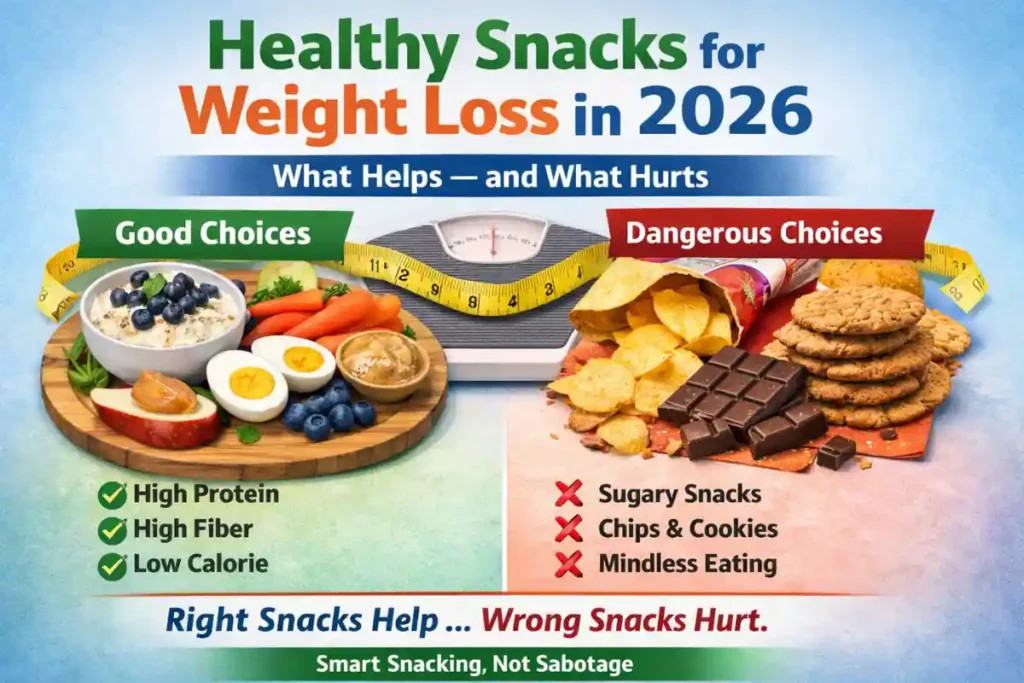
Healthy snacks for weight loss seem like a mystery sometimes. Because if you’re trying to slim down, snacks often seem like a mystery. Some advice tells you to cut them out entirely, while others will tell you to snack your way to a “boosted metabolism“. Both of these extremes ignore the real issue, however.
The thing is, snacks aren’t inherently good or bad on their own. What actually counts is what you’re eating, how much of it, and why you’re reaching for it in the first place.
As of March 2026, the majority of the research started pointing in one direction: that snacking intelligently could actually help control your hunger and reduce overeating later on. But poor snack choices can easily undo any calorie deficit you’re trying to build.
Let’s sort this all out in a straightforward way, without resorting to all the usual hype.
What are healthy snacks for Weight Loss?
Healthy snacks for weight loss are foods that stop you feeling so hungry but don’t add too many extra calories. They tend to be high in protein, fibre, or both.
That’s not some fancy sales pitch – it’s just the way our bodies work. Protein has a slowing-down effect on digestion, while fibre adds bulk, both of which help keep you feeling fuller for longer.
Here’s what all this looks like in practice:
| Snack Type | Why It Helps | Example |
|---|---|---|
| High-protein | Reduces hunger hormones1A high-protein diet induces sustained reductions in appetite, ad libitum caloric intake, and body weight despite compensatory changes in diurnal plasma leptin and ghrelin concentrations, PubMed Central. | Greek yogurt, boiled eggs |
| High-fiber | Slows digestion, improves fullness2Benefits of Fiber-Enriched Foods on Satiety and Parameters of Human Well-Being in Adults with and without Cardiometabolic Risk, https://www.mdpi.com/2072-6643/15/18/3871 | Apple with peel, oats |
| Low-calorie density | Lets you eat more volume | Cucumbers, popcorn (air-popped) |
| Balanced snacks | Combine protein + fiber | Peanut butter + apple |
Okay, let’s get real here. The majority of ‘snack foods’ that people eat don’t fall into this category. Chips, biscuits, and sugary bars are all designed to make you eat more, not less.
What tends to happen is that people don’t go off track because of snacking in itself. They go off track because they are eating snacks that don’t fill them up.
What Does Science Say?
Healthy snacks might actually help with weight loss – but only if you’re eating fewer calories in total.
That’s the bit most articles gloss over.
Studies show that snacks high in protein (like yogurt or nuts) do help you feel less hungry and eat fewer calories later. But it’s not a magic solution.
If you’re still eating your regular meals and adding snacks on, then weight loss will just stop. Or you might even end up gaining weight.
This is where people get into trouble. They hear that ‘healthy snacks’ are a good thing, and then think it’s an all-you-can-eat buffet. That’s just not how it works.
Research patterns are pretty consistent, though:
But here’s the thing – just because something is healthy doesn’t mean it will help you lose weight. Nuts are a great example.
They’re nutritious, but they’re also really high in calories. A small handful might be helpful, but a big bowl would just be adding 300-500 calories.
We’ve looked at loads of weight loss trends over the years, and most of them fall apart the moment people actually start tracking their calories. This one holds up – but you still need some discipline.
Who Should Pay Attention — and Who Should Be Cautious?
Healthy snacks for weight loss make a lot of sense if you’re constantly feeling hungry between meals.
If you find yourself overeating at lunch or dinner, a snack earlier in the day might help you keep things under control.
This approach works especially well for:
But here’s the flip side.
If you’re already eating enough food and not feeling hungry, then adding in snacks just means you’re eating more calories.
Fair warning: many people snack because they’re bored or stressed, not because they’re hungry. And that’s where things start to go wrong.
You should be careful if:
Practical Takeaway – What Do You Need to Actually Do?
Healthy snacks for weight loss are only as good as the strategy behind them. That means planning, portion-control, and making sure they are built around the good stuff: protein or fiber.
That’s it in a nutshell. No guessing, just a clear plan.
Here’s a simple step-by-step guide to putting it into practice:
1. Only reach for snacks when you really are hungry
Not because you’re bored. Not because you’re stressed. Just genuinely hungry.
2. Make your snacks centred around protein or fibre
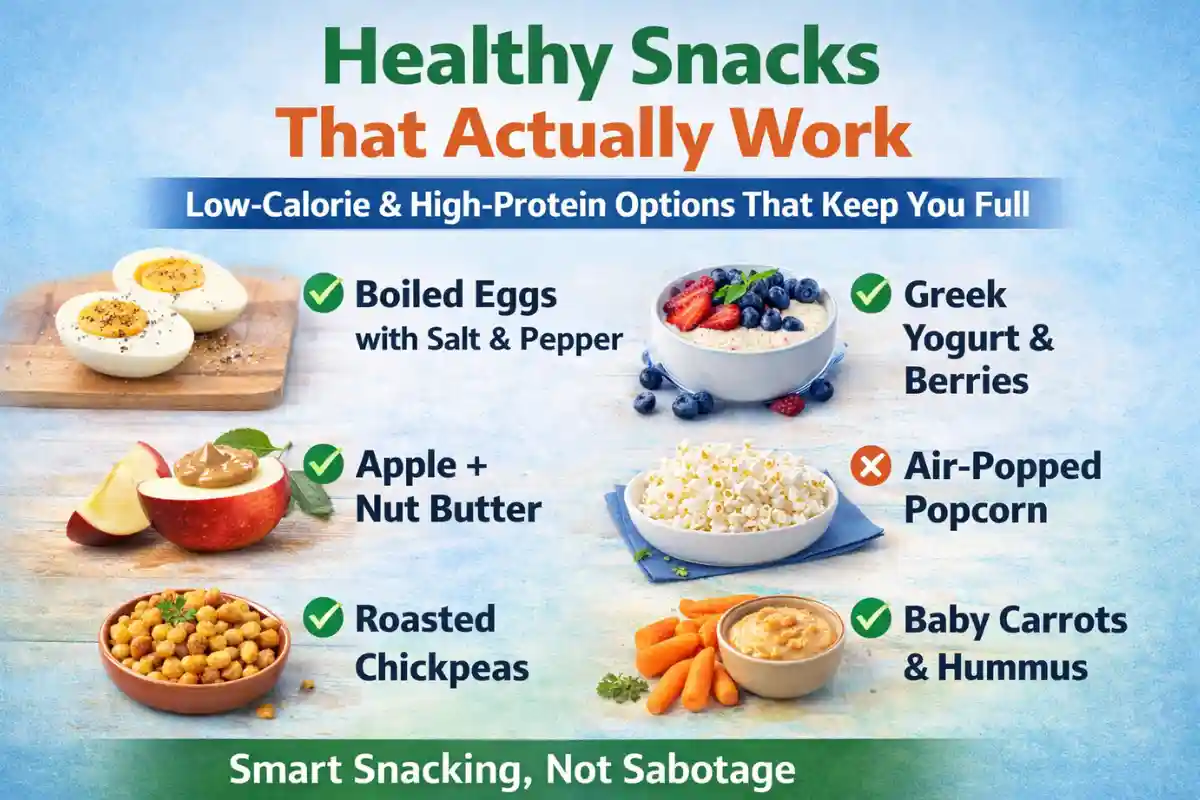
Things like boiled eggs, yogurt, fruit, and roasted chickpeas are all good bets.
3. Keep an eye on the calories (aim for 100-200 per snack)
This is where most people tend to go overboard.
4. Avoid those ‘low-calorie’ packets that are really just ultra-processed rubbish
They’re designed to be easy to overeat and super unsatisfying.
5. Keep track of how snacking actually affects your hunger, not just what you think you want
If your snacks aren’t actually helping you cut down on your main meals, it’s time to rethink them.
To make things a bit easier, here are some snack ideas that actually work:
We’ve found out that simple snacks are usually the way to go, not the fancy or complicated ones.
FAQs
Do I really need to snack to lose weight?
No, you don’t need to snack at all to lose weight. You can still do it just fine without them. Snacking only helps if it prevents you from overeating later on.
What’s the best snack for weight loss at night?
For nighttime snacks, it’s best to stick with light, high-protein options like plain yogurt or a boiled egg. And avoid those heavy or sugary snacks that are just going to push up your total calorie count.
Can I use fruit as a snack to help with weight loss?
Yes, fruit is a great choice for weight loss because it’s high in fibre and low in calories. Just watch out not to pair it with super high sugar add-ons.
How many snacks should I be having each day?
Most people do best with either no snacking at all or 1-2 moderate-sized snacks per day. More than that, and it’s likely just extra calories creeping in.
Final Thoughts
Healthy weight loss snacks can be helpful, but they’re not some silver bullet. They only work when they’re actually helping you keep your overall calorie intake down, not adding to it.
The thing is, at the end of the day, weight loss still comes down to balancing the energy you take in and the energy you burn. Snacks are just a tool to help you get there.
Scientific References
- 1A high-protein diet induces sustained reductions in appetite, ad libitum caloric intake, and body weight despite compensatory changes in diurnal plasma leptin and ghrelin concentrations, PubMed Central.
- 2Benefits of Fiber-Enriched Foods on Satiety and Parameters of Human Well-Being in Adults with and without Cardiometabolic Risk, https://www.mdpi.com/2072-6643/15/18/3871

Recent Posts