
Free BMI vs BMR calculator to compare body mass index and basal metabolic rate.
BMI vs BMR Calculator
Compare your Body Mass Index and Basal Metabolic Rate
Your BMI on the Scale
<18.5 Normal
18.5-24.9 Overweight
25-29.9 Obese I
30-34.9 Obese II+
>35
📌 Key Takeaways
- BMI measures body fat level based on height and weight ratio
- BMR measures calories your body burns at complete rest
- A healthy BMI range is 18.5-24.9 according to the WHO
- BMR is calculated using the Mifflin-St Jeor equation, the most accurate method
- Use both metrics together for comprehensive health and nutrition planning
How to Use This BMI vs BMR Calculator
Follow these simple steps to calculate both your Body Mass Index and Basal Metabolic Rate:
- Select your unit system – Choose Metric (kg/cm) or Imperial (lbs/inches)
- Choose your gender – This affects the BMR calculation formula
- Enter your age – Must be between 15-100 years
- Enter your weight – In kilograms or pounds based on selected unit
- Enter your height – In centimeters or inches based on selected unit
- Click “Calculate BMI & BMR” – View your results and personalized insights
Understanding BMI vs BMR: What’s the Difference?
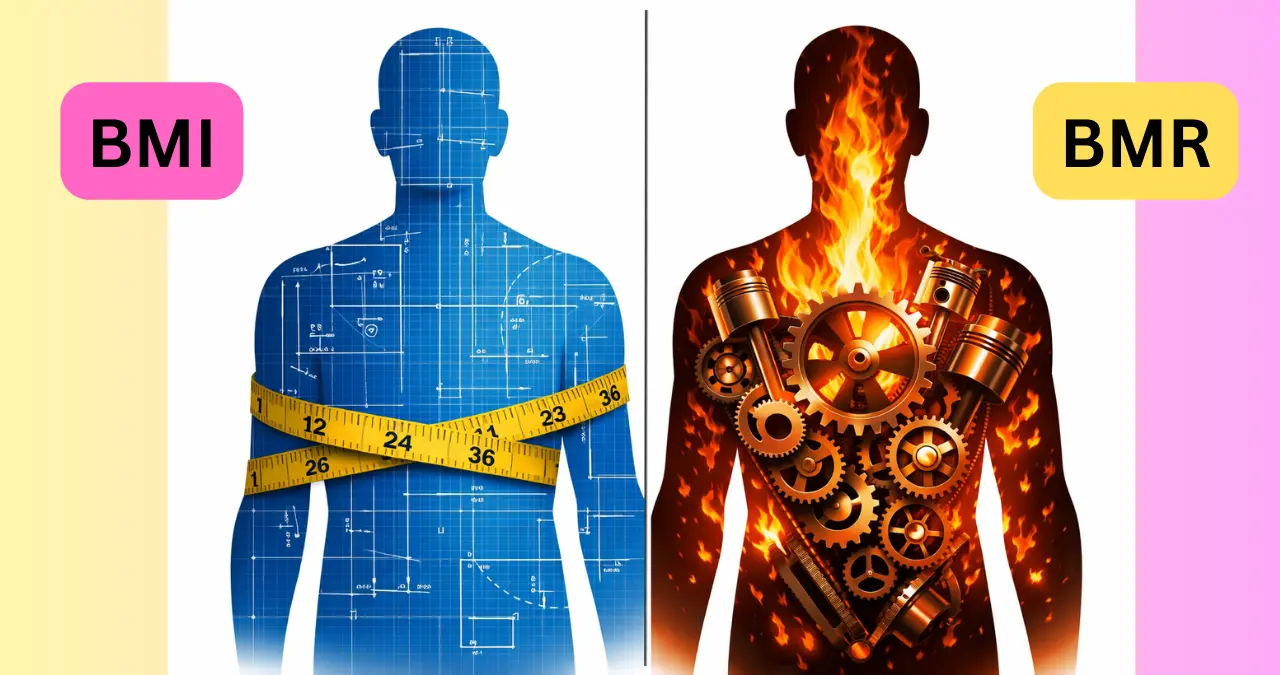
BMI and BMR are two fundamental health metrics that serve very different purposes. Understanding both can help you make better decisions about your health and fitness goals.
You can read our detailed article on the difference between BMI vs BMR .
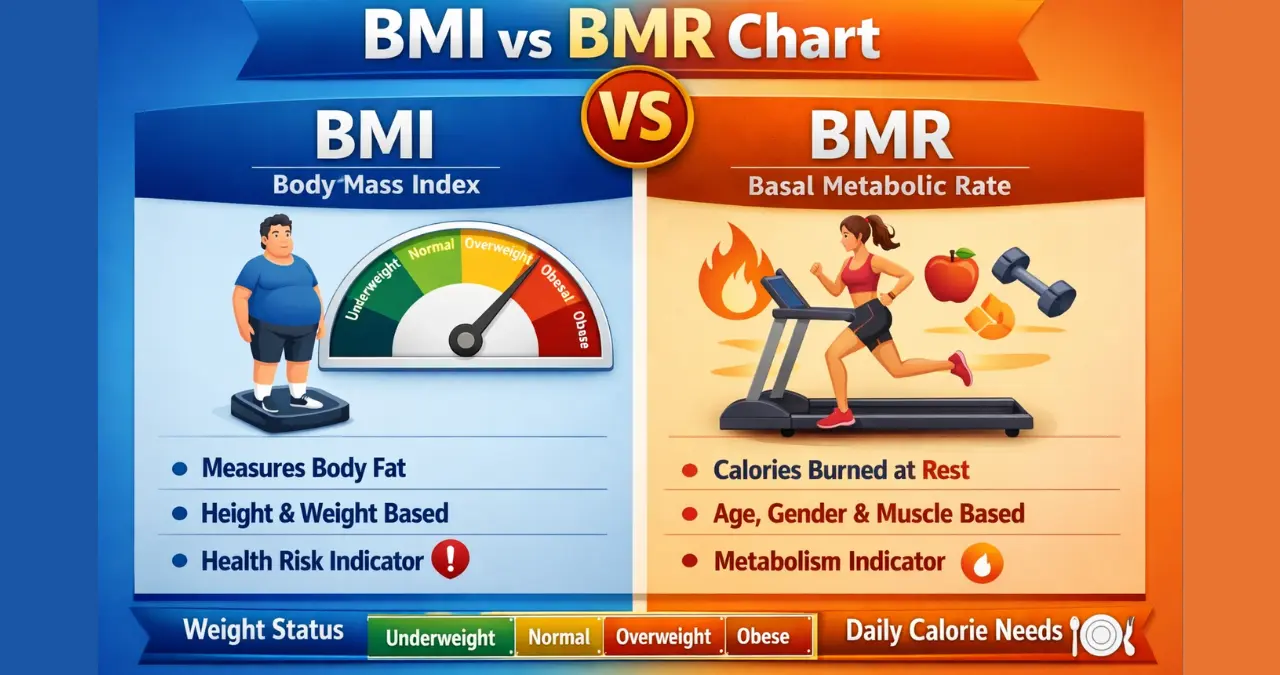
BMI (Body Mass Index) is a simple ratio of your weight to height that estimates body fat levels. It helps identify potential weight-related health risks.
BMR (Basal Metabolic Rate) is the number of calories your body burns at complete rest to maintain vital functions like breathing, circulation, and cell production.
Key Differences at a Glance
| Aspect | BMI | BMR |
|---|---|---|
| Purpose | Assess body composition | Calculate calorie needs |
| Formula Uses | Height & weight only | Height, weight, age & gender |
| Result Type | Category (underweight to obese) | Calories per day |
| Best Used For | Health risk screening | Diet & nutrition planning |
| Limitations | Ignores muscle mass | Doesn’t include activity |
What is BMI (Body Mass Index)?
BMI is a screening tool that uses your height and weight to estimate body fat. Developed by Belgian mathematician Adolphe Quetelet in the 1830s, it remains one of the most widely used health metrics today. The World Health Organization (WHO) uses BMI as a standard measure for classifying weight categories.
BMI Formula
Metric: BMI = weight (kg) ÷ height (m)²
Imperial: BMI = 703 × weight (lbs) ÷ height (in)²
BMI Categories (WHO Classification)
| Category | BMI Range | Health Risk |
|---|---|---|
| Underweight | < 18.5 | Increased (nutritional deficiency) |
| Normal Weight | 18.5 – 24.9 | Low |
| Overweight | 25 – 29.9 | Increased |
| Obese Class I | 30 – 34.9 | High |
| Obese Class II | 35 – 39.9 | Very High |
| Obese Class III | ≥ 40 | Extremely High |
According to the CDC, obesity affects over 40% of American adults and is linked to increased risk of heart disease, type 2 diabetes, and certain cancers.
Limitations of BMI
- Doesn’t distinguish muscle from fat: Athletes may have high BMI with low body fat
- Age not considered: Elderly lose muscle mass, affecting accuracy
- Ethnicity variations: Health risks vary across different populations (WHO guidelines note Asians may have higher risk at lower BMI)
- No fat distribution info: Doesn’t show where fat is stored (belly vs. hips)
⚠️ When BMI May Be Misleading
BMI may not accurately reflect health for: athletes, bodybuilders, pregnant women, elderly individuals, children, and people with high muscle mass. Consider waist circumference and body fat percentage for a more complete picture.
What is BMR (Basal Metabolic Rate)?
BMR represents the minimum calories your body needs to perform essential functions while at complete rest. Think of it as the energy cost of simply existing – the calories burned if you stayed in bed all day doing nothing but breathing.
According to research published in the Journal of the American Dietetic Association, BMR typically accounts for about 60-75% of your total daily energy expenditure.
What BMR Includes
- Breathing and oxygen circulation
- Blood circulation and heart function
- Cell production and repair
- Brain and nervous system function
- Body temperature regulation
- Hormone secretion
The Mifflin-St Jeor Equation
This calculator uses the Mifflin-St Jeor equation, which was published in 1990 and is recognized by the Academy of Nutrition and Dietetics as the most accurate method for estimating BMR in healthy individuals.
| Gender | BMR Formula |
|---|---|
| Men | (10 × weight kg) + (6.25 × height cm) − (5 × age) + 5 |
| Women | (10 × weight kg) + (6.25 × height cm) − (5 × age) − 161 |
Factors That Affect BMR
- Age: BMR decreases approximately 1-2% per decade after age 20 (research)
- Gender: Men typically have higher BMR due to more muscle mass
- Body composition: More muscle = higher BMR
- Genetics: Metabolic rate has a hereditary component
- Hormones: Thyroid function significantly impacts BMR
- Body size: Larger bodies require more energy
BMR vs TDEE: BMR only covers rest. Your Total Daily Energy Expenditure (TDEE) = BMR × Activity Multiplier. TDEE is the true number of calories you burn daily including all activities.
How to Use BMI and BMR Together
While BMI and BMR measure different things, using them together gives you a more complete picture of your health and helps you set realistic goals.
For Weight Loss
Use BMI to understand where you stand and set a target weight. Use BMR (multiplied by your activity level to get TDEE) to determine how many calories to eat. For safe weight loss, the CDC recommends a deficit of 500–1000 calories below TDEE to lose 1–2 pounds per week.
For Weight Gain
If your BMI indicates underweight, use BMR to calculate baseline needs, then add 300–500 calories above TDEE to gain weight gradually. Focus on nutrient-dense foods and strength training to build lean mass.
For Maintenance
A healthy BMI combined with eating at your TDEE (BMR × activity multiplier) helps maintain your current weight while supporting overall health.
Pro Tip: Don’t rely on BMI alone. The National Heart, Lung, and Blood Institute recommends combining BMI with waist circumference and risk factors for a complete assessment.
Tips for Healthy BMI & Optimal BMR
To Achieve a Healthy BMI
- Create a moderate calorie deficit (not extreme) for sustainable weight loss
- Prioritize protein to preserve muscle mass during weight loss
- Combine cardio with strength training for optimal results
- Focus on whole foods, vegetables, and lean proteins
- Stay consistent – the CDC recommends aiming for 1-2 lbs weight loss per week
To Boost Your BMR
- Build muscle: Each pound of muscle burns approximately 6 calories/day at rest vs 2 for fat (research)
- Stay active: Regular exercise temporarily elevates metabolism
- Eat enough protein: Protein has a higher thermic effect (20-30% of calories burned during digestion)
- Get quality sleep: Poor sleep can reduce metabolic rate and increase hunger hormones
- Avoid crash diets: Severe restriction slows metabolism long-term (metabolic adaptation)
- Stay hydrated: Even mild dehydration can slow metabolism by 2-3%
⚠️ Medical Disclaimer
This calculator provides estimates for educational purposes only. Individual results vary based on genetics, health conditions, and lifestyle factors. The information provided is not medical advice. Always consult a healthcare professional, registered dietitian, or your doctor before making significant changes to your diet or exercise routine, especially if you have existing health conditions.
Frequently Asked Questions
Published by Healthy Beginning Magazine