
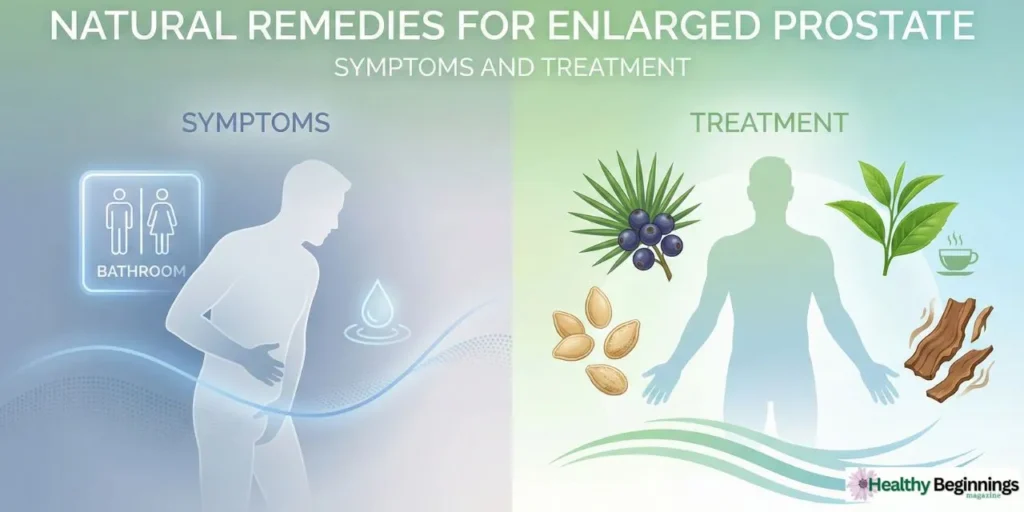
Benign Prostatic Hyperplasia (BPH) is common in men over 40. The prostate slowly grows with age and can press against the urethra, causing urinary problems. Many men look for natural remedies for enlarged prostate to reduce these symptoms before trying medication.
This article covers six natural remedies, how the prostate enlarges, and which lifestyle changes reduce symptoms. Each section is structured to answer your common queries about the enlarged prostate and provide clear, responsible health information.
This guide explains what works, what doesn’t, and safe ways to use natural remedies, based on available scientific evidence.
What Is BPH?
BPH means the prostate grows larger due to age-related cellular changes. It is not prostate cancer and does not increase cancer risk, but symptoms overlap. Common symptoms include:
BPH can affect daily life and sleep, so early management helps reduce long-term complications.
How the Prostate Enlarges With Age
According to the Prostavive reviews, the prostate responds to hormonal changes, especially dihydrotestosterone (DHT). DHT causes prostate cells to multiply. With age, the gland becomes more sensitive to this hormone. Other factors also contribute:

As the prostate grows, it narrows the urethra. This increases bladder pressure and triggers symptoms.
Why Men Consider Natural Remedies
Prescription meds like alpha-blockers and 5-alpha-reductase inhibitors work well. However, they may cause side effects such as dizziness, sexual dysfunction, or low blood pressure. Natural remedies appeal to men seeking:
| Mild symptom relief | Better tolerability | Long-term safety | Lower cost |
Evidence for natural remedies is mixed. Some show modest benefits. None shrinks the prostate significantly. They mainly help reduce urinary discomfort.
6 Natural Remedies for Enlarged Prostate
Each remedy below includes the mechanism, evidence overview, benefits, and limitations. These sections are structured for clear Bing answer extraction.
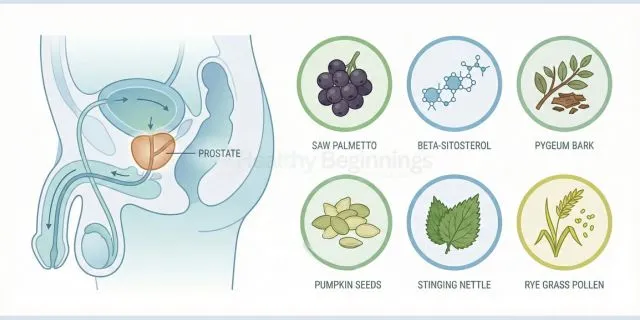
1. Saw Palmetto
Saw palmetto is one of the most widely used herbal supplements for BPH. It works by blocking the conversion of testosterone into DHT.
- Evidence: Large reviews show inconsistent results. Some small studies found mild improvement in urinary symptoms,1Randomized, double-blind, placebo-controlled trial of saw palmetto in men with lower urinary tract symptoms, PubMed Central. but most high-quality trials show little to no meaningful benefit.
- Benefits: Well-tolerated and easy to access
- Limitations: It may not work for most men. Does not shrink the prostate
- Best for: Men with mild symptoms looking for low-risk options.
2. Beta-Sitosterol
Beta-sitosterol is a plant sterol with stronger evidence than many other herbal options. It improves urine flow by reducing inflammation and supporting bladder emptying.
- Evidence: Several clinical trials show modest improvement in urinary flow2A multicentric, placebo-controlled, double-blind clinical trial of beta-sitosterol (phytosterol) for the treatment of benign prostatic hyperplasia, ResearchGate. and symptom scores.
- Benefits: Noticeable symptom relief for some men and generally safe in moderate doses
- Limitations: It is not a cure, and the long-term data are limited.
- Best for: Men wanting symptom reduction without hormonal effects.
3. Pygeum (African Plum Bark)
Pygeum extract has been used traditionally for urinary issues. It contains compounds that reduce nighttime urination and improve urine flow.
- Evidence: Older clinical studies show modest improvements in nocturia, residual urine volume, and flow rate.
- Benefits: Works for nocturnal symptoms. Mild anti-inflammatory effect.
- Limitations: Studies are small, and quality varies between brands
- Best for: Men with bothersome nighttime urination.
4. Pumpkin Seed Oil
Pumpkin seed oil offers gentle support for prostate health. It contains phytosterols that may help reduce prostate discomfort.
- Evidence: Studies show mild symptom improvement, especially for early-stage BPH.
- Benefits: Good safety profile. Supports bladder function.
- Limitations: Effects are mild and work best when combined with lifestyle changes.
- Best for: Men wanting a safe, food-based supplement.
5. Stinging Nettle Root
According to Nitric Boost Ultra, Nettle root helps reduce inflammation in the prostate and urinary tract.
- Evidence: Multiple small trials show improvement in overall urinary symptom scores.
- Benefits: Anti-inflammatory properties and often used in combination formulas
- Limitations: Alone, effects vary as it hasn’t been studied for the long term
- Best for: Men with early urinary symptoms and inflammation-related discomfort.
6. Rye Grass Pollen Extract (Cernilton)
Cernilton is a pollen extract used in European prostate formulations.
- Evidence: Shows modest improvement in nocturia and urinary discomfort.
- Benefits: Well-tolerated and effective for nighttime symptoms.
- Limitations: Limited large-scale research and works gradually.
- Best for: Men struggling with sleep disruption due to urination.
Note: The natural remedies discussed above are general educational information, not a substitute for professional medical care. Speak with your doctor before starting any supplement, diet change, or lifestyle plan for prostate symptoms.
How to Use Natural Remedies Safely
Supplements can help mild symptoms but require caution. Follow these safety rules:
Natural remedies are supportive tools. They do not replace medical evaluation. For better understanding, consult your health professional first.
Lifestyle Changes for Reducing BPH Symptoms
Lifestyle improvements often provide equal or greater relief than supplements.
These changes improve overall urinary health and slow symptom progression.
When Natural Remedies Are Not Enough
Natural methods help with mild symptoms. They are not suitable for men with advanced BPH. Seek medical care immediately if you notice:
Delaying treatment can lead to bladder damage.
FAQs
Can natural remedies actually shrink the prostate?
Nope, most natural remedies won’t actually shrink your prostate size. But they can help alleviate the symptoms that are driving you nuts.
How long do natural remedies take to start showing some results?
Figuring it typically takes 8–12 weeks to see some benefits. If things don’t start looking up, though, it’s probably time to stop using them and get some medical advice
Is an enlarged prostate a major health threat?
Now, BPH on its own isn’t going to kill, but in severe cases, you’ve got to worry about urinary retention, bladder damage, and the risk of infection popping up.
Which natural remedy is actually going to be the most effective?
Evidence suggests that beta-sitosterol, pygeum, and rye pollen extract are possibly the ones that can give you the best symptom relief out of the bunch.
Do natural supplements start messing around with PSA test results?
Yeah, some of them can potentially mess around with PSA levels just a little bit, so always check in with your doctor before you go and get a test done.
Final Verdict
Natural remedies can provide modest relief for men with mild BPH symptoms. The most promising options include beta-sitosterol, pygeum, stinging nettle, and rye pollen extract. Saw palmetto remains popular but shows limited benefit in high-quality studies.
Lifestyle changes such as exercise, weight control, and reducing irritants are essential for long-term improvement. Natural solutions are supportive, not curative. Always combine them with a proper medical evaluation for safe, effective management of enlarged prostate symptoms.
This information is for educational purposes only and is not medical advice. Always consult a qualified healthcare professional before using supplements or making changes to your diet or lifestyle.
Scientific References
- 1Randomized, double-blind, placebo-controlled trial of saw palmetto in men with lower urinary tract symptoms, PubMed Central.
- 2A multicentric, placebo-controlled, double-blind clinical trial of beta-sitosterol (phytosterol) for the treatment of benign prostatic hyperplasia, ResearchGate.

Recent Posts