
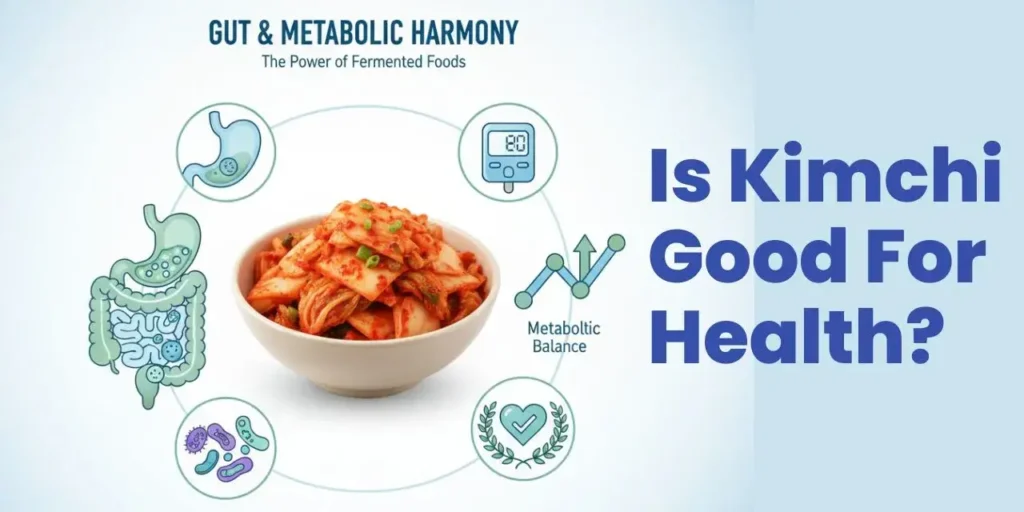
Kimchi is a traditional Korean fermented food made with napa cabbage, radish, chili flakes, garlic, ginger, and salt. The veggies ferment for days or weeks, which gives kimchi its spicy flavor and natural probiotics.
Interest in kimchi has gone crazy because people link it to gut health, weight loss, and strong immunity. It has live lactic acid bacteria, often called LAB, which form during fermentation. These bacteria act like natural probiotics, and early research in journals like Frontiers suggests they may support a healthier gut. Kimchi also has fiber, vitamins, antioxidants, and many plant compounds, as reported in PMC, which makes it a nutrient-dense food with real functional value.
If you want a straight answer upfront, here it is: Kimchi can support gut and metabolic health when eaten in moderation. It’s not a cure for anything. It’s also not for everyone, especially those with IBS, high blood pressure, or histamine intolerance.
This guide breaks down each major question you may have. It starts with gut health, then moves into weight loss, IBS, bloating, diabetes, skin health, risks, best timing, and a final science-backed benefits summary. Each section has direct practical answers so you can decide if kimchi fits your daily routine or not.
How Kimchi Becomes a Functional Food
Kimchi becomes biologically active through a simple process called lacto fermentation. The vegetables are mixed with salt, and this creates the right setting for helpful bacteria to grow. These bacteria include Lactobacillus and Leuconostoc, which break down natural sugars and turn them into lactic acid. Research in Frontiers highlights how this process supports the growth of live, beneficial microbes.
Fermentation changes the food in several useful ways:
These changes are the reason people treat kimchi as more than a side dish. It acts like a living food that interacts with the gut in real time.
What Is Inside Kimchi?
Kimchi delivers a mix of nutrients that support both gut and overall health. It is low in calories and high in fiber because the main ingredients are cabbage and other vegetables. Reports from Medical News Today show that kimchi contains vitamins A, C, K, several B vitamins, and minerals such as calcium and potassium.
Along with these core nutrients, kimchi also carries powerful bioactive compounds such as Capsaicin from chili, Polyphenols, Carotenoids, Organic acids, Live LAB, and their byproducts, including short-chain fatty acids and bacteriocins.
These bioactive compounds help explain why kimchi is often referred to as a natural functional food. It offers nutrients, beneficial bacteria, and plant compounds that may support digestion, immunity, and inflammation control.
Is Kimchi Good for Gut Health?
Kimchi can support gut health because it has live lactic acid bacteria, or LAB. These microbes grow during fermentation and get to your gut when you eat the food. Studies in Frontiers show that LAB helps your gut in a few ways.
They can:

Research in MDPI says kimchi may change the gut microbiota in a positive way. Early human and animal studies show that kimchi intake is linked to better microbial diversity and improved metabolic markers. Newer studies also show that kimchi may affect bile acids.1Effects of Kimchi Intake on the Gut Microbiota and Metabolite Profiles of High-Fat-Induced Obese Rats, National Library of Medicine. steroid hormones, and other metabolic pathways, which means deeper effects in the digestive system.
Practical Gut Benefits
Many people notice changes after adding small amounts of kimchi to their daily meals. The most common benefits are:
Some people may feel more gas or bloating at first. This usually happens when the gut is adjusting to more fermented foods.
Is Kimchi a Probiotic Food?
A food is considered probiotic only if it has specific strains in known amounts with proven health benefits. This is defined in research from Taylor and Francis Online. Kimchi has live LAB, but the exact strains and amounts vary with each batch.
The evidence shows two things:
- Kimchi has live bacteria that get to your gut.
- It acts like a probiotic food but is not standardized like a supplement capsule.
Most people can still get probiotic-like benefits if they eat it in moderation and monitor how their gut responds.
Is Kimchi Good For Weight Loss?
Research shows a clear pattern. Kimchi can help with weight loss when eaten as part of a balanced diet. A clinical trial on ScienceDirect tested 300 grams of fresh or fermented kimchi per day for 4 weeks. Participants who ate kimchi lost body weight, BMI, and body fat. They also improved fasting glucose, cholesterol, and blood pressure.
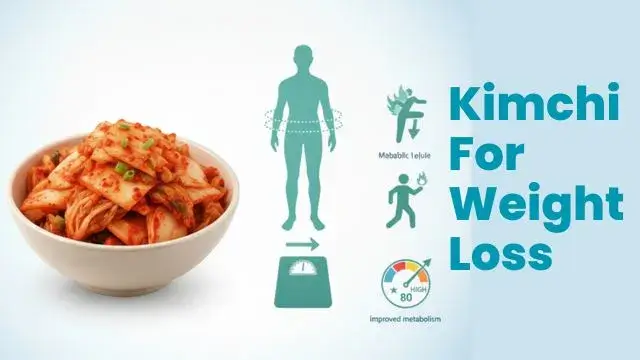
2024 and 2025 reviews on ScienceDirect show similar results. Fermented kimchi intake is associated with better lipid profiles and body fat reduction. Long-term data from BMJ Open shows that eating 1-3 servings a day is linked to lower obesity risk in men. Very high intake may have a U-shaped response, so moderation is key.
Why Kimchi Helps With Weight Management
Kimchi helps with weight control in several ways.
Kimchi & A Sustainable Weight Loss Plan
Kimchi can help, but it’s not a magic fat-burning food. It works best as part of your daily routine, not a standalone fix.
You can use kimchi when:
- Replace high-calorie, ultra-processed sides with a small serving of kimchi
- Eat it with meals that have lean protein, vegetables, and whole grains
- Pair it with consistent physical activity and an overall calorie-balanced diet
Simple ways to include kimchi in weight-friendly meals are to add it to grain bowls, salads, soups, eggs, or tofu dishes. These combinations create filling meals with fewer calories, which supports long-term weight control.
Best Time To Eat Kimchi for a Healthy Gut & Metabolism
Most folks find that eating kimchi with meals makes it easier on the digestive system. The food in your meal helps soak up some of the acidity and heat, which makes it a lot kinder to your gut. Plus, mixing kimchi with proteins, fats, and carbs during a meal can really help with digestion.
That being said, eating big helpings on an empty stomach can be a recipe for disaster – the acidity and spice can trigger heartburn, cramps, or that annoying burning feeling in your stomach. If you’re sensitive, just take it with some food, not on its own.
Morning, Afternoon, or Night
To be honest, there isn’t really any hard and fast rule on the best time to have kimchi. You can just use your common sense.
- Starting the day off with a small serving can give your digestion a kickstart and get you going with some much-needed fiber and probiotics.
- Midday is often the best time for bigger helpings because your digestive system is cranking along at full steam.
- If you’re prone to reflux, bloating, or have trouble sleeping because of spicy foods, nighttime might not be the best time to have kimchi.
As with most things, your personal tolerance is way more important than what time of day you eat it.
How Often and How Much is Best
I’ve seen some studies that say most people eat anywhere from 50 to 200 grams of kimchi per day, and sometimes even up to 300 grams. But don’t worry, you don’t need that much to get the benefits.
A good rule of thumb is:
- Start with a serving size of about 1-2 tablespoons per day.
- Gradually increase it over the course of 1-2 weeks.
- Most people end up liking about 1/4 to 1/2 cup per day, but only if you can handle the sodium and heat.
Also, if you want to mix things up a bit, you can try rotating through fermented foods. Eating kimchi along with foods like yogurt, kefir, miso, or other fermented options can really give your gut a boost.
Is Kimchi Bad For Your Health? Who Should Be Careful?
Kimchi has a lot of sodium because salt is the catalyst for fermentation. One serving can push you close to your daily sodium limit, and multiple servings can exceed it. This is a concern for anyone who needs to manage blood pressure.
Research shows that high kimchi intake can still improve some metabolic markers, but sodium is a big issue for Hypertension, Heart failure, Kidney disease, etc. If you are on a low-sodium diet, you should monitor your portions or choose lower-sodium versions.
Apart from these, Kimchi can irritate the stomachs of sensitive people. Its spicy and acidic nature can worsen symptoms of GERD, Gastritis, & Peptic ulcers
The link between kimchi and gastric cancer is debated. Some older studies suggested that very high consumption of salty fermented vegetables can increase risk. More recent studies say the evidence is mixed. Salt intake, cooking habits, smoking, and other lifestyle factors likely play a bigger role than kimchi alone.
Histamine, Allergies, And Food Safety
Kimchi is a high-histamine food. People with histamine intolerance may react with headaches, flushing, itching, or hives even after small servings. Some ingredients can trigger allergies. Some recipes include Shrimp paste, Fish sauce, and wheat-based seasonings.
Food safety also matters. Fermented foods require proper handling. Avoid any kimchi that smells off, looks swollen, or shows signs of mold. The need for correct fermentation and refrigeration to prevent contamination.
Who Should Limit Or Avoid Kimchi?
You should be careful with kimchi if you are:
These individuals should consult with a doctor before adding fermented foods like kimchi to their diet.
Is Kimchi Good For Skin Health?
Your gut and skin communicate through what researchers call the gut skin axis. When your gut microbiome stays balanced, it helps reduce systemic inflammation and oxidative stress. Both play big roles in acne, rosacea, and eczema. Some recent studies revealed that a healthier gut can support a stronger skin barrier, which keeps moisture in and irritants out.
Kimchi supports this pathway because its live bacteria can influence the gut environment. A calmer gut often leads to calmer skin.

Antioxidants & Anti-Inflammatory Compounds In Kimchi
Kimchi contains vitamin C, carotenoids, and polyphenols. These nutrients help the body manage oxidative damage, as shown in reports on PMC. The LAB in kimchi also produces compounds that reduce inflammation.
Some experimental studies on Synapse suggest that certain LAB strains and plant compounds in kimchi may show anti-inflammatory, anti-oxidative, and even anticancer activity. These effects support skin health indirectly by lowering internal stress on the body.
Realistic Expectations For Skin
Kimchi will not act like a topical acne product or deliver instant results. Its benefits come from inside the body, and results depend on your overall diet and gut balance.
You may see indirect improvements because:
- Systemic inflammation drops
- Metabolic health improves, which supports hormone balance
People with rosacea or very sensitive skin should be careful. Spicy foods can trigger flushing and may worsen symptoms. In those cases, very small servings or milder kimchi varieties work better.
10 Science-Backed Health Benefits Of Kimchi
- Supports a more diverse gut microbiome: LAB in kimchi can shift the gut microbiota toward a healthier and more balanced state, as shown in Frontiers research.2Kimchi and Other Widely Consumed Traditional Fermented Foods of Korea: A Review, Frontiers.
- May aid weight loss and reduce body fat: Studies report reductions in body weight, BMI, and body fat with daily kimchi intake.
- Helps improve blood sugar and insulin sensitivity: PubMed findings show lower fasting blood glucose and better insulin markers in people who eat kimchi regularly.
- Lowers LDL cholesterol and supports heart health: Research on PubMed links high kimchi intake with lower total and LDL cholesterol levels.
- Provides potent antioxidant protection: Experimental data on Synapse show that kimchi and its LAB help reduce oxidative stress and mutagenic activity.3A survey of research papers on the health benefits of kimchi and kimchi lactic acid bacteria, KoreaMed Synapse.
- May reduce systemic inflammation: Reports on PMC show that kimchi can lower inflammatory cytokines, which supports gut and immune health.
- May improve IBS symptoms in some individuals: A small trial in PMC found symptom improvement due to better fiber intake and microbiome changes, although some people may still react.
- Supports immune function: LAB in kimchi helps modulate immune activity, as highlighted in MDPI reviews on fermented foods.
- May offer cancer protective effects, with caveats: Synapse research shows anti-cancer potential, while MDPI notes that real-world evidence is mixed because salt intake and lifestyle vary.
- Enhances meal satisfaction without many calories: Kimchi adds strong flavor with very low calorie density, which helps support healthier eating and steady weight control.
These benefits show why kimchi stands out as a nutrient-rich, gut-friendly food that supports multiple aspects of health when eaten in sensible portions.
Final Verdict
Kimchi is a nutrient-dense, probiotic-rich food that can support gut health, weight control, blood sugar balance, and overall metabolic wellness. It is not a cure and not ideal for everyone, but most people can benefit from small daily servings. When you pair kimchi with a balanced diet and moderate portions, it works as a simple and effective addition to long-term health.
FAQs
Is kimchi good for gut health?
Yes. Kimchi contains live LAB that support a healthier gut microbiome and better digestion. Some people with very sensitive stomachs may need smaller servings at first.
Is kimchi good for weight loss?
Yes, as a supportive food. It is low in calories and can improve satiety. Studies show reductions in body weight and body fat with daily intake.
Is kimchi good for IBS?
It depends. Some people improve due to better gut balance, while others worsen because of spice or FODMAP ingredients. Low FODMAP kimchi works better for sensitive guts.
Is kimchi bad for your health?
Not for most people. It becomes a concern if you have high blood pressure, histamine intolerance, severe reflux, or a strict low-sodium diet.
Does kimchi help with bloating?
It can help over time by improving microbiome balance. Some people feel temporary gas or bloating when they first add fermented foods.
Is kimchi good for diabetes?
Yes. It is low-calorie and low-carb and may help improve fasting glucose and insulin sensitivity.
Is kimchi good for skin?
Indirectly yes. Kimchi may reduce inflammation and oxidative stress, which can support clearer skin. People with rosacea may react to spicy varieties.
When is the best time to eat kimchi?
Eat kimchi with meals, especially lunch or dinner. Avoid large servings on an empty stomach if you get heartburn or cramps.
How much kimchi should I eat a day?
Most people do well with one to two tablespoons at first, then up to one-fourth to one-half cup per day if tolerated.
Scientific References
- 1Effects of Kimchi Intake on the Gut Microbiota and Metabolite Profiles of High-Fat-Induced Obese Rats, National Library of Medicine.
- 2Kimchi and Other Widely Consumed Traditional Fermented Foods of Korea: A Review, Frontiers.
- 3A survey of research papers on the health benefits of kimchi and kimchi lactic acid bacteria, KoreaMed Synapse.


Recent Posts