
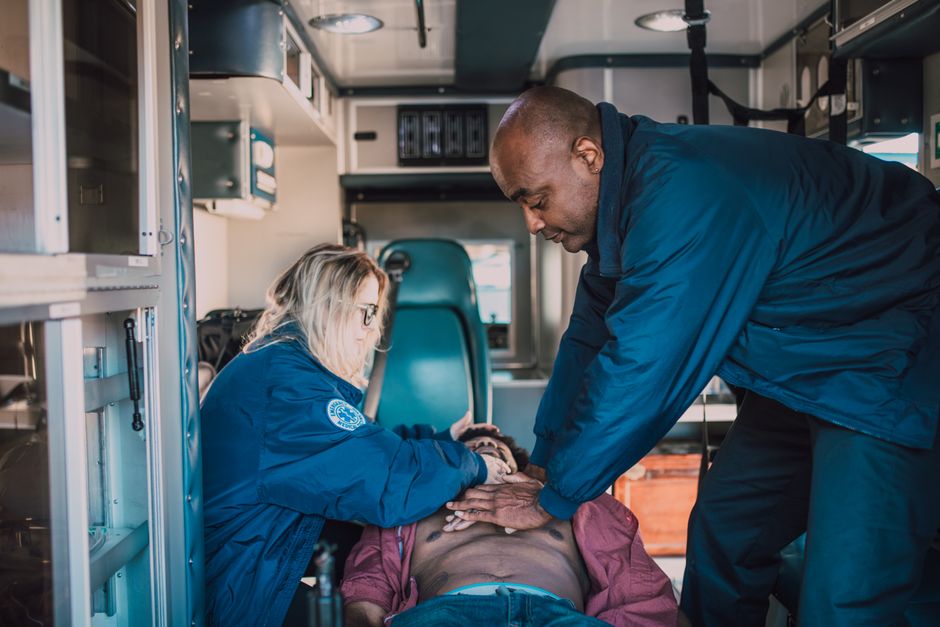
Cardiac arrest is not a heart attack. It is the sudden loss of all heart function, and the person in front of you is clinically dead until someone acts. The only treatment that works is immediate CPR and a shock from an AED, delivered within minutes. Everything else — medications, breathing tubes, cooling the body — happens in a hospital and cannot replace those first few minutes.
This article covers what to do, why it works, and what the evidence actually shows about the steps beyond CPR and defibrillation. It also covers what does not work, because a lot of what circulates online about cardiac arrest is wrong.
What Is the Difference Between Cardiac Arrest and a Heart Attack?
A heart attack is a plumbing problem. Cardiac arrest is an electrical problem. That distinction determines everything about treatment.
In a heart attack, a blocked artery starves part of the heart muscle of blood. The person is usually awake, often in pain, and the heart keeps beating. In cardiac arrest, the heart’s electrical system fails and the heart stops pumping entirely. Blood stops moving. The person collapses, stops breathing normally, and has no pulse.
A heart attack can cause cardiac arrest, but most cardiac arrests happen without a prior heart attack. Other causes include dangerous heart rhythms, severe electrolyte imbalances, drowning, electrocution, major blood loss, and drug overdose.
The practical difference matters. A heart attack patient needs an ambulance and a hospital. A cardiac arrest patient needs a bystander to start compressions right now. Waiting for the ambulance means waiting too long.
How To Treat Cardiac Arrest: CPR, AED, And Beyond
The sequence is simple, and the order is not negotiable. Call for help, start chest compressions, use an AED as soon as one arrives.
Here is what each step involves.
Calling for help
Call 911 or direct someone specific to call. Say “cardiac arrest” if you know it. Emergency dispatchers are trained to coach you through CPR over the phone, and doing compressions with dispatcher guidance is far better than doing nothing.
Put the phone on speaker so your hands stay free.
Chest compressions
Push hard and fast in the center of the chest. The established target is a rate of 100 to 120 compressions per minute and a depth of at least 2 inches (about 5 centimeters) in adults. Let the chest come all the way back up between compressions. Do not stop until an AED arrives or someone relieves you.
Depth and rate matter more than perfection. A study published in the Journal of the American College of Cardiology found that bystander CPR roughly doubled survival odds for out-of-hospital cardiac arrest compared with no bystander CPR. The gap between imperfect compressions and no compressions is enormous.
Rescue breaths
If you are trained and willing, give two breaths after every 30 compressions. If you are not trained or not comfortable, do compression-only CPR. The American Heart Association has stated for years that untrained bystanders should perform compression-only CPR. Interrupting compressions to attempt breaths you are not confident about does more harm than good.
Using an AED
An automated external defibrillator analyzes the heart rhythm and delivers a shock if one is needed. Turn it on and follow the voice prompts. The pads go on bare skin — upper right chest and lower left side. Do not touch the person during analysis or shock delivery.
AEDs are designed for untrained users. They will not shock a heart that does not need it. If the device says “no shock advised,” resume compressions immediately.
Why Does Defibrillation Work Only for Certain Rhythms?
An AED can only correct two rhythms: ventricular fibrillation and pulseless ventricular tachycardia. Both involve chaotic or dangerously fast electrical activity in the heart. A shock essentially stuns the heart and lets its natural pacemaker restart a normal rhythm.
Other arrest rhythms — asystole (flatline) and pulseless electrical activity — do not respond to shock. For those, the only treatment is high-quality CPR plus finding and fixing the underlying cause, such as low oxygen, severe blood loss, or a massive pulmonary embolism.
This is why AEDs say “no shock advised” in many cases. It does not mean the device failed. It means the rhythm is not shockable, and compressions are still the priority.
One detail worth knowing: the proportion of cardiac arrests that present with a shockable rhythm has declined over recent decades. Researchers have documented this trend in multiple countries. The reasons are not fully settled, but it means AEDs save fewer arrests than many people assume — not because AEDs are ineffective, but because fewer arrests start with a shockable rhythm.
What Happens After the Ambulance Arrives?
Advanced care begins. Paramedics may insert a breathing tube, give medications, and continue compressions with mechanical devices. None of this replaces what you did in the first few minutes.
In the hospital, treatment focuses on three things: restoring circulation, protecting the brain, and finding the cause.
- Targeted temperature management. Cooling the body to roughly 32 to 36 degrees Celsius for at least 24 hours is used in many hospitals for patients who do not wake up after their circulation returns. The evidence for this practice is mixed, and recent large trials have questioned how much benefit it provides compared with simply preventing fever. It remains common clinical practice, but it is not a settled intervention.
- Coronary angiography. If a blocked artery is suspected, clinicians may open it. This is well established for patients whose arrest was caused by a heart attack.
- Cause investigation. Blood tests, imaging, and heart rhythm monitoring look for electrolyte problems, structural heart disease, inherited rhythm disorders, and other triggers.
Survival with good brain function depends heavily on how quickly circulation was restored. Every minute without CPR reduces the chance of survival, and the decline is steep.
What Does Not Work for Cardiac Arrest?
Several widely shared claims about cardiac arrest treatment are not supported by evidence.
Coughing CPR. This is a real technique, but it only works in a monitored hospital setting during a specific type of rhythm change, and only if the patient is still conscious. It does not apply to a collapsed, unresponsive person. No bystander should attempt it.
Precordial thump. A sharp blow to the chest was once taught as a first response. It has a very low success rate and can worsen the rhythm. It is no longer recommended for out-of-hospital use.
Shaking, slapping, or splashing water. None of these restore circulation. They waste time.
Waiting for an AED before starting compressions. Compressions come first. If an AED is right next to you, use it. If someone has to go find one, start compressions now.
One more point worth being clear about: CPR alone rarely restarts a stopped heart. Its purpose is to keep oxygenated blood moving to the brain and heart until a defibrillator or advanced care can restore a rhythm. That is why the combination of CPR and early defibrillation — not CPR by itself — is what saves lives.
How Can You Prepare Before an Emergency Happens?
Preparation is the only variable you control, and it matters more than any single technique.
- Take a CPR and AED course. Hands-on training improves compression depth and rate, and it builds the confidence to act.
- Know where AEDs are in your workplace, gym, church, and community centers. Many are mounted near entrances and in hallways.
- Learn to recognize the difference between a seizure, a faint, and cardiac arrest. Agonal breathing — gasping, snoring-like sounds — is common in the first minutes of cardiac arrest and is often mistaken for normal breathing. It is not. Start compressions.
- If you have a family history of sudden cardiac death at a young age, talk to a doctor about evaluation. Some inherited heart rhythm conditions can be identified before they cause an arrest.
Survival rates for out-of-hospital cardiac arrest remain low in most communities. Bystander action is one of the few factors that reliably changes the outcome.
Frequently Asked Questions
Can you survive cardiac arrest without CPR?
Survival without any CPR is very rare. A small number of people survive because their heart rhythm spontaneously returns or because help arrives within a minute or two, but CPR and defibrillation are what make survival possible in most cases.
How hard should chest compressions be?
Push at least 2 inches deep in an adult chest, at 100 to 120 compressions per minute. Pushing too shallow is a more common problem than pushing too hard, and broken ribs are an accepted risk compared with death.
Do you need to give rescue breaths to treat cardiac arrest?
No, not if you are untrained or uncomfortable. Compression-only CPR is recommended for untrained bystanders and produces similar outcomes to conventional CPR in adult cardiac arrest.
What is the survival rate for cardiac arrest?
Survival rates vary widely by community, and most out-of-hospital cardiac arrests do not result in survival to hospital discharge. Survival is substantially higher when a bystander performs CPR and an AED is used quickly.
