
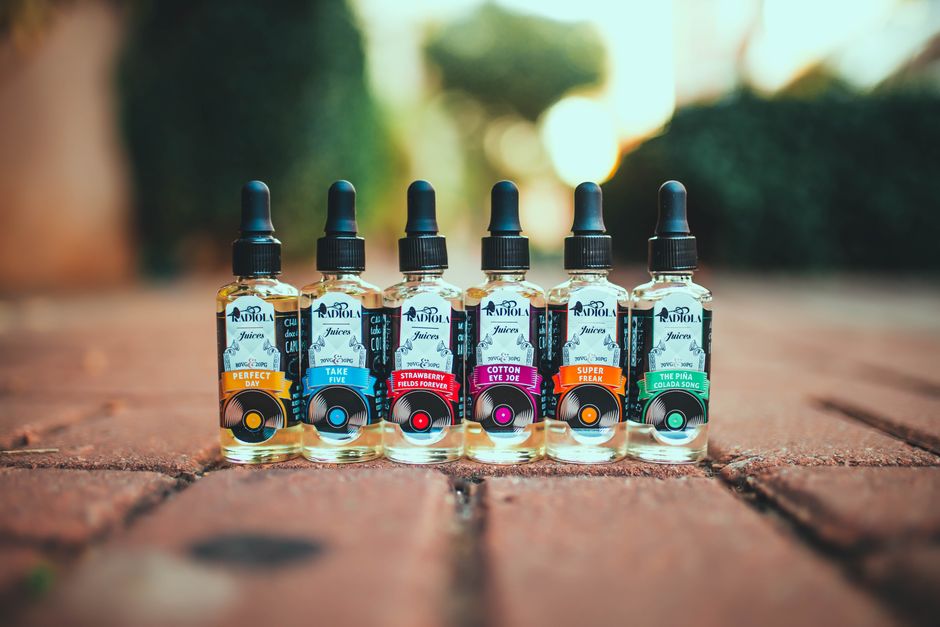
Making vape juice at home with household items is not a safer DIY project — it is a chemistry experiment with no quality control, no dose accuracy, and no way to predict what you are inhaling. The risks come from three places at once: the ingredients themselves, the way they are handled and mixed, and the fact that no home setup can sterilize, measure, or test what it produces.
What Is Actually In Vape Juice?
Commercial e-liquid is built around a short list of ingredients. The base is usually propylene glycol (PG) and vegetable glycerin (VG) in some ratio. Nicotine is added for users who want it. Flavorings are added for taste. That is the standard formula, and even that short list carries documented respiratory effects when heated and inhaled.
Propylene glycol and vegetable glycerin are both generally recognized as safe for use in food. That designation does not automatically transfer to inhalation. The lungs are not the digestive tract. When PG and VG are heated, they can break down into other compounds, including carbonyls such as formaldehyde and acetaldehyde. Research on e-cigarette aerosols has detected these compounds, and levels tend to rise with higher device temperatures. This is not a fringe finding — it has been measured repeatedly in laboratory studies of e-cigarette emissions.
Nicotine is the other major component. In commercial products it comes in controlled concentrations. In homemade products it usually comes from concentrated nicotine solutions sold for mixing, which are among the most hazardous consumer chemicals a person can keep in a home.
How To Make Vape Juice With Household Items The Risks?
The central risk is that household items are not designed for this use, and the people mixing them are not working in a controlled environment. A kitchen or garage has no ventilation hood rated for chemical vapor, no calibrated measuring equipment, and no way to confirm what the final product contains.
Consider what “household items” typically means in DIY recipes circulating online:
- Food-grade glycerin from a pharmacy or grocery store
- Propylene glycol sold for other purposes, sometimes not intended for inhalation
- Concentrated nicotine liquid, often sold in high-strength form
- Candy flavorings or baking extracts
- Syringes, droppers, or kitchen measuring spoons
Each of these introduces a specific problem. Food-grade glycerin may contain impurities acceptable for eating but not for heating and inhaling. Flavorings made for baking are formulated to be eaten, and their safety when vaporized and inhaled has not been established. Kitchen spoons cannot measure small volumes accurately, so the final nicotine concentration is unknown even to the person who made it.
There is no home method that verifies nicotine strength, sterility, or the absence of contaminants. A commercial lab tests batches. A kitchen cannot.
Why Is Nicotine So Dangerous In DIY Mixing?
Concentrated nicotine is the single most serious hazard in home vape juice production. Nicotine in its concentrated liquid form is a potent poison. It absorbs through the skin, and a spill or splash can cause nicotine poisoning without any being swallowed.
Symptoms of nicotine toxicity include nausea, vomiting, rapid heart rate, high blood pressure, sweating, dizziness, confusion, and in severe cases seizures and cardiac problems. These effects can escalate quickly. Nicotine poisoning is a medical emergency, and anyone showing serious symptoms after exposure needs emergency care immediately — call 911 or Poison Control.
This is not a theoretical concern. The rise in e-cigarette and nicotine liquid use has been linked to a documented increase in nicotine poisoning cases, particularly involving children who come into contact with the liquids. Concentrated mixing solutions make that risk worse because the nicotine content is far higher than in a finished product.
The math problem is also real. A recipe that calls for a certain number of drops of concentrated nicotine produces a final concentration that depends on the exact strength of the source liquid and the exact volume mixed. Get either wrong and the result can be many times stronger than intended. There is no reliable way to check the result at home.
Can You Safely Mix Vape Juice At Home?
There is no established safe method for home vape juice production. The evidence does not support a “safe” version of this practice, and no clinical guidelines describe one.
Some people point to the fact that commercial e-liquids are also not risk-free, which is true. E-cigarettes are not harmless, and their long-term health effects are still being studied. But that does not make a homemade product equivalent or safer. A commercial product at least has a labeled nicotine concentration and a manufacturing process. A homemade product has neither.
The comparison that matters is not “homemade versus commercial.” It is “controlled versus uncontrolled.” Home mixing removes the controls.
What Are The Specific Health Risks?
The health risks fall into several categories, and they overlap.
Chemical exposure. Heating PG, VG, and flavorings can produce carbonyl compounds. The amounts depend on temperature and device, but they are present in measurable quantities in many e-cigarette aerosols.
Nicotine overdose. Unknown concentration means unknown dose. This is the most immediate danger.
Contamination. Household surfaces, reused containers, and non-sterile tools can introduce bacteria or other contaminants. The lungs are not built to handle them.
Flavoring unknowns. Many flavor chemicals have been tested for ingestion, not inhalation. Diacetyl is a well-known example — it caused a severe lung disease called bronchiolitis obliterans in workers who inhaled it in flavoring manufacturing. Whether the levels in vaping cause similar harm is still being studied, but the concern is grounded in documented occupational disease.
Skin and eye exposure. Concentrated nicotine and some flavorings can irritate or injure skin and eyes on contact.
The honest summary is that the long-term health effects of vaping in general are not fully known, and the effects of homemade vaping are known even less. That uncertainty is itself a risk.
What Should You Do Instead?
If the goal is to stop smoking, the evidence supports using proven methods. Nicotine replacement therapy, prescription medications, and behavioral support all have research behind them. A doctor or pharmacist can help match a method to your situation.
If the goal is to vape, buying from a regulated manufacturer at least provides a labeled nicotine concentration and some manufacturing standards. That is not a safety endorsement — it is a statement about what is and is not controlled.
What no one should do is mix concentrated nicotine at home. The margin for error is small, the consequences can be severe, and there is no way to verify the result. If you or someone in your home has been exposed to concentrated nicotine liquid, treat it as an emergency and call for help rather than waiting to see what happens.
Frequently Asked Questions
Is homemade vape juice safer than store-bought?
No. Homemade vape juice has no controlled nicotine concentration, no sterility, and no testing, so it carries additional risks that commercial products do not. Commercial products are not risk-free, but they are at least labeled and manufactured under standards.
Can you get nicotine poisoning from making vape juice?
Yes. Concentrated nicotine liquid absorbs through the skin, so a spill or splash can cause nicotine poisoning even without swallowing any. Symptoms include nausea, vomiting, rapid heart rate, and in severe cases seizures, and require emergency care.
What happens if you vape food flavoring?
Food flavorings are tested for eating, not for heating and inhaling, so their safety when vaporized is not established. Some flavoring chemicals, such as diacetyl, have caused serious lung disease in workers who inhaled them occupationally.
Are there safe household ingredients for making vape juice?
No. There is no established safe method for home vape juice production, and no clinical guidelines describe one. Even ingredients that are safe to eat are not automatically safe to heat and inhale.
