
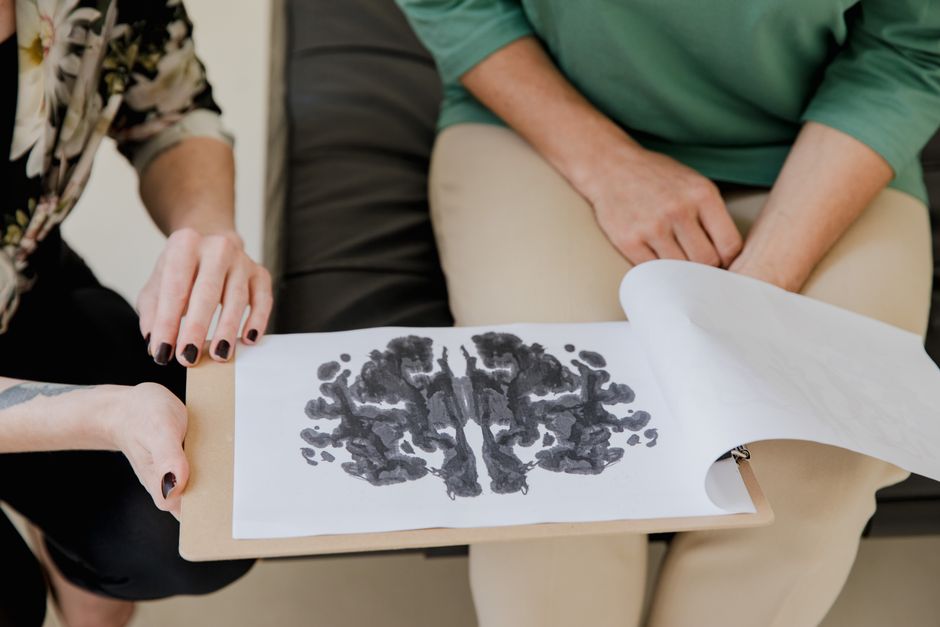
Forensic psychology applies the science of human behavior to the legal system. It helps courts make fairer decisions, helps police understand criminal behavior, and helps communities reduce repeat offenses. It is one of the few fields where psychology directly shapes real-world outcomes in courtrooms, prisons, and police stations every day.
That reach is broader than most people realize. Forensic psychologists do not just evaluate defendants. They assess witnesses, advise parole boards, train officers, and study why some people reoffend while others do not. Each of these roles touches public safety and individual rights at the same time.
What Exactly Does a Forensic Psychologist Do?
A forensic psychologist uses psychological knowledge inside the legal system. The work sits at the intersection of two very different disciplines — one built on probabilities and evidence, the other built on rules of law and standards of proof.
The daily tasks vary widely. Some forensic psychologists conduct evaluations for courts. Others conduct research on criminal behavior. Some work in prisons providing mental health care. Others train law enforcement or serve as expert witnesses.
Common roles include:
- Evaluating a defendant’s mental state at the time of an alleged offense
- Assessing whether someone is competent to stand trial
- Conducting risk assessments for parole or sentencing decisions
- Providing expert testimony in both criminal and civil cases
- Researching patterns in criminal behavior and victim psychology
- Developing treatment programs inside correctional facilities
One thing that separates forensic psychology from clinical psychology is the client. A clinical psychologist’s client is the patient. A forensic psychologist’s client is typically the court, the agency, or the legal system itself. That distinction matters because it changes who the psychologist answers to and what standard they apply.
How Does Forensic Psychology Benefit Society?
Forensic psychology benefits society by bringing evidence into legal decisions that would otherwise rely on intuition, bias, or guesswork. Courts are not naturally equipped to assess mental health, memory accuracy, or future risk. Forensic psychologists fill that gap with structured methods and data.
Consider eyewitness testimony. Decades of research have shown that human memory is far less reliable than most people assume. It is reconstructive, not photographic. Forensic psychologists study how memory can be contaminated by stress, leading questions, or the passage of time. This research has influenced how some jurisdictions conduct lineup procedures and interview witnesses. The goal is not to discredit witnesses but to gather more accurate information.
Risk assessment is another major contribution. Courts must decide whether to release someone on bail, grant parole, or impose a longer sentence. These decisions carry real consequences for public safety. Forensic psychologists use structured assessment tools to estimate the likelihood of future violence or reoffending. No tool predicts individual behavior with certainty. But structured professional judgment consistently outperforms unstructured gut feeling, and that is a meaningful improvement over how these decisions were once made.
Competency evaluations protect both the defendant and the integrity of the legal process. A person who cannot understand the charges against them or assist in their own defense cannot receive a fair trial. Forensic psychologists help courts identify these situations. This protects individual rights and prevents legal proceedings from producing unreliable outcomes.
How Does Forensic Psychology Help the Criminal Justice System?
Forensic psychology helps the justice system in several concrete ways. Each one addresses a specific weakness in how the system would otherwise operate.
Eyewitness identification. Research on memory and perception has led to changes in how some police departments conduct lineups. Presenting suspects one at a time rather than all at once, and using a blind administrator who does not know which person is the suspect, are two examples. These changes grew directly from psychological research.
Interrogation practices. False confessions are a documented problem. Some people confess to crimes they did not commit, especially when they are young, cognitively impaired, or subjected to high-pressure questioning. Forensic psychologists study the conditions that produce false confessions. This research has contributed to shifts toward information-gathering approaches rather than confrontational ones in some agencies.
Sentencing and parole. Judges and parole boards must estimate future risk. Structured risk assessment tools give them a more consistent framework than personal judgment alone. The evidence shows these tools improve accuracy compared to unstructured decisions. They are not perfect, and the field continues to debate how to reduce bias within them, but the direction of evidence supports their use over intuition.
Treatment and rehabilitation. Forensic psychologists design and evaluate programs meant to reduce reoffending. Some programs focus on anger management. Others target substance use, cognitive distortions, or social skills. The evidence on what works is mixed. Programs based on cognitive-behavioral principles tend to show better results than those without a structured framework, though effect sizes vary and no program eliminates reoffending entirely.
What Is the Difference Between Forensic Psychology and Criminal Profiling?
Criminal profiling and forensic psychology are not the same thing. Profiling is one narrow technique. Forensic psychology is a broad scientific discipline.
Profiling attempts to infer characteristics of an unknown offender from crime scene behavior. It is most associated with the FBI’s Behavioral Analysis Unit and similar groups. The evidence base for profiling is limited. Some studies suggest it can provide useful general leads, while others find it performs no better than educated guesswork. The field remains debated.
Forensic psychology covers a much wider territory. It includes competency evaluations, risk assessment, eyewitness memory research, treatment program design, expert testimony, and more. Most forensic psychologists never profile anyone. The two are often confused because television and film tend to focus on profiling, which is dramatic but represents only a small slice of the actual work.
Another common misconception is that forensic psychology is primarily about catching criminals. In reality, much of the work involves evaluating people who are already in the system, advising courts, and trying to understand behavior well enough to improve outcomes.
Does Forensic Psychology Help Prevent Crime?
Forensic psychology contributes to crime prevention indirectly. It does not stop crimes from happening in the moment. But it shapes the systems that influence whether someone offends again.
Risk assessment tools help identify individuals who need more intensive supervision or treatment. When these tools are used well, they can direct limited resources toward people at higher risk. That is a form of prevention.
Treatment programs inside prisons and in the community aim to reduce reoffending. The evidence here is genuinely mixed. Some cognitive-behavioral programs show modest reductions in recidivism. Others show little effect. The results depend heavily on program quality, how well participants engage, and what happens after release. No program guarantees that someone will not reoffend.
Research on developmental pathways also matters. Studies on adverse childhood experiences and their link to later behavior have influenced how some systems approach early intervention. This is a growing area, and the causal picture is complex. Poverty, trauma, genetics, and environment all interact. Forensic psychology contributes to understanding these patterns but does not claim to solve them.
What Are the Limits of Forensic Psychology?
Forensic psychology has real limits, and honest practitioners acknowledge them. The field deals in probabilities, not certainties. No psychologist can look at a person and know with confidence what they will do in the future.
Risk assessment tools produce estimates. They classify people into categories like low, moderate, or high risk. But within any category, individual outcomes vary widely. A person classified as high risk may never reoffend. A person classified as low risk may commit a serious offense. The tools improve on chance, but they do not eliminate uncertainty.
Bias is another concern. Some research suggests that risk assessment tools can produce different results across racial and ethnic groups. Whether this reflects true differences in risk or bias in the tools themselves is an active area of debate. The field has not fully resolved this, and responsible practitioners treat it as a live issue.
Expert testimony also has limits. Courts do not always accept psychological evidence, and judges sometimes exclude it when they find it unreliable or more prejudicial than helpful. Forensic psychologists must work within those constraints.
Finally, the science itself evolves. What was accepted practice twenty years ago may be revised today. That is a strength of science, but it also means the field must remain humble about what it currently claims to know.
How Does Forensic Psychology Protect Individual Rights?
Forensic psychology protects individual rights by ensuring that legal decisions about a person’s liberty rest on accurate information about their mental state and behavior. This is easy to overlook.
Competency evaluations exist so that people who cannot understand proceedings are not tried unfairly. Insanity evaluations, though rare and often misunderstood, exist so that the legal system can account for severe mental impairment. Risk assessments, when done properly, can support release for people who do not pose a danger, rather than keeping them locked up out of caution alone.
The field also contributes to wrongful conviction research. Studies on false confessions, faulty eyewitness identification, and flawed forensic evidence have helped identify why some innocent people are convicted. This research has led to reforms in some jurisdictions, including changes to lineup procedures and interrogation practices.
None of this means the system always gets it right. It does not. But forensic psychology provides tools and evidence that make fairness more achievable than it would be without them.
Frequently Asked Questions
What is the main benefit of forensic psychology to society?
It brings scientific evidence into legal decisions that would otherwise rely on intuition or bias. This improves accuracy in areas like eyewitness identification, competency evaluations, and risk assessment.
Is forensic psychology the same as criminal profiling?
No. Profiling is one narrow technique, while forensic psychology is a broad field that includes evaluations, research, treatment, and expert testimony. Most forensic psychologists never profile anyone.
Can forensic psychologists predict who will commit a crime?
No. They estimate risk using structured tools that improve on chance, but no method predicts individual behavior with certainty. Risk assessment deals in probabilities, not guarantees.
Do forensic psychologists help innocent people?
Yes, in some cases. Research on false confessions and faulty eyewitness memory has led to reforms that reduce wrongful convictions, and competency evaluations help prevent unfair trials.
