
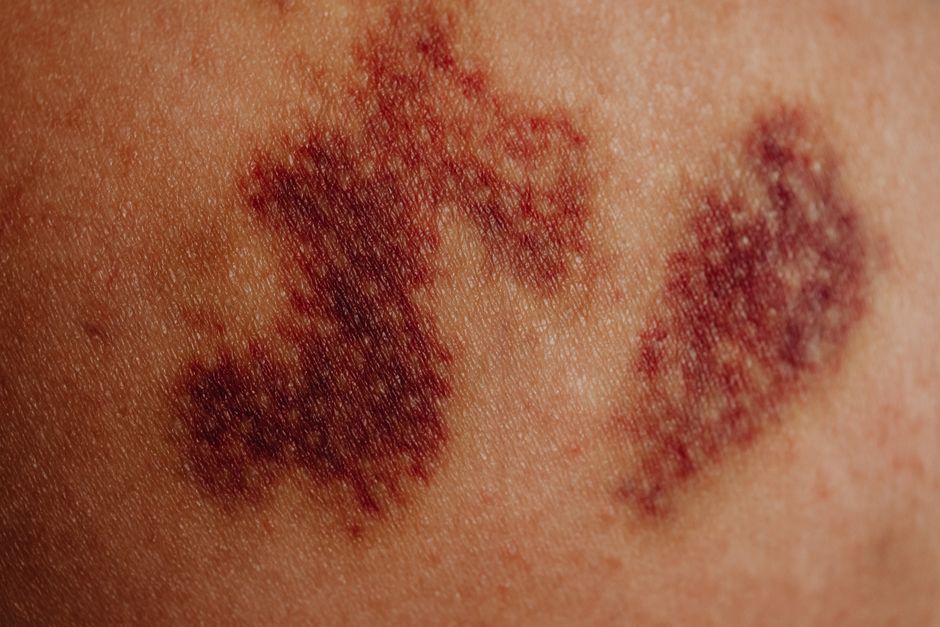
A bruise is a pool of blood that has leaked from damaged vessels into the tissue just under your skin. A blood clot is a gel-like clump of blood that forms inside a vessel or the heart. So can a bruise cause a blood clot? A bruise itself does not turn into a dangerous clot. But both can come from the same injury, and in some cases a clot is forming deep in a vein while a bruise appears near the surface. That is why a bruise plus certain symptoms deserves a closer look.
What Is the Difference Between a Bruise and a Blood Clot?
A bruise is blood that has escaped the bloodstream. A clot is blood that has solidified inside it.
When a small vessel breaks, red blood cells spill into the surrounding tissue. That pooling creates the purple, blue, or green color you see. The blood is outside the vessels and no longer circulating. Your body gradually breaks it down and reabsorbs it.
A clot forms through a different process. Platelets and clotting proteins build a mesh inside a blood vessel or the heart chamber. The blood stays in the circulatory system but turns from liquid to a semi-solid mass. Clots that form where they should not are called thrombi. Clots that break loose and travel are called emboli.
The key point: a bruise is a leak, and a clot is a blockage. They are not the same event, even when one injury causes both.
Can A Bruise Cause A Blood Clot?
A bruise does not transform into a clot. The blood in a bruise is already outside your vessels, so it cannot clog them.
But the injury that caused the bruise can also damage deeper vessels. Trauma can injure a vein wall beneath the skin. That injury can trigger the clotting process inside the vein. In that scenario you might see a bruise on the surface and have a clot forming deeper down at the same time. The bruise is not the cause. The shared injury is.
This distinction matters. People sometimes assume a visible bruise means the injury is minor and nothing else is going on. That is not always true.
What Is a Hematoma and How Is It Different From a Bruise?
A hematoma is a collection of blood that has escaped a vessel, like a bruise, but it forms a more defined pool or mass.
The difference is mostly one of degree and location. A bruise, also called a contusion or ecchymosis, spreads through tissue in a flatter pattern. A hematoma can be larger, firmer, and more localized. It may raise the skin or feel like a lump.
Hematomas can form in muscle, under the skin, or inside organs. Most are not dangerous. But a hematoma in a deep vein or in a muscle can press on vessels and, in rare cases, contribute to clot formation. This is one reason a large, firm, or rapidly growing swelling after an injury should be evaluated.
It is also worth noting that a hematoma is not the same as a thrombus. A hematoma is blood outside the vessels. A thrombus is a clot inside them. They can occur together after trauma, but they are separate problems.
What Is Deep Vein Thrombosis and Why Does It Matter?
Deep vein thrombosis, or DVT, is a clot that forms in a deep vein, most often in the leg or thigh. It is the clot that people most often worry about when they connect bruising to clotting.
DVT can develop after injury, surgery, long periods of inactivity, or in people with certain medical conditions. The classic signs include swelling in one leg, pain or tenderness, warmth, and redness or discoloration of the skin. Sometimes there is no visible bruise at all.
The real danger is that part of the clot can break off and travel to the lungs. That is called a pulmonary embolism, and it can be life-threatening. Symptoms include sudden shortness of breath, chest pain that may worsen with a deep breath, rapid heart rate, and coughing up blood.
A bruise near a swollen, painful leg is not something to dismiss. It does not prove a clot is present, and most bruises are harmless. But when a bruise appears alongside swelling, warmth, or pain in one leg, that combination is worth a medical evaluation.
When Should You Worry About a Bruise?
Most bruises fade on their own within a couple of weeks and need no treatment. Knowing which ones are different helps you decide when to seek care.
Seek medical attention if you notice any of the following:
- A bruise that keeps growing or becomes firm and swollen
- Swelling, warmth, or pain in one leg, especially with a bruise
- Shortness of breath, chest pain, or a rapid heartbeat
- Bruises that appear without any injury or cause
- Bruising that is unusually large or frequent
- A bruise that does not fade after several weeks
Bruising without a clear cause can point to problems with platelets or clotting factors, or to medication effects. Blood thinners, for example, make bruising more likely. Some people bruise more easily as they age because skin and blood vessels thin over time.
This is not a reason to panic about every bruise. It is a reason to notice patterns.
Can a Bruise Itself Become Dangerous?
A bruise alone rarely causes serious harm. The main exceptions involve size, location, and what is happening beneath it.
A very large hematoma can put pressure on surrounding tissue and, in rare cases, on nerves or blood vessels. A bruise over a joint or in a confined space, such as inside a muscle compartment, can sometimes cause complications. These situations are uncommon and usually follow significant trauma.
In most cases, the bruise is a sign of a minor injury and resolves on its own. The concern is not the bruise itself. The concern is what else the injury may have done.
How Are Bruises and Blood Clots Treated Differently?
These two problems call for different approaches because they involve different processes.
For a typical bruise, self-care is usually enough. Rest, ice in the first day or two, compression, and elevation can help limit swelling. Over-the-counter pain relief may help, though some medications affect clotting and are worth discussing with a clinician if you have clotting concerns.
For a suspected clot, treatment is medical. Doctors may use blood-thinning medications to prevent the clot from growing or breaking loose. Diagnosis often involves ultrasound or other imaging. This is not something to manage at home.
One practical point: do not massage a swollen, painful area that might contain a clot. Massage is sometimes suggested for bruises, but if a deep clot is present, pressing on it is not advisable. When in doubt, get it checked.
What Raises Your Risk of a Blood Clot?
Several factors increase the chance of a clot forming, and knowing them helps you judge your own situation.
Risk factors include recent surgery, long periods of immobility such as during travel or bed rest, certain cancers, pregnancy, some hormonal medications, smoking, obesity, and a personal or family history of clotting problems. Some people have inherited conditions that make their blood clot more easily.
Having a risk factor does not mean you will develop a clot. It means the odds are higher, and symptoms deserve more attention. If you have several risk factors and notice new leg swelling or pain, that is a reason to seek care promptly rather than wait.
Frequently Asked Questions
Can a bruise turn into a blood clot?
No. A bruise is blood that has already leaked outside your vessels, so it cannot form a clot inside them. The injury that caused the bruise can sometimes also trigger a clot in a deeper vein at the same time.
Can a blood clot look like a bruise?
A clot can cause redness, discoloration, or swelling that resembles a bruise, but the underlying problem is different. A clot sits inside a vein, while a bruise is blood pooled in tissue.
How do I know if my bruise is a blood clot?
You usually cannot tell by looking. Signs that point toward a clot include swelling, warmth, and pain in one leg, especially with a bruise. Imaging is needed to confirm a clot.
When should I see a doctor for a bruise?
See a doctor if a bruise keeps growing, appears without injury, or comes with leg swelling, warmth, or pain. Seek emergency care for shortness of breath or chest pain.
